





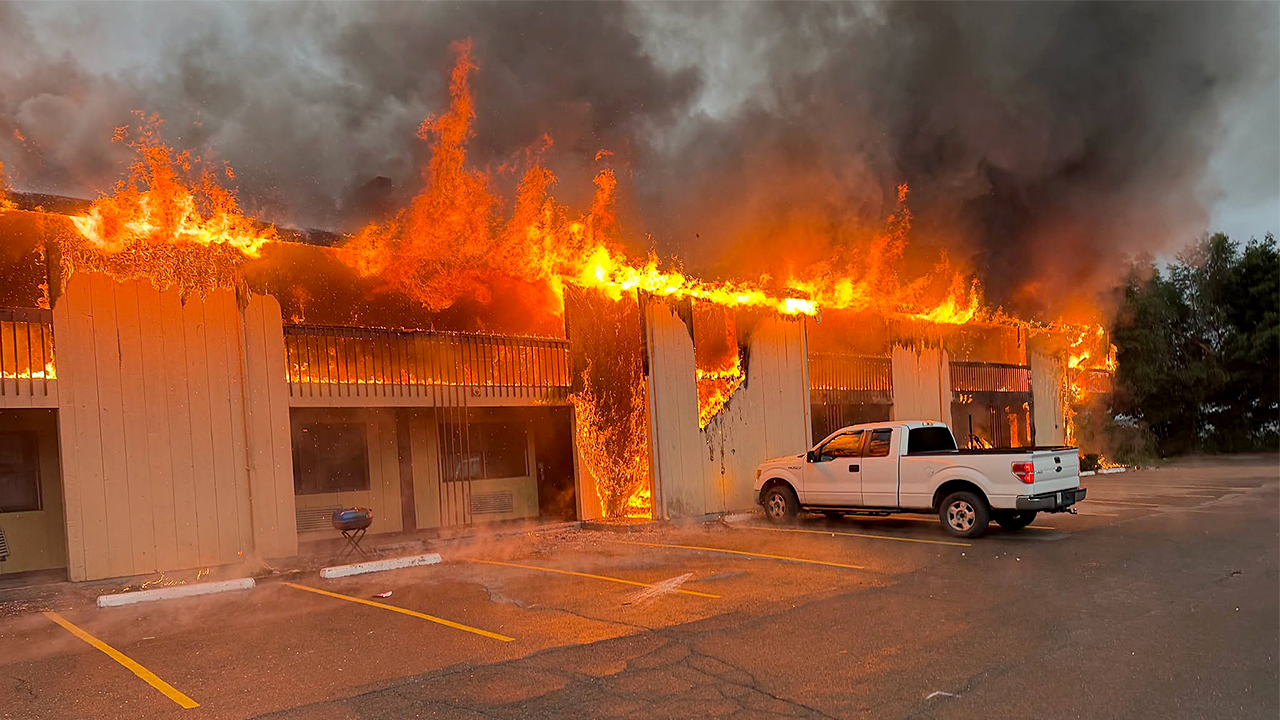
The quiet, early morning hours in the small town of Endwell, New York, were shattered by an unspeakable tragedy that stripped six vulnerable individuals of their lives and robbed dozens of others of their only remaining sanctuary. Around 6:00 a.m. on a fateful Monday, a fast-moving and catastrophic fire ripped through the Knights Inn, a local motel that had been serving as a crucial lifeline and temporary housing facility for the county’s displaced and homeless population. For the residents sleeping inside, this motel was far more than just a collection of cheap roadside rooms; it represented a desperately needed shield against the unforgiving elements, offering a rare modicum of warmth, safety, privacy, and hope in a world that all too often overlooks them. What should have been a peaceful morning of rest and recovery turned in an instant into a horrific, claustrophobic struggle for survival as thick, suffocating black smoke and violent orange flames rapidly consumed the two-story building. The terrifying suddenness of the disaster meant that many residents had absolutely no time to escape, transforming a place of transition, healing, and shelter into a scene of unimaginable horror. When the smoke finally cleared, six human beings—individuals with families, dreams, personal struggles, and vibrant stories that deserved to continue—had perished in the inferno, while two other victims were rushed to a nearby hospital to battle for their survival. The immense tragedy has left a tight-knit upstate New York community deeply traumatized, grieving, and searching for answers in the wake of a disaster that highlights the extreme vulnerability of those living on the margins of society, reminding us all of the fragile thread that connects life, safety, and human dignity.
At the dark, bewildering center of this unfolding tragedy is 24-year-old Tyler Russell, a young man whose recent path through the criminal justice system raises troubling questions and deepens the community’s collective pain. Having served approximately two years in a New York state prison following a conviction for grand larceny, Russell had only recently tasted freedom again after being released on parole in February. For many individuals transitioning back into society, a release on parole represents a fragile secondary chance at life, an opportunity to rebuild, seek rehabilitation, and find a productive, peaceful path forward. However, just months after his release, Russell now stands accused of committing an unspeakable act of destruction, charged with six counts of second-degree manslaughter and one count of arson for allegedly setting the fatal blaze that consumed the motel. The sharp contrast between a young man receiving a second chance at life and his alleged, deliberate taking of six other lives is a jarring reminder of the unpredictable nature of human behavior and the systemic challenges inherent in prisoner reentry and housing rehabilitation programs. Currently held in the Broome County Jail pending his formal arraignment, Russell’s arrest brings a somber, urgent focus to the legal proceedings ahead. Yet, while the wheels of justice begin to turn, the arrest offers little immediate comfort to a community searching for some logical explanation as to why such a senseless, violent, and devastating act was committed against a population of people who were already struggling daily to survive the hardships of homelessness. The gravity of the charges he faces reflects the profound level of devastation inflicted upon the victims, their loved ones, and the broader community, leaving a lingering sense of anger, grief, and confusion that will likely persist for years to come.
The scene that confronted the first responders who rushed to the Knights Inn on that desperate morning was nothing short of apocalyptic, demanding every ounce of physical strength, courage, and emotional resilience from local emergency services. Upon arriving at the scene shortly after 6 a.m., firefighters from the Endwell Fire Department were met with a building almost fully engulfed in violent flames, with thick, toxic black smoke pouring heavily from the front of the structure while aggressive fire vented out from the rear, blocking escape routes. The sheer speed with which the fire spread created an incredibly perilous environment, necessitating urgent calls for mutual aid that brought multiple area fire departments and law enforcement agencies racing to assist in the desperate rescue efforts. Amid the chaos, blistering heat, and blinding smoke, these brave men and women risked their own lives to search the burning rooms, attempting to pull survivors from the wreckage while battling a highly volatile and fast-moving blaze that threatened to collapse the building around them. The emotional weight of this operation was immense; firefighters are trained to save lives, and facing a tragedy of this magnitude leaves an indelible, painful mark on those who stand on the front lines of emergency response. In the aftermath, the Endwell Fire Department expressed their profound sorrow publicly, offering their deepest thoughts and continuous prayers to the victims and their families, asserting that the entire department and community stand in unwavering solidarity with those bearing the unimaginable weight of this sudden and tragic loss. This public expression of grief highlighted the profound connection between the first responders and the community they serve, underscoring that the trauma of such an event is shared by everyone who witnessed the destruction of human life.
Beyond the tragic loss of life, the fire has left an incredibly painful, chaotic vacuum for the survivors, with an estimated 73 individuals suddenly displaced and stripped of the few physical possessions they had left in the world. These residents were already navigating the difficult, stressful, and often demoralizing experience of homelessness, relying on the Knights Inn as a vital stepping stone toward finding permanent stability. In a single, terrifying morning, they lost their clothes, their personal keepsakes, their documents, and the fragile sense of security they had fought so hard to establish. In the face of this overwhelming displacement, the local community rallied with inspiring speed and empathy, demonstrating the deep-rooted resilience of Broome County’s residents. The American Red Cross immediately stepped in to coordinate emergency relief efforts, working tirelessly to provide comfort, physical resources, and essential supplies to the shell-shocked survivors. A temporary shelter was quickly established at the nearby Vestal United Methodist Church, transforming a sacred space into a sanctuary of warmth, safety, and human connection for those who had just escaped the flames. Simultaneously, the United Way of Broome County launched an emergency relief fund, which quickly raised tens of thousands of dollars in donations from neighbors and strangers alike, proving that even in the darkest times, compassion and communal care can shine as a guiding light. This outpouring of support represents a vital lifeline for the survivors as they begin the daunting task of piecing their shattered lives back together from nothing, showing them that they are not forgotten by their fellow citizens in their hour of greatest need. Every dollar raised and every warm blanket distributed serves as a small but powerful antidote to the trauma of that night, reminding these displaced individuals that they are valued members of a community that refuses to let them fall further into despair.
This catastrophic event casts a harsh, undeniable spotlight on the broader, systemic issues surrounding homelessness and the reliance on transitional housing networks in upstate New York. The Knights Inn was not merely a commercial motel; it was one of several local lodging establishments actively utilized by the Broome County Department of Social Services to provide emergency shelter for individuals and families experiencing housing insecurity. This practice, common in many municipalities across the country, highlights a deep-seated crisis where social safety nets are stretched to their limits, relying on temporary, commercial spaces to house vulnerable populations because of a severe shortage of permanent, affordable housing options. These motels often become fragile ecosystems, housing individuals who are dealing with various life challenges, from economic hardship and mental health struggles to the difficult transition of reentering society after incarceration. By humanizing the victims of this fire, we are forced to recognize them not just as abstract statistics or temporary hotel guests, but as neighbors, friends, and valuable members of our community who were seeking stability and safety, only to have their lives tragically cut short due to a vulnerability that society has yet to fully address and resolve. The loss of these six lives must serve as an urgent catalyst for change, forcing policymakers and community leaders to reexamine how we care for those without a permanent roof over their heads and whether our current systems of emergency shelter are truly safe and sufficient for human habitation. We must ask ourselves tough questions about the safety standards of transitional housing and work tirelessly to ensure that those seeking refuge from the streets are not met with even greater hazards indoors. True progress will only come when we commit to building long-term, sustainable housing solutions that offer dignity, security, and peace of mind to every individual, regardless of their financial status or personal circumstances.
As the investigation into the cause and motive of the fire continues under the careful direction of the New York State Police and local arson investigators, the community of Endwell enters a long, painful period of mourning and reflection. The road ahead for the survivors will be incredibly arduous, requiring sustained mental health support, housing assistance, and community compassion to help them heal from the profound trauma of that icy morning. Tyler Russell remains behind bars, awaiting the slow wheels of the justice system to turn, a process that will hopefully provide clarity, accountability, and some measure of closure for the families of those lost. While the legal system seeks to address the criminal aspect of this tragedy, the human heart of the community remains focused on honoring the memories of the six victims whose lives were so abruptly stolen. Their names, though not yet fully publicized, represent unique stories of survival, struggle, and hope that must not be forgotten. As Broome County begins the slow process of rebuilding and healing, this tragedy serves as a solemn, urgent reminder of our shared responsibility to protect, support, and uplift the most vulnerable among us, ensuring that no one is left to face the darkness alone. We must honor the deceased by creating a safer, more compassionate world, transforming our collective grief into a powerful force for systemic progress, empathy, and change. In the end, the true measure of our society lies in how we treat those in their hours of deepest vulnerability, and this tragedy calls upon all of us to ensure that such a horrific loss of life never occurs within our communities again. May the memories of those who perished be a guiding light toward a future where everyone has a safe place to call home, and may their loved ones find peace in the midst of this overwhelming darkness.