



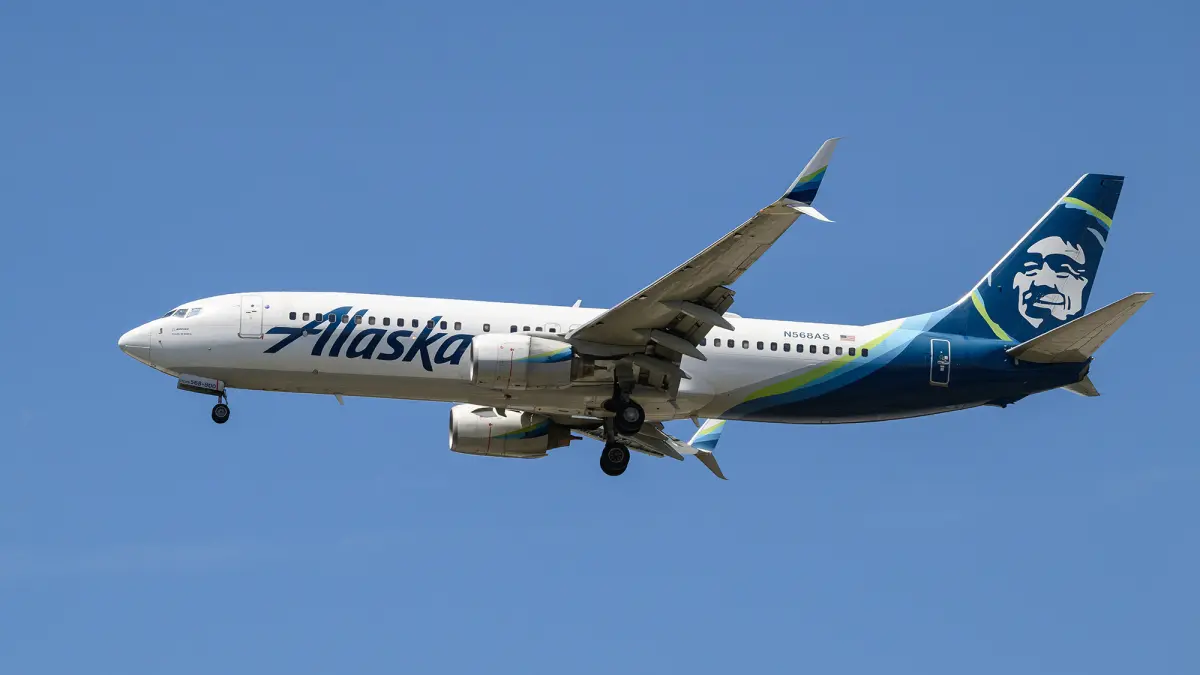
A Mid-Flight Ordeal: The Story of Alaska Airlines Flight 87
In a tense mid-air incident that highlights both the unpredictability of air travel and the heroism of everyday passengers, an Alaska Airlines flight became the scene of a disturbing disturbance last Wednesday. Kassian William Fredericks, a passenger on Flight 87 bound for Anchorage, allegedly attempted to open a cabin door while the aircraft was in flight, creating moments of fear and confusion for those onboard. The incident, while alarming, showcases how quickly fellow travelers can transform into first responders when faced with a potential crisis. According to FBI documents, the situation began to unfold when Fredericks started exhibiting erratic behavior, claiming invisible entities were “trying to take over the plane” and imploring others to “stop the plane.” His increasingly concerning actions culminated when he rushed toward the rear cabin door and began attempting to pry it open—a moment that prompted swift action from those around him.
The response from fellow passengers was immediate and decisive. A man returning from the lavatory noticed Fredericks aggressively trying to open the cabin door and had already managed to lift the door’s arm upward. Without hesitation, this passenger grabbed Fredericks while calling for assistance, prompting two other male passengers to help restrain him. Together, they managed to return Fredericks to his seat, though he continued to struggle and make concerning statements. “I need to call my mom,” he reportedly repeated, while also asking for a cigarette and inquiring how to break the window because he “needed air” and wanted to “get out of here.” These statements, coupled with visible shaking and earlier bizarre claims, painted a picture of someone experiencing a serious mental health crisis rather than an individual with malicious intent.
The behavior exhibited by Fredericks appeared to stem from significant psychological distress rather than intoxication. Prior to the door incident, passengers had observed him taking what appeared to be medication with Gatorade, after which his behavior seemed to worsen. Flight attendants noted that while they didn’t believe he was drunk, they had noticed him acting “weird and off” and attributed his shaking to a possible medical condition. This assessment gained credibility after the flight landed when Fredericks reportedly told hospital staff that he had been drinking for 9-10 days straight, was experiencing hallucinations, couldn’t remember the last two years of his life, and was taking Trazodone—a medication used to treat depression, anxiety, and insomnia. The combination of potential withdrawal, medication effects, and underlying mental health issues offers context for the frightening episode, without excusing the danger it created.
While aviation experts note it’s virtually impossible to open a cabin door mid-flight due to pressurization differences, the attempt itself posed significant risks to everyone aboard. The FBI affidavit explained that had Fredericks continued his efforts, he might have triggered the emergency slide to deploy and inflate inside the aircraft cabin, potentially causing serious injuries to nearby passengers. The flight crew, aware of this danger, considered restraining him with zip ties but ultimately decided against it, fearing such action might escalate his agitation further. Instead, they relied on the passengers who had already intervened to maintain control of the situation while the pilots contacted ground controllers and arranged for authorities to meet the aircraft upon landing in Anchorage. Their professional handling of the situation exemplifies the extensive training airline crews receive to manage in-flight emergencies of all kinds.
The aftermath of the incident brought both legal consequences and a certain resolution to the chaotic flight. Upon landing in Anchorage, Fredericks was escorted from the plane by authorities and taken to a hospital for evaluation. Witnesses noted that by this point, he had calmed considerably and apologized to the crew as he departed. Alaska Airlines subsequently banned Fredericks from future travel on their carriers, a standard response to serious in-flight disruptions. More significantly, he now faces federal charges of interference with flight crew members—an offense that carries potential penalties of up to 20 years in prison. This severe potential consequence reflects the seriousness with which authorities treat any actions that threaten aviation safety, regardless of the perpetrator’s mental state at the time of the incident.
This event aboard Alaska Airlines Flight 87 serves as a complex reminder of the intersecting issues of mental health, substance use, and public safety. While the incident certainly frightened passengers and crew, it also demonstrated the resilience and quick thinking of ordinary travelers who prevented a situation from potentially worsening. In their statement, Alaska Airlines thanked their crew for their professionalism and apologized to passengers for the disturbance. Beyond the immediate circumstances, this event raises broader questions about identifying vulnerable travelers before they board, supporting those experiencing mental health crises, and balancing compassionate care with necessary security measures. As the legal process unfolds for Fredericks, whose attorney has not yet commented publicly, the incident stands as a stark reminder of how quickly a routine flight can transform into an emergency situation—and how the combined actions of alert passengers and trained professionals can make all the difference in ensuring everyone’s safety.