



On a warm, electric Manhattan evening, the iconic neon marquee of Radio City Music Hall glowed with a singular, fierce brilliance, beckoning the theater world home for the annual Tony Awards. There is a scientific law to the atmosphere of New York City on Tony Sunday, a palpable shift in gravity where the bustling, indifferent noise of Sixth Avenue seems to soften, replaced by the collective, buzzing anticipation of Broadway’s finest. It is a night where the grueling, invisible labor of theater—the early morning vocal warm-ups, the bruised knees from dance rehearsals, the emotional exhaustion of inhabiting complex characters eight times a week—is finally illuminated by the sparkling flashbulbs of the red carpet. For the actors, directors, designers, and crew members arriving at the steps of Radio City, the evening represents far more than a simple television broadcast; it is a sacred family reunion. The red carpet itself became a vibrant tapestry of human stories, a place where decades of theatrical history collided with the raw, wide-eyed excitement of newcomers making their Broadway debuts. The air was thick with the scent of summer rain, expensive perfume, and the faint, sweet smell of roasted nuts from nearby street carts, creating a sensory symphony that could only belong to New York. As the stars paraded past the velvet ropes, clutching their custom gowns and Adjusting their tuxedos, the overwhelming sentiment was one of profound gratitude, a shared understanding of how incredibly fragile, yet miraculously resilient, the magic of the stage truly is.
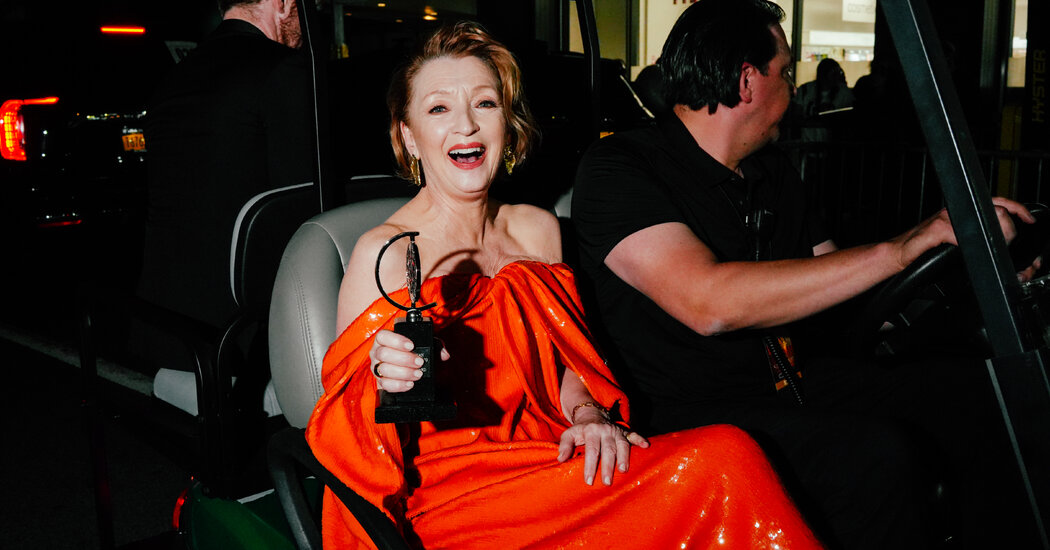
Among the luminous constellation of stars who graced the evening, Laurie Metcalf stood out as a masterclass in quiet, unyielding dedication to the craft of acting. Metcalf, a titan of both screen and stage, possesses a rare, chameleonic ability to disappear completely into her roles, rendering the boundary between the actress and the character entirely invisible. Her presence on the red carpet was marked by a beautiful, grounded humility that contrasted wonderfully with the glittering extravagance surrounding her. When she claimed her top prize, the auditorium erupted into a roar of admiration that spoke volumes about her standing within the theatrical community. In her hands, the Tony Award felt less like a trophy and more like a natural extension of her decades-long commitment to telling difficult, deeply human stories with uncompromising honesty. Backstage, along the winners’ walk, Metcalf spoke of the theater not as a career, but as a vital, breathing sanctuary where she continues to learn how to be human. Her victory was a celebration of the quiet, disciplined work ethic that defines the true heart of Broadway—the actors who show up day after day, in dusty rehearsal rooms and dimly lit theaters, to do the hard work of holding a mirror up to our collective souls. Watching her navigate the press room with a gentle smile and a look of genuine wonder in her eyes was a poignant reminder that even the most seasoned legends of the stage never lose their capacity for awe.
The evening’s emotional heartbeat found its perfect expression in the radiant, kinetic energy of Joshua Henry, whose very presence seemed to make the walls of Radio City Music Hall vibrate with joy. Henry, a performer of unmatched vocal prowess and magnetic stage presence, represented the brilliant, forward-looking spirit of modern Broadway. As he walked the red carpet, his infectious smile and effortless warmth drew people in, transforming a standard promotional walk into a series of deeply personal connections. Henry’s artistic journey is one of passion, fierce determination, and an unwavering belief in the power of music to heal and unite, qualities that were on full display throughout the celebratory night. When his name was called, the reaction in the room was electric, a collective surge of excitement for an artist who pours his entire soul into every note he sings. On the winners’ walk, clutching his prize with a mixture of reverence and pure, childlike ecstasy, Henry took a moment to reflect on the long road that brought him to this pinnacle, paying tribute to the mentors who believed in him and the audiences who feed his creative fire. His victory was a triumphant reminder that theater is an athletic, spiritual endeavor, and that the voice of a single, dedicated performer can elevate the human spirit and remind us of our shared capacity for love, joy, and resilience.
Adding a touch of towering, classic elegance to the night’s festivities was the incomparable John Lithgow, an actor whose legendary career spans generations and mediums, yet who always finds his way back to the warm embrace of the theater. Lithgow, standing tall physically and artistically, brought a sense of gracious history to the proceedings, acting as a bridge between Broadway’s golden past and its vibrant present. On the red carpet, he moved with the easy confidence of a man who is thoroughly at home in his own skin and deeply in love with his community. His interactions with fellow nominees, younger actors, and the eager press were characterized by a generous, paternal warmth that exemplified the best of the theatrical tradition. For Lithgow, the stage is a playground of the mind, a place where he has played kings, villains, fools, and heroes, always searching for the universal truths that connect us all. His walk through the winners’ press room was a masterclass in charm and storytelling, as he shared anecdotes, offered wise counsel to emerging talents, and expressed his enduring gratitude for the privilege of making a life in the theater. In an industry that is constantly chasing the next trendy thing, Lithgow’s presence and recognition served as a beautiful anchor, reminding everyone in attendance that longevity in the arts is built on a foundation of kindness, curiosity, and an enduring respect for the audience.
Beyond the polished television packages and the tightly timed acceptance speeches, the true, unfiltered humanity of the Tony Awards unfolded in the chaotic, emotional sanctuary of the winners’ walk. This backstage labyrinth, lined with historical playbills and the ghostly echoes of legendary performances past, became a place where the armor of celebrity completely melted away. Here, away from the glare of the live television cameras, the newly minted winners were met by a gauntlet of cheering publicists, weeping friends, and camera crews capturing the raw, immediate aftermath of their triumphs. It was a space of beautiful, unscripted human drama: actors collapsing into the arms of their directors, clutching their heavy silver medallions as if to convince themselves they were real, and frantic, joyful phone calls made to parents and partners in faraway hometowns. The air in the winners’ walk was thick with the scent of spilled champagne, hairspray, and the collective relief of a grueling theater season finally reaching its breathtaking conclusion. Group hugs were not performative gestures for the media, but tight, breathless embraces between colleagues who had spent months sweating together in drafty backstage wings, helping each other through vocal fatigue, personal losses, and the relentless physical demands of live performance. In these quiet, frantic moments behind the scenes, the true essence of the Broadway community was laid bare—a fiercely loyal, deeply loving family of artists who celebrate each other’s victories with the same passion they bring to their own work.
As the final notes of the orchestra faded and the theater community spilled out of Radio City Music Hall into the warm, damp Manhattan night, the lingering magic of the Tony Awards hung in the air like a sweet promise. Long after the red carpet is rolled up, the borrowed diamonds are returned to their vaults, and the physical trophies are placed on living room shelves, the true impact of this night will continue to resonate in Broadway theaters and far beyond. The triumphs of Laurie Metcalf, Joshua Henry, and John Lithgow are not merely personal milestones; they are symbols of the enduring, irreplaceable power of live, human storytelling. In an increasingly digital world where human interaction is so often mediated by cold, glowing screens, the theater remains a radical act of communion—a physical space where strangers gather in the dark to share a singular, unrepeatable experience. The Tony Awards reminded us that the stage is a place where we learn empathy, where our hearts are broken and mended in the space of a single act, and where the human spirit is celebrated in all its messy, beautiful complexity. As the stars walked home through the quiet streets of the Theater District, their laughter echoing off the brick walls of historic playhouses, they carried with them the collective heartbeat of an art form that has survived plagues, depressions, and wars, and will continue to shine as long as there are stories to tell and humans willing to gather in the dark to listen.