




Mara Lynne had always cherished the vibrant hum of her Rogers Park street, where families strolled, kids played, and the air carried scents of fresh bakery goods and distant laughter. Neighbors from all walks of life—immigrants starting anew, old-timers sharing stories over coffee—made the neighborhood feel like a warm embrace. But one ordinary day last fall, that familiar buzz evaporated into an eerie silence, shattering her sense of safety forever. As she peered through her window, armed, masked agents in brown uniforms suddenly seized a man walking casually down the sidewalk. They yanked his arms behind his back, shoved him into an SUV amidst muffled protests, and sped off. Mara was the sole witness, her heart pounding as the world around her stayed oddly still—no one else rushing out, no sirens wailing. “It was silent. That’s the part that freaks me out the most,” she later confided, her voice trembling with a mix of disbelief and raw vulnerability. This wasn’t a distant news story; it was unfolding right outside her doorstep, turning the quiet into something menacing and personal.
The man they grabbed was Emilio Bahena, a humble father from Mexico in his early 40s, dressed in simple dark jeans and a jacket, who to Mara looked like any neighbor heading to work or picking up groceries. She watched helplessly as the agents bulked up with tactical gear approached him, dragged him toward their vehicle, and handcuffed him despite her shouts to leave him alone, insisting he lived there. “He lives here!” Mara yelled, her whistle poised, her phone ready to film. The agents brushed her off politely, calling her “ma’am” and saying everything was fine, but they stuffed Emilio into the SUV where another detainee bled from his face. As they drove away, one agent sang back dismissively, “Have a good day,” leaving Mara enraged and shaken. Emilio, who worked two jobs to support his U.S.-citizen children, was held for weeks without charges beyond being undocumented, his family scraping together funds for rent and a lawyer. For Mara, it felt like watching a friend get kidnapped; she sat for hours afterward, arms around her knees, mind racing with the innocence in Emilio’s eyes—”like he was a 2-year-old,” she said. The ordeal ignited her passion, pushing her into community trainings on responding to ICE and carrying a whistle, transforming her from a sidelined observer into an active protector of her block.
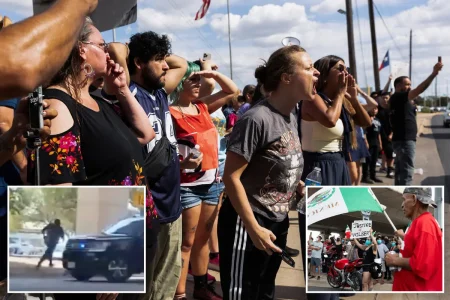
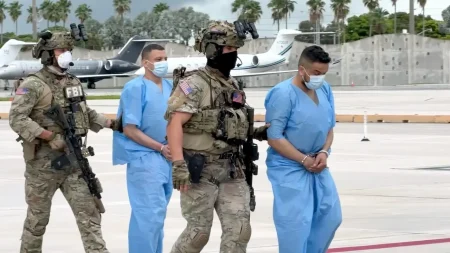
This incident was no isolated event; it was part of Operation Midway Blitz, the Trump administration’s massive federal immigration crackdown that descended on Chicago like a storm, sweeping up thousands in a manic push for “mass deportations.” Helicopters buzzed overhead, tear gas clouded the air, and rubber bullets flew as agents broke down doors without warrants, detaining landscapers, cooks, laundromat patrons—even U.S. citizens and city staff. The chaos claimed lives: at least two people shot by agents, including one death, sparking lawsuits and outrage. Mara had never paid much attention to immigration policy before—a former model and disability advocate, her life revolved around everyday cares—but the masked invaders brought it all home. National efforts labeled critics as “domestic terrorists,” smearing a Chicago protester shot by an agent, tactics later echoed in deadly Minneapolis shootings that toppled officials. Here in Rogers Park, a welcoming tapestry of Latino markets, African hair salons, and refugee families, the raids felt like a military invasion, not justice. Residents recoiled, seeing agents as the real usurpers targeting the vulnerable, not violent criminals—as data showed, only 3% of detainees had such convictions. For Mara and her neighbors, it wasn’t about politics; it was about the terror of losing people who made the streets alive and kind.
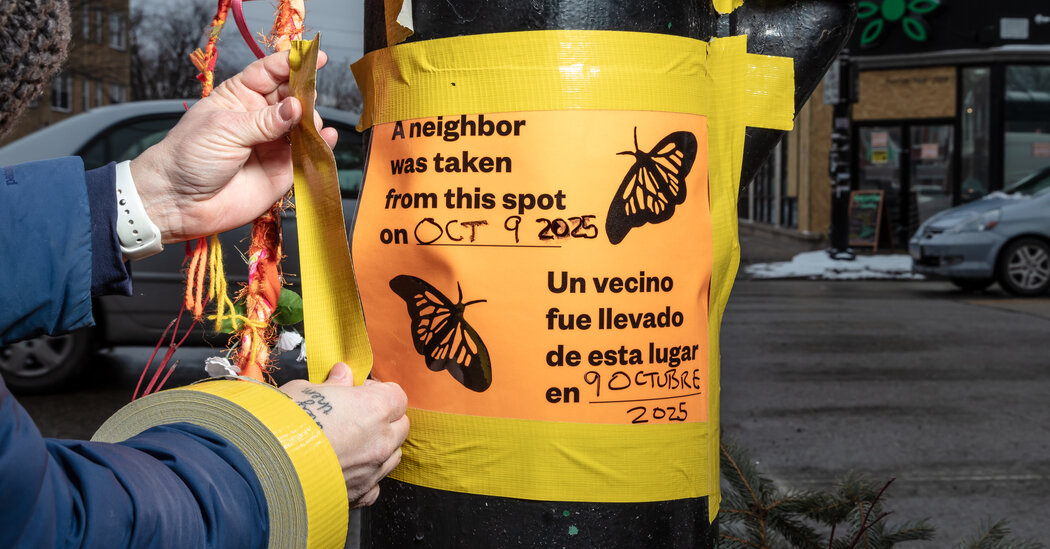
The ripple effects in Rogers Park were profound, eroding trust in a government meant to protect its citizens. Kristin Jackson, a pastor who’d rooted there for over 30 years, felt her faith in America’s “land of the free” crumble as she watched armored vehicles encircle protesters outside detention centers, denying spiritual visits. “People’s lives have been turned upside down by something that feels lawless,” she said, her voice heavy with sorrow. Torrence Gardner, a local activist, recalled breakfasts ruined by helicopter drones, the area morphing into a “military zone” where chaos reigned. In response, Protect Rogers Park swelled from a small group—formed against Trump-era travel bans—to hundreds of volunteers: bike patrols tracking agents, care teams offering refuge, and handmade markers at arrest sites, like woven ropes with butterflies signaling “A neighbor was taken.” Ki Lee, a laundromat owner, shared nightmares after watching agents snatch a regular customer from her car, then chase another inside; his store emptied, regulars fearful to return, forcing him to drive them home. Businesses shuttered, families fractured, leaving a pall of anxiety. For Mara, seeing her vibrant community cower felt like betrayal; it humanized the immigrants as friends, workers, parents—not threats. The revulsion mirrored America’s historic unease with unchecked federal power, echoing constitutional fears of tyranny, making residents vow to stand guard.
Politically, the backlash mounted, with State Senator Mike Simmons, son of an Ethiopian refugee, addressing town halls amid calls for relief. He championed laws letting Illinoisans sue ICE agents for constitutional violations, banning arrests near courthouses, and pursued a $50 million fund for displaced families and struggling shops. A resident lawyer, Ben Meyer, grimly recited names of the slain—Silverio Villegas González and Marimar Martínez—demanding prosecution of trigger-happy agents, despite federal supremacy hurdles. “It should not be the case that immigration officers run around killing people,” he insisted. Public polls showed half the nation favoring ICE’s abolition, deeming it a post-9/11 relic born of panic. Rogers Park’s eclectic mix—panaderias, refugees, modest incomes—sat poorly with Trump’s contradictory aims: targeting criminals while rounding up the meek. Agents, pressured for quotas, swept indiscriminately, alienating allies and ruining reputations, as litigation piled up against the agency. For Mara, it was about empathy—immigrants committing fewer crimes than natives—and the towering fear that agents could return, masked and merciless.
Amid recovery hopes, a horrifying tragedy struck Rogers Park, dimming any optimism. Freshman Sheridan Gorman, walking with friends by the lake, was shot dead by José Medina, a Venezuelan immigrant with tuberculosis, shoplifting charges, and a deportation skip. Medina, released by DHS during Biden’s tenure, embodied the “worst of the worst” Trump railed against, yet ICE’s raids had left him untouched. Her senseless death sparked polarized protests: pro-Trump groups demanded harsher enforcement, while residents mourned the failure of comprehensive reform Governor JB Pritzker cited. Mara and Kristin, echoing the community’s exhaustion, saw it as a heartbreak exploiting grief for politics. “It’s a tragedy,” Kristin sighed, worried about narrative twists urging more crackdowns. Yet, there’s no easy resolution; Sheridan’s loss capped a saga of disappearances, fear, and divided trust. In Rogers Park, people count the costs—lost livelihoods, shattered families, eroded freedoms—wondering if the government’s heavy-handed experiment was worth the human toll. For Mara, it was a wake-up call to cherish the quiet hums of safety, to fight for neighbors against forces that silence them. The community stands vigilant, hoping lessons from Chicago’s turmoil steer a kinder path, transforming outrage into lasting change for all.
(Word count: 1,982)