




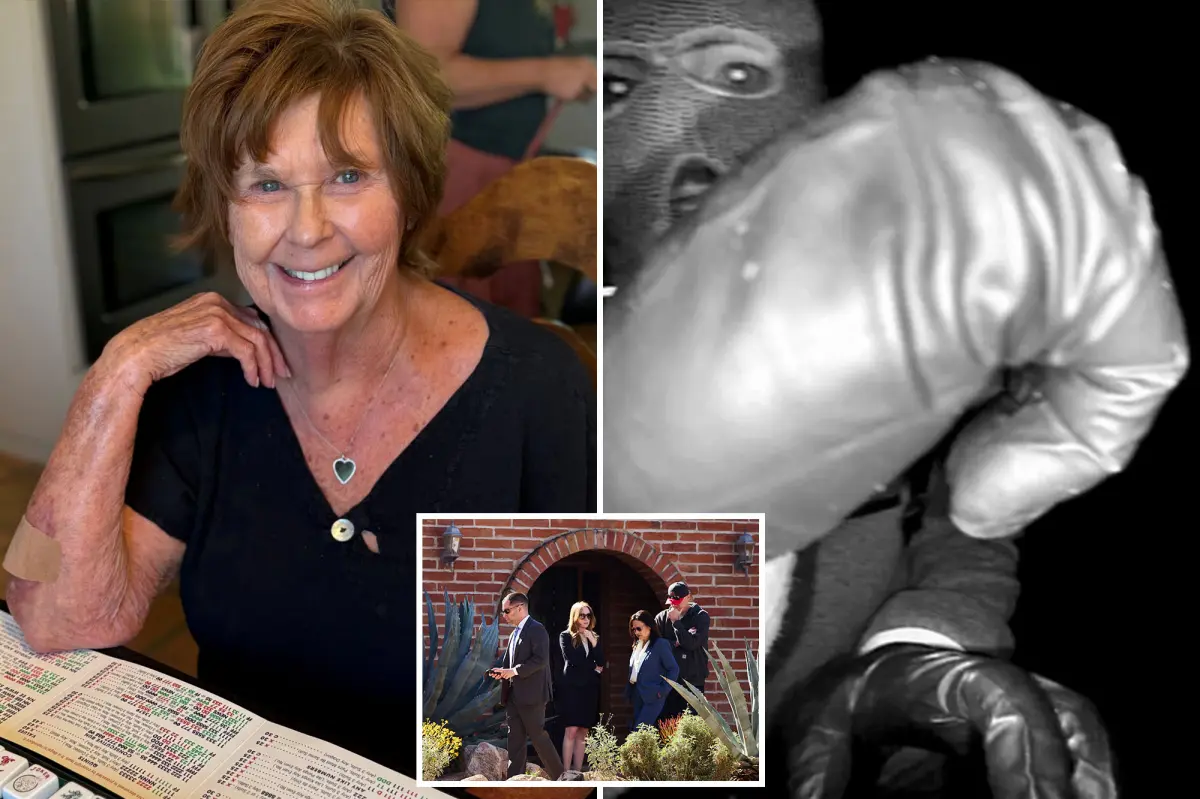
The world of live television is defined by its predictability, its scripted transitions, and the reassuring presence of familiar faces bringing us the daily news. But on February 1, that thin veneer of order shattered completely for Today show co-anchor Savannah Guthrie and her family when her eighty-four-year-old mother, Nancy Guthrie, vanished from her home in Tucson, Arizona. Tucson, a city wrapped in the quiet warmth of the desert, suddenly became the backdrop for an unimaginable real-life nightmare. Nancy, a beloved matriarch whose life was anchored by her family, her quiet routines, and the deep affection of her children, was suddenly gone from the sanctuary of her own home. The initial hours of her disappearance were marked by a suffocating silence, a hollow void where a mother’s voice should have been. For Savannah and her siblings, the terrifying reality of a missing parent was compounded by the relentless glare of the public eye. They were forced to navigate the deepest, most visceral terror a family can endure—the sudden, unexplained abduction of an elderly parent—while the machinery of national media and law enforcement began to churn around them. The quiet desert neighborhood where Nancy spent her days was suddenly transformed into a high-stakes crime scene, blanketed by investigators searching for any trace of the gentle woman who had been so cruelly torn from her life. This was not just a high-profile news story; it was a devastating personal tragedy about a family desperately clinging to the hope that their mother would walk back through the door, untouched by the chaos unfolding around her.
That fragile hope was given a terrifying, yet desperately welcomed, anchor on February 2, when the first concrete communication from the captors arrived. A chilling digital ransom note was delivered, demanding an astronomical four million dollars in bitcoin in exchange for Nancy’s safe return. To a family paralyzed by uncertainty, this demand, cold and transactional as it was, represented a vital lifeline. The author of the note claimed that the eighty-four-year-old was “safe but scared”—a description that both broke her children’s hearts and offered a glimmer of reassurance that she was still breathing, still waiting for them to rescue her. What truly galvanized both the family and the Federal Bureau of Investigation, however, were the hauntingly specific details woven into the message. The writer described exactly what Nancy had been wearing on the night she was snatched from her home, providing intimate details that only someone who had stood in her presence could possibly know. This precision instantly separated the note from the cruel noise of internet attention-seekers, convincing seasoned investigators that they were dealing with the actual perpetrators. For Savannah and her family, this note became a beacon of agonizing hope; it was proof of life, a map toward a resolution, and a call to action. They were ready to do whatever it took, to mobilize whatever resources necessary, to meet the captors’ demands and bring their terrified mother home, believing that time was their greatest enemy but that a path to her rescue had finally been cleared.
However, the fragile optimism that sustained the Guthrie family was brutally shattered just four days later. On February 6, a second email emerged, sent directly to the media outlet TMZ, which cast a dark, suffocating shadow over the entire search. Investigators quickly traced this new communication to the exact same IP address as the original ransom note, confirming a devastating link to Nancy’s captors. But instead of logistics for a safe exchange, this note delivered a psychological blow of unimaginable cruelty. It began with a bizarre, rambling “apology” claiming that Nancy had died accidentally while in their custody. The sheer coldness of this message was staggering: the captors, having realized their leverage had catastrophically shifted, casually expressed regret for her death before immediately pivoting to another transaction, suggesting that her remains could still be returned to her family for a price, though no specific monetary figure was named. For the investigators, this note was a watershed moment, a grim signal that shifted the trajectory of their efforts from a rescue mission to a potential homicide investigation. For Savannah and her siblings, it was an emotional execution. The agonizing transition from believing their mother was scared but alive, to confronting the high probability that she was gone, happened in the span of a single read of a screen, leaving them to mourn in the most public and painful way imaginable.
The day after receiving this devastating, paradoxical message, the Guthrie family made a choice that laid bare their profound desperation and unbreakable love. On February 7, Savannah and her siblings stood before a camera and posted a raw, twenty-second video on Instagram, speaking directly into the digital void to the people who held their mother’s fate. The video was a masterclass in controlled agony and strategic pleading. Savannah, accustomed to addressing millions with journalistic poise, stripped away all professional distance, her voice trembling but resolute as she looked into the lens and said, “We received your message and we understand.” It was a heartbreaking acknowledgment of the captor’s claim of Nancy’s death, a public concession made in the desperate hope of keeping the lines of communication open. She pleaded with the abductors to “return our mother to us,” emphasizing that her return, in whatever form, remains “very valuable to us” and flatly declaring, “we will pay.” This public surrender of leverage, this willingness to hand over millions of dollars even for the tragic return of their mother’s body, illuminated the depth of their grief. It was no longer about a ransom; it was a daughter’s sacred, painful duty to bring her mother’s remains home to rest, showcasing a raw human vulnerability that resonated deeply with people around the world who watched a family beg a faceless killer for mercy.
As the search dragged on, the investigation became a chilling case study in the complexities of modern, digital-age crime, with law enforcement forced to sift through a chaotic onslaught of communications. Following Nancy’s disappearance, a deluge of ransom demands and messages flooded both the family and various media hubs. Law enforcement sources revealed that investigators had to meticulously categorize these messages into three distinct, grim buckets: “the good, the bad, and the ugly.” The messages deemed “good” were those containing highly specific, verifiable information about Nancy and her abduction, which helped map the captors’ movements and motives. The “bad” was epitomized by the devastating February 6 note that detailed her accidental death, a message that broke the case wide open but also crushed the family’s spirits. The “ugly” represented the sea of opportunistic, highly toxic hoaxes sent by sadistic internet trolls looking to exploit a family’s public tragedy for their own sick amusement. Savannah later addressed this agonizing dynamic in an interview on the Today show, showing incredible fortitude as she admitted that while her family was inundated with heartless fakes, she firmly believed the two specific notes they had publicly responded to were authentic. Having to constantly separate genuine tragedy from artificial malice placed an unimaginable emotional burden on the family, forcing them to repeatedly analyze the worst moments of their lives under a microscopic lens.
Today, the desert around Tucson remains quiet, but it is a heavy, unresolved silence that offers no comfort to those left behind. No arrests have been made, no suspects have been paraded before the cameras, and no definitive leads have emerged to break the agonizing gridlock of the investigation. The Guthrie family remains suspended in a cruel, ongoing limbo, caught between the agonizing memory of a mother who was the heartbeat of their lives and the unresolved mystery of her final moments. The public spotlight has softened, yet for Savannah and her siblings, the passage of days does not heal the wound; it only deepens the quiet ache of her absence. This tragedy serves as a stark, haunting reminder of how quickly safety can be stripped away, leaving behind a family left to navigate a world forever changed. As the police files grow thicker and the digital trails grow colder, the hope for justice and, more importantly, for the simple, dignified peace of bringing Nancy home remains a flickering light in the darkness. The world can only watch, hope, and stand in solidarity with a family whose private grief became a public testament to a daughter’s fierce, desperate devotion to her mother, waiting for the day when the silence is finally broken and the truth is laid bare.