



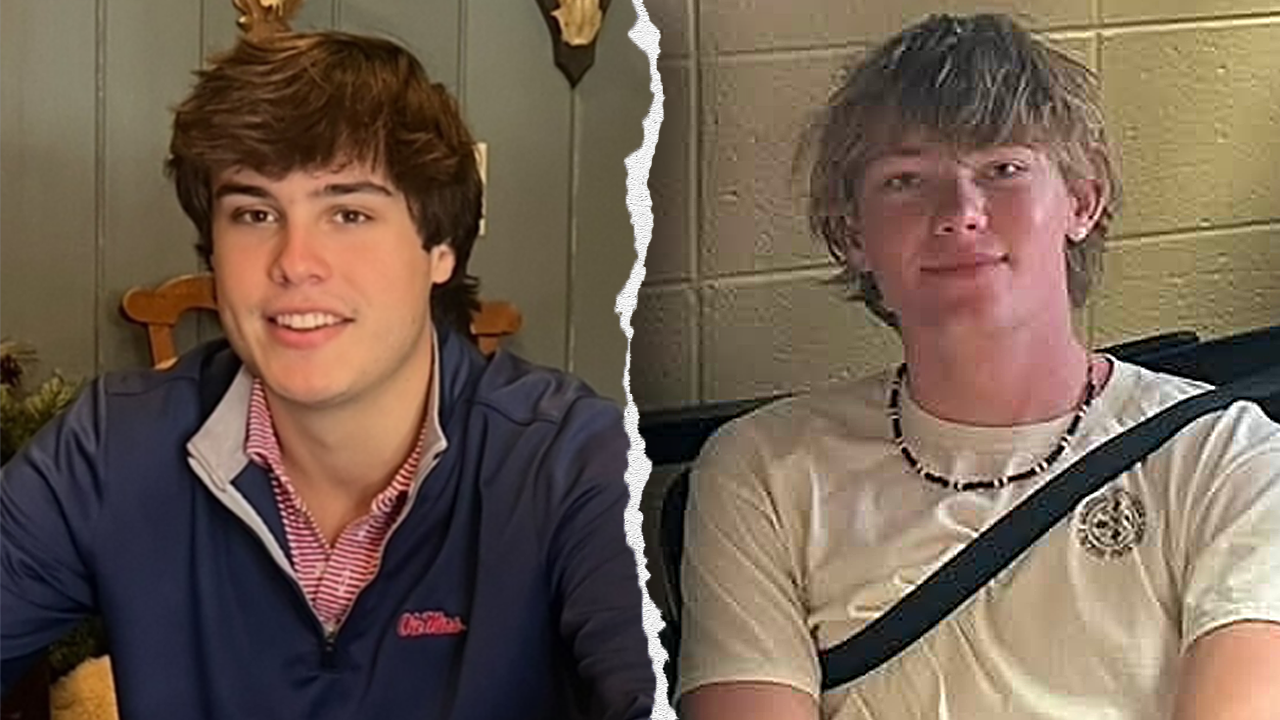
In the quiet college town of Oxford, Mississippi, grief has settled heavily over the University of Mississippi campus after the suspicious deaths of two students in the prime of their young lives. The victims have been identified as Robert Strang, a 20-year-old junior from Atlanta, and Aidan Hamilton, an 18-year-old freshman from Colorado. Neither name is just a name on a police report; each represents a young man with a future, a family, and friends who are now left in shock and sorrow. Their families have asked for privacy and compassion as they navigate the unimaginable pain of losing a son, and that request should be honored by everyone who hears this story. The circumstances surrounding their deaths remain unclear, but the involvement of narcotics detectives suggests that authorities are treating these cases with the seriousness they deserve. In a town where students walk to class, gather at local spots, and share the ordinary rituals of college life, the sudden loss has created a sense of unease that is hard to shake. Parents are calling their children more often, roommates are checking on each other, and the usual rhythm of campus life has been interrupted by fear and uncertainty. No one yet knows what caused these tragedies, and it is precisely that unknown that makes the mourning even harder to bear.
Toxicology reports are expected to be completed as early as next week, according to Mississippi’s commissioner of public safety, Sean Tindell, and the entire community is waiting for answers that may finally explain what happened. Tindell has been careful not to jump to conclusions, telling Fox News Digital that investigators have not uncovered any indications of foul play, but they have not ruled it out either. The final determination will depend on the autopsy reports, witness statements, and the physical evidence gathered from the scenes. One key legal tool hanging over this case is Parker’s Law, a Mississippi statute enacted in 2022 that allows criminal charges to be pursued when an unlawful delivery of fentanyl results in someone’s death. If the toxicology reports find fentanyl in the students’ systems, law enforcement will work with prosecutors to identify whoever supplied the drug and hold them accountable under this law. Tindell’s words make it clear that the state is not willing to let these deaths go unanswered, especially if an illegal substance is shown to be the cause. But for the families waiting by the phone, the legal process offers little comfort right now. They just want to know why their sons are gone, and every passing day without an explanation only deepens the anguish. The promise of expedited reports, thanks to Governor Tate Reeves pledging state resources, offers a sliver of hope that clarity may come sooner rather than later.
At the same time, Oxford police have made arrests in a separate narcotics investigation tied to a local tobacco shop, a development that has added another layer of worry to an already tense community. The store, Puffs Vape, Tobacco and Beer Store, located on Heritage Drive, was raided by police, who say they discovered more than 500 units of kratom along with THC cartridges, gummies, and other suspected narcotics. Two local residents, Yahya Mohamed Mosleh, 51, and Islam Mohamed, 18, have been arrested in connection with the investigation. Kratom, a plant-based substance often used for pain relief or relaxation, is commercially available in many places, but it has been prohibited from possession, distribution, and sale within the city of Oxford since 2019, as well as in Lafayette County. The raid raises serious questions about how easily these products were accessible to young people in a college town, and whether they played any role in the deaths of Strang and Hamilton. It is not yet clear if the raid is connected to the student deaths, and authorities have been careful not to imply a direct link. Even more troubling is the history of the business itself: in 2022, the owner, Amer Alowdi, was indicted on narcotics trafficking charges and fled the country before facing prosecution. How the business remained open after that is a question that has not been fully answered, and it adds to the frustration of parents and residents who want to feel confident that local establishments are safe and lawful. The arrests may represent a step toward accountability, but they also highlight the ongoing challenge of keeping dangerous substances out of a community that is supposed to be focused on education and growth.
Meanwhile, the emotional toll on students has been profound. Reports have described Ole Miss students as being scared to leave their dorms, and that fear is not an exaggeration. Bars and Greek life organizations have clamped down in response to the deaths and a series of druggings that have heightened anxiety across campus. Students who once felt invincible in the safety of a college town are now looking over their shoulders and questioning the choices they make on weekends. Classmates have circulated warnings about a powerful synthetic opioid called cychlorphine, which they say can take multiple doses of Narcan to counteract. The fact that students feel the need to educate each other about such a dangerous substance is a stark reminder of how far the crisis has reached. It is one thing to read about fentanyl or opioid overdoses in distant cities; it is another to wonder whether a friend who went out last night is going to come home. The ordinary anxieties of college life, exams, relationships, finding your place in the world, have been overshadowed by something far darker. Parents are receiving messages from university administrators, student groups are holding meetings, and everyone is trying to process how a place known for Southern hospitality and vibrant campus life has become a source of worry. Behind every statistic about drug use and overdoses are real people, young adults who came to Oxford to learn, to make friends, and to begin their futures, and they now find themselves navigating a tragedy that no orientation session could have prepared them for.
The human side of this story cannot be overstated. Robert Strang and Aidan Hamilton were not just victims; they were sons, brothers, classmates, and friends. Robert was a junior, halfway through his college experience, likely with dreams of graduation, a career, and a future that seemed bright. Aidan was just a freshman, barely into adulthood, with his whole life ahead of him when his journey was cut short. Their families are now facing a reality that no parent should ever have to face, and their loss is felt by everyone who hears their names. In the classrooms, there are empty seats. In the dorms, there are quiet conversations and tears. In the dining halls, students eat in silence, thinking about their own mortality in ways that young people should not have to. The phrase “suspicious deaths” is clinical, but behind it is a human tragedy that cannot be captured in a police statement. The families have asked for privacy and compassion, and that is exactly what they deserve. They should not have to read speculation about their sons online or in the news; they should be allowed to grieve in their own way and in their own time. For their classmates, the grief is also real. Many are struggling to understand how two people who were part of the same campus community could be gone so suddenly, and they are asking themselves hard questions about safety, trust, and the choices they make every day. The loss of a young person is always a reminder that life is fragile, but when it happens in a place where students are supposed to be building their futures, it feels especially cruel.
As the investigation continues, the hope is that the toxicology reports will provide the answers that everyone is desperately seeking. Governor Reeves has pledged state resources to expedite the process, which normally takes weeks but could now take only days in this case. That speed matters to families who are living in limbo, waiting for news that may bring some measure of closure, even if it is painful. At the same time, the broader conversation about drug safety and enforcement in Oxford is just beginning. The raid on the tobacco shop, the arrests that followed, and the warnings circulating among students all point to a community grappling with the realities of substance abuse and the dangers of commercially available products that can be misused. There are legal tools like Parker’s Law to hold suppliers accountable if fentanyl is involved, but those tools can only be used after the evidence is collected and the cause of death is confirmed. In the meantime, the people of Oxford are left to grieve, to worry, and to hope that no other family has to endure this kind of loss. The most important response to a tragedy like this is compassion. Compassion for the families, compassion for the students who are frightened, and compassion for a community that has been shaken to its core. The search for justice will continue in the days and weeks ahead, but the memory of Robert Strang and Aidan Hamilton should be honored not just through investigations and arrests, but through the way the community comes together to support one another. They were young men with futures that should have been filled with promise, and their loss is a reminder of how precious life truly is.