




Focusing on the grueling reality of long-distance road trips, especially those undertaken with young children, requires a great deal of patience, quick decision-making, and deep parental intuition. Tyler Brodsky was driving back home to Oklahoma after a family trip to Florida, navigating the monotonous highways and the endless stretches of asphalt with his two precious young daughters in the back seat. Anyone who has ever traveled with toddlers knows that when a child needs the bathroom, it is not a request that can be delayed; it is an immediate emergency. Pulling into a QuikTrip gas station in Alabama, Tyler was confronted with a classic parental conundrum that highlights the daily logistical hurdles of hands-on fatherhood. Looking at his options, he stood before two doors: a men’s restroom, which he knew all too well could be home to dirty stalls, crude odors, and groups of adult men, and an empty women’s restroom. Guided by a fierce, protective paternal instinct, Tyler decided that he would rather shelter his daughters from an uncomfortable, potentially unsafe environment than adhere strictly to a sign on a door. He ushered his little girls into the vacant women’s restroom, prioritizing their emotional and physical safety over arbitrary social binaries. To Tyler, the choice was simple: his daughters’ well-being came first, and any reasonable person would see that a father shielding his little girls from a rough environment was simply doing his job.
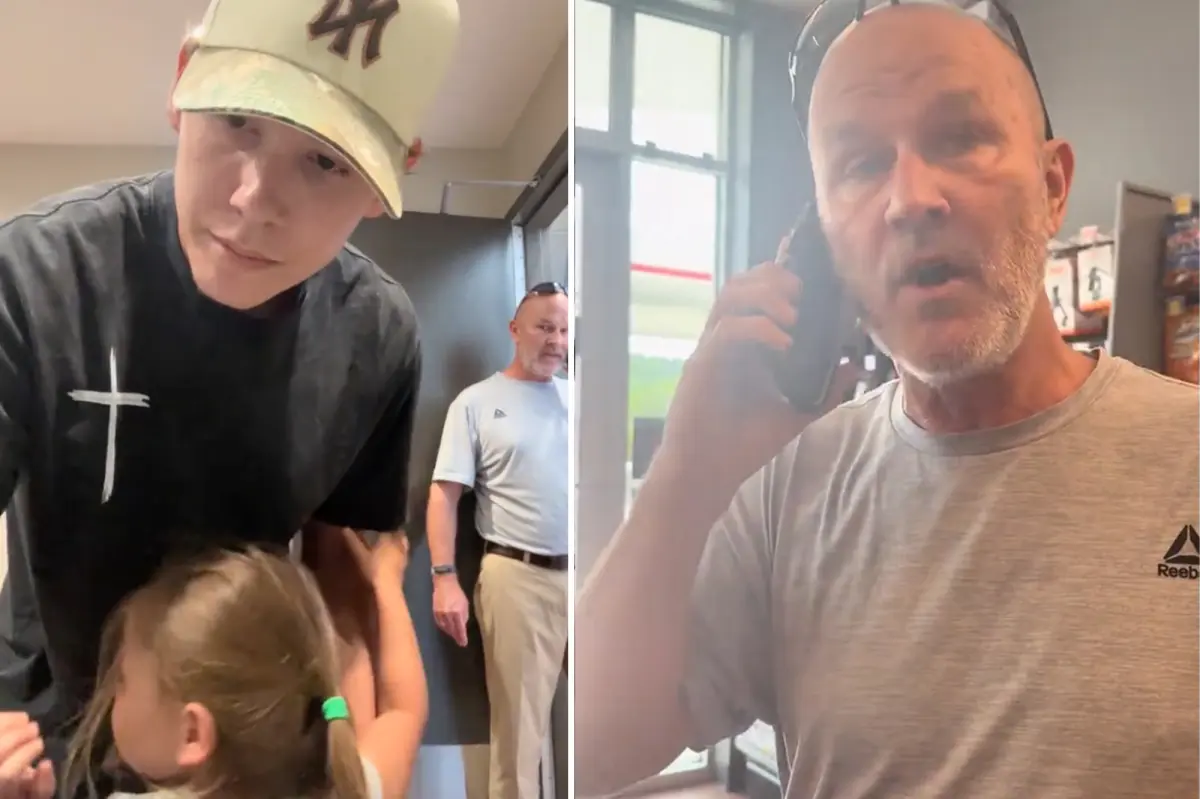
However, what should have been a routine, minor pitstop quickly dissolved into a distressing nightmare of public outrage and confrontation. While Tyler was inside helping his daughters, another customer was alerted by his wife and an ailing mother-in-law that a man had entered the ladies’ room. Instead of knocking on the door to assess the situation logically or speaking with a manager, the customer chose immediate, aggressive escalation. The man confronted Tyler while the young father was in the middle of helping his daughters wash their hands at the sink, pulling out his phone to record the interaction and calling the police. The atmosphere in the restroom shattered as the man shouted accusations, entirely blind to the vulnerability of the two little girls standing bystander to his rage. Overwhelmed by the loud, aggressive presence of a strange man yelling at their dad, Tyler’s daughters burst into tears, terrified by the sudden hostility. The caller painted Tyler as a threat to dispatchers, proclaiming into his phone that a man was using the women’s bathroom, ignoring the reality that this “man” was actually a protective father performing the basic, innocent duties of parenthood under stressful circumstances.
Amidst the rising panic and the heartbreaking cries of the little girls, a beacon of human kindness emerged in the form of a QuikTrip employee. Seeing the unfair harassment unfold, the worker stepped in, apologized directly to the shaken family, and physically closed the door on the aggressive bystander, creating a temporary sanctuary of peace. Outside the door, the hostile customer continued his tirade, arguing with a disturbing level of audacity that Tyler had “no business” being in there and should have instead let the female retail worker take his young children into the restroom. This suggestion highlighted a deep-seated, systemic double standard: the expectation that a devoted father should comfortably hand his vulnerable, frightened daughters over to a complete stranger rather than supervise and protect them himself. When three local police officers arrived on the scene, they quickly cut through the noise of the bystander’s outrage. They assessed the situation with clarity and common sense, instantly reassuring Tyler that he had committed no crime and had done absolutely nothing wrong. The officers recognized that the safety and supervision of minor children by their legal guardian trumped any rigid interpretation of public restroom designations.
The way the situation resolved turned what could have been a deeply traumatizing experience for the children into a powerful lesson in community support and law enforcement compassion. After confirming Tyler had done nothing wrong, the officers instructed the aggressive bystander to leave the gas station immediately, removing the source of hostility from the premises. But it was what happened next that Tyler noted would stay with him forever: the responding officers did not simply leave after resolving the dispute; they took the time to crouch down, look his daughters in the eyes, and speak to them gently to ensure they felt entirely safe. This compassionate act of de-escalation helped heal the emotional shock of the confrontation and left the girls with a warm, comforting image of police officers. To add to this wave of local kindness, the QuikTrip employees stepped forward to apologize again, gifting the crying girls free frozen treats to soothe their spirits. Safely back on the road to Oklahoma, the girls’ tears transitioned into smiles, and they were soon happy, resilient, and safe, thanks to the combined efforts of compassionate workers and thoughtful public servants who chose empathy over anger.
When Tyler later shared the video of the incident on TikTok, he had no idea it would spark a global conversation, quickly climbing to over 13 million views and resonating deeply with parents worldwide. The viral response highlighted a massive, systemic struggle that active fathers, mothers, and caregivers face daily while navigating public spaces with young children of the opposite sex. Tyler was flooded with thousands of emotional messages from grandparents, single mothers, and fellow fathers who shared identical stories of being scrutinized, judged, or outright harassed while simply trying to keep their children safe in public. The incident exposed a glaring design flaw in modern public infrastructure: the severe lack of family-restricted or gender-neutral restrooms. This systematic oversight routinely forces well-meaning parents into uncomfortable, vulnerable positions where they must weigh the physical cleanliness and safety of their children against the fear of public backlash. By speaking out, Tyler transformed a distressing personal incident into an important, highly visible campaign for structural empathy, urging public establishments to install family-friendly spaces that accommodate the practical realities of modern parenting.
Ultimately, Tyler Brodsky’s experience serves as a powerful reminder of the grace and resilience required of modern parents, especially in a world that is often quick to judge and slow to understand. Displaying an admirable level of maturity, Tyler used his massive platform to explicitly ask his followers not to engage in counter-harassment or cyberbullying against the man who had confronted him. Instead, he expressed hope that the man would eventually come across the video, reflect on his hostile actions, and realize the pain and fear he had inflicted on two innocent children. Tyler’s message is a call to action for broader society to extend patience, understanding, and grace to moms and dads who are simply doing their best to navigate the unpredictable challenges of raising kids. As a father who stood his ground to protect his daughters, Tyler proved that parental intuition and the safety of a child will always outweigh the rigid, unfeeling social norms of strangers. In a world full of noise and hasty assumptions, his story stands as a beautiful testament to the enduring power of a parent’s love, reminding us all that empathy is the ultimate safeguard for our communities.