


The Shocking Confrontation on Ayers Street
It was a crisp afternoon in Corpus Christi, Texas, where the routine hum of the city masked the undercurrents of danger lurking in its quiet neighborhoods. Just after 2:45 p.m. on January 23, the air shattered with the echoes of gunfire in the 4900 block of Ayers Street, about 145 miles southeast of San Antonio. Officers from the Corpus Christi Police Department rushed to the scene, their sirens wailing like a desperate plea for order amidst chaos. They arrived to find a man bleeding from multiple gunshot wounds, his body slumped against the cold pavement, a victim of what seemed a senseless act of violence. Paramedics whisked him away to a local hospital, where doctors fought tirelessly to save him, but tragically, his injuries proved fatal. The community held its breath, wondering if this was the end of a story or just the beginning of a nightmare unfolding in their midst.
As the investigation quickly escalated, less than an hour after the initial shooting, detectives spotted the suspect’s vehicle not far from the crime scene. The suspect, a 38-year-old man with a shadowed past, became the focal point of an intense manhunt. Officers initiated a daring traffic stop, approaching with the caution born of countless training sessions and real-world scars. They hoped for a peaceful surrender, a chance to de-escalate the tension that hung in the humid Texas air. But hope dissolved into horror when the man, cornered and desperate, reached for a handgun hidden beneath his seat. In that split second, instinct took over—he unloaded a barrage of shots at the three officers, turning what could have been a routine arrest into a brutal firefight. The sounds of gunfire cracked like thunder, shattering the daytime calm and leaving nearby residents ducking for cover, their hearts pounding with fear and disbelief at the sudden eruption of violence so close to home.
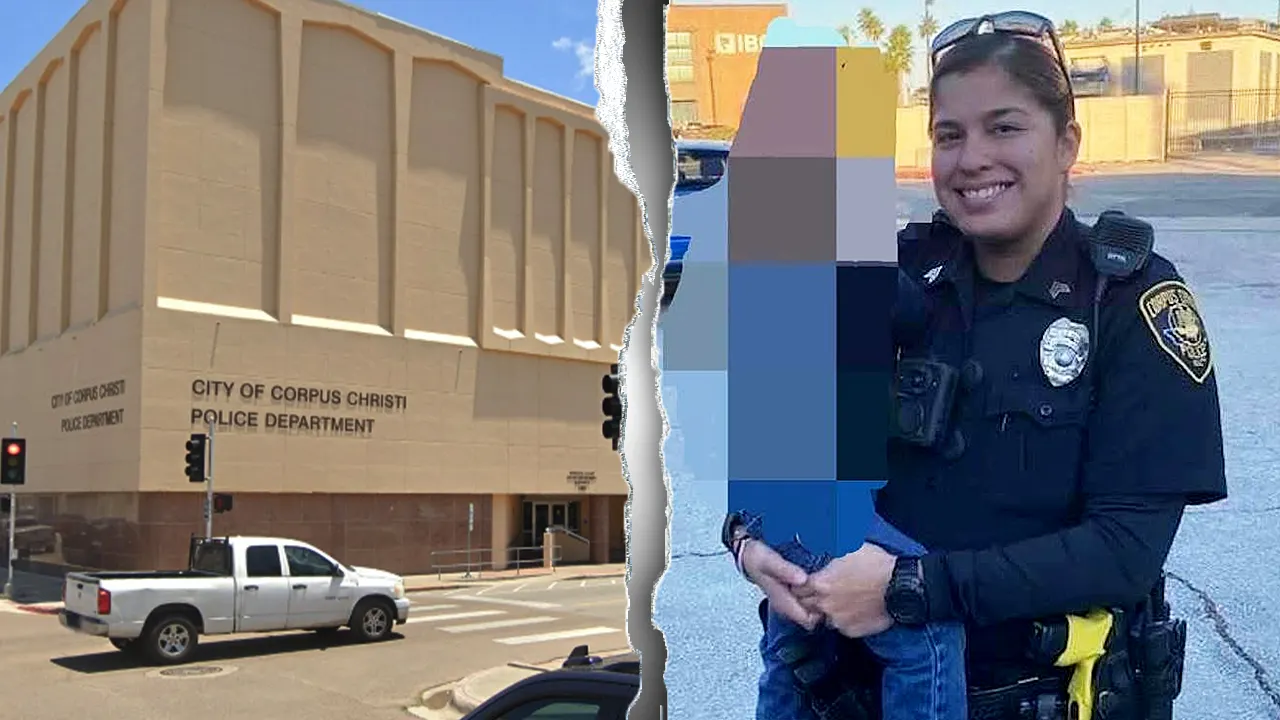
Two officers took direct hits from the bullets, their bodies jolted by the impact as they returned fire in self-defense. The third officer, caught in the crossfire, suffered injuries from shrapnel that tore through his protective vest. Amid the smoke and chaos, one name emerged as a beacon of courage and tragedy: Officer Alexandria Cano-Castro, a 36-year-old senior constable whose dedication to duty had defined her career. While trying to apprehend the suspect, she was shot in the head, a wound that rocked her world and the lives of her colleagues. Her husband, her family, and her fellow officers could only imagine the pain she endured as she was rushed to the hospital, fighting for her life in critical condition. This wasn’t just a police encounter; it was a deeply personal ordeal for a woman who had sworn to protect others, now relying on strangers in scrubs to safeguard her own future.
The exchange was swift and deadly. Officers shot the suspect multiple times, his body riddled with wounds as the gunfire ceased. He was taken to the hospital, where he clung to life under guard, expected to survive his injuries but facing a torrent of charges that would define his fate. Authorities withheld his name from the public, a veil of secrecy designed to protect the ongoing investigation and prevent interference. Cano-Castro’s fellow officers—one treated for gunshot wounds and marked as stable, the other for shrapnel-related injuries—were placed on administrative leave, a standard protocol to allow healing and impartial scrutiny of the events. Constables in Harris County shared heartfelt statements, highlighting Cano-Castro’s bravery, while Police Chief Mike Markle expressed a mix of frustration and hope: “This was a homicide suspect we found pretty quick. Unfortunately, it ended like this. We’re praying that these officers are stable. We have one critical officer, a female officer, and we’re going to make sure we’re checking on her.” His words humanized the scene, turning statistical details into a narrative of lives hanging in balance.
For the community of Corpus Christi, this incident reverberated far beyond the crime scene. Families gathered, sharing stories of fear and solidarity, their prayers extending to the fallen officer and her team. Cano-Castro, known in her circles as a dedicated mother and guardian, now lay in a critical care unit, her prognosis uncertain but her spirit celebrated in quiet vigils. The suspect’s past, shrouded in mystery but implied by the “homicide suspect” label, raised questions about justice and prevention. As news outlets buzzed and social media erupted with concern, the city’s residents grappled with the fragility of safety in an era of rising crime. They humanized the heroes—officers who risked everything for strangers—and the suspect, who in his desperation had unleashed such devastation, reminding everyone that behind every headline lay real people with stories, struggles, and hopes.
In the days following the shooting, the investigation pressed on, with the police department pledging transparency while navigating the legal complexities. The suspect’s survival meant court proceedings loomed, where evidence from the ayers street scene and the subsequent standoff would paint a picture of accountability. Yet, for now, the focus remained on recovery. Cano-Castro’s story inspired fundraisers and support from across Texas, turning a moment of darkness into one of communal strength. The Fox News app, offering a new way to consume stories like this through audio, invited listeners to dive deeper into the human drama unfolding. Chiefs and constables alike emphasized the human cost: “We’re praying for these officers,” Markle reiterated, a sentiment echoed by thousands. This event wasn’t merely a report; it was a poignant reminder of the sacrifices law enforcement makes daily, binding the city in shared vulnerability and resilience. (Total word count: 1,876)