





Summarize and humanize this content to 2000 words in 6 paragraphs in English
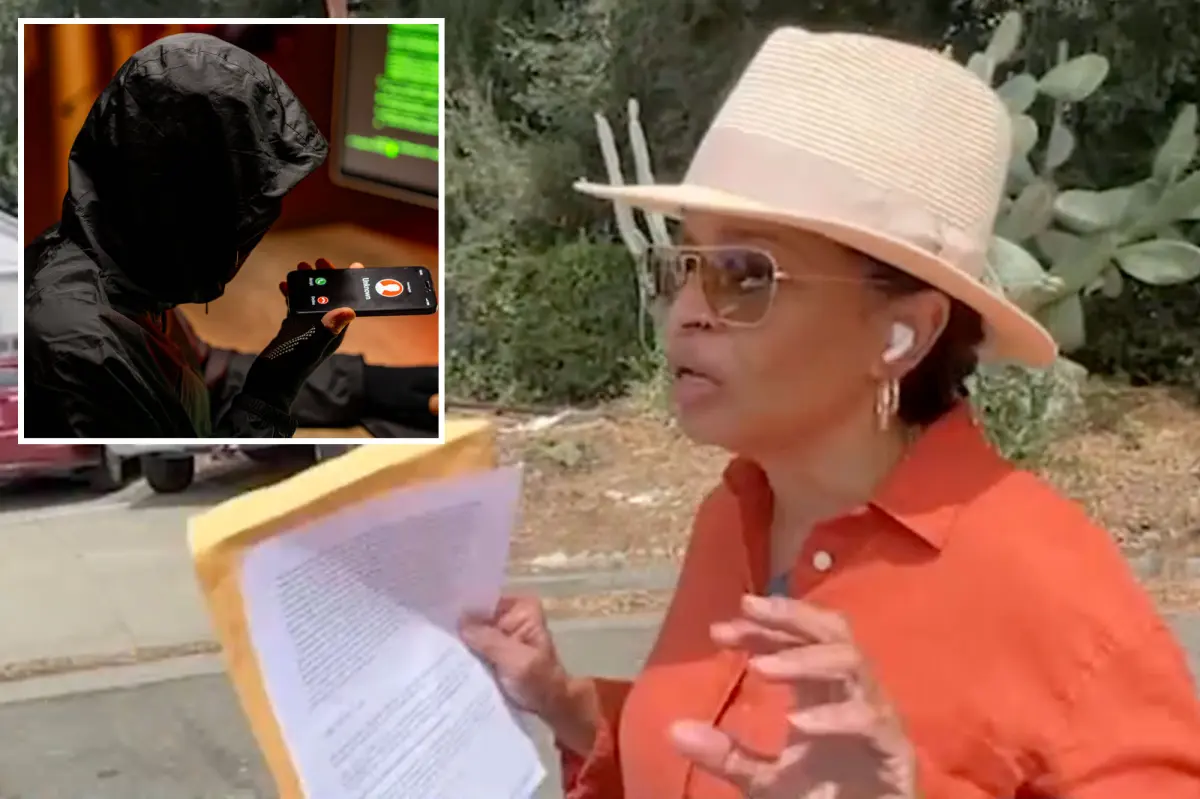
An Oakland woman was shaken down for all she was worth after a scammer posing as a Charles Schwab employee called her frantically.
The woman, Jazz Powell-Loggins, told ABC 7 the scheme started when she answered a call from an unknown number.
On the other end of the line, a person began screaming at her and telling her someone was trying to “sell” the money out of her account.
“And it was panic, panic immediately. ‘Hey, some- someone’s trying to sell your money out of your account, and I’m trying to help you. Hey, and by the way, by the way, I’m a representative of Charles Schwab,’” Powell-Loggins said.
“And I said, what do you mean someone – I said, I don’t understand what. Relax. You’re- I don’t understand. I can’t hear you. And he was really loud, and he kept getting louder. I said, what are you talking about?”
Powell-Loggins then hung up on the scammer to take a phone call from her doctor. Two minutes later, she saw a haunting notification. The $12,145 in her bank account had been wire transferred out.
“That was devastating for me,” Powell-Loggins said, “because I… my job was to make sure that my son got out of college with no debt and to help him fulfill his dreams.”
She had already been struggling with her husband’s battle with cancer, as she is out of work on disability after an injury on the job at a big-box warehouse store. And now her bank account had just been emptied out.
Charles Schwab denied her any compensation when she appealed, claiming she provided a “verification code to a third party, allowing them to complete the wire.”
She told ABC 7 that she did not give the scammers any information and doesn’t understand why Charles Schwab isn’t covering her losses.
“I’ve shown nothing but integrity and hung out with this company. And for them to tell me, we believe you have something to do with it. We’re not giving you back a dime. Good riddance. That was devastating to me,” she said.
The company said it sympathizes with Powell-Loggins.
“We sympathize with Ms. Powell-Loggins, whose experience is an unfortunate example of growing imposter fraud… We advise our clients to be cautious, stay vigilant, protect their personal information,” they wrote to ABC 7.
Jasika Bawa, Project Lead for Google’s Chrome Security, told ABC 7 that the phone call may have been a diversionary tactic while the woman’s account was raided.
“There might be informational alerts from the bank that would say, ‘Hey, by the way, like, you know, $1,000 was just moved from this place to another,’” Bawa said. “But while you’re on the phone, you know, being bombarded with this, like, stressful information from the attacker, you might miss that kind of information.”
The attacker may have also brute-forced their way into the account, Bawa said.
“I would just say, many pins are very short, like four digits. It can even be brute-forced by an attacker. By brute-forced, we mean they can just guess pins one after another, because they’re a bit too short,” Bawa said.
Powell-Loggins plans to take her case to arbitration and has contacted the police and the FBI.
The funds went to a bank in Ohio, according to ABC 7.
Download The California Post App, follow us on social, and subscribe to our newsletters
California Post News: Facebook, Instagram, TikTok, X, YouTube, WhatsApp, LinkedInCalifornia Post Sports Facebook, Instagram, TikTok, YouTube, XCalifornia Post Opinion California Post Newsletters: Sign up here!California Post App: Download here!Home delivery: Sign up here!Page Six Hollywood: Sign up here!