




The streets of New York City are alive with a constant, humming rhythm—a complex tapestry of millions of lives intersecting in a daily dance of ambition, survival, and routine. Yet, beneath this vibrant metropolis lies a challenging reality for the men and women of the New York City Police Department, who step onto the pavement every day knowing that a routine patrol can instantly dissolve into a life-or-death crisis. This fragility of peace was starkly illustrated on a recent Sunday afternoon in the Bronx, a borough known for its rich history but also for the urban struggles that can occasionally erupt into unexpected violence. The catalyst for this specific day’s chaos was a silver Kia Sportage, a vehicle that had been reported stolen from somewhere in the borough and was winding its way through the neighborhood’s grid of streets. In an era where technology assists law enforcement in keeping pace with urban crime, it was modern license plate readers that first flagged the hot car, silently alerting officers to its presence as it traveled along West Fordham Road. For the officers who received the dispatch, the call was not just a statistical alert; it was an urgent call to action requiring an immediate, careful response, as stolen vehicles are frequently involved in secondary, more dangerous crimes. As the patrol units converged on West Fordham Road, the atmosphere grew tense, and the mundane Sunday afternoon quickly evaporated, replaced by the acute focus of police officers preparing for an unpredictable confrontation.
When the officers successfully located the silver SUV, they executed a tactical stop, hoping to resolve the situation quickly, safely, and without incident. Surrounding the vehicle, they stepped out of their patrol cars, projecting voices of authority and urgency, repeatedly ordering both the driver and the passenger to step out of the Kia with their hands visible. In these precarious moments, the human element of policing is laid bare; these officers are not merely figures in blue uniforms, but individuals with families, hopes, and anxieties of their own, trying to navigate a high-risk encounter where a single misstep can be fatal. On the other side of the windshield, the driver faced a critical juncture, trapped by police vehicles and facing the immediate consequences of their actions. Rather than surrendering, the driver chose a path of desperate escalation, a decision that transformed a standard grand larceny auto arrest into an active, violent threat. The refusal to comply with verbal orders often signals to law enforcement that a suspect is willing to use extreme measures to evade capture, forcing officers to brace themselves for a physical confrontation that they always hope to avoid but must continually prepare for.
The tension shattered into pure chaos when the driver suddenly threw the stolen Kia into reverse, using the heavy vehicle as a battering ram against the surrounding officers and an unmarked police car. The screeching of tires, the grinding of metal, and the shouts of officers filled the air as the suspect violently forced his way backward, striking multiple officers in the process. In a desperate bid to clear a path of escape, the driver then threw the vehicle into drive, aggressively turning the steering wheel to the right—directly toward where an NYPD sergeant was standing. With no regard for human life, the driver accelerated, striking the sergeant with enough force to throw him violently to the hard pavement. This terrifying sequence of events, later described in detail by Aneudy Castillo, the assistant chief and commanding officer of Patrol Borough Bronx North, highlights the raw danger officers face; in an instant, a vehicle becomes a multi-ton weapon capable of crushing bones and ending lives, leaving fellow officers to watch in horror as their colleague is struck down in the line of duty.
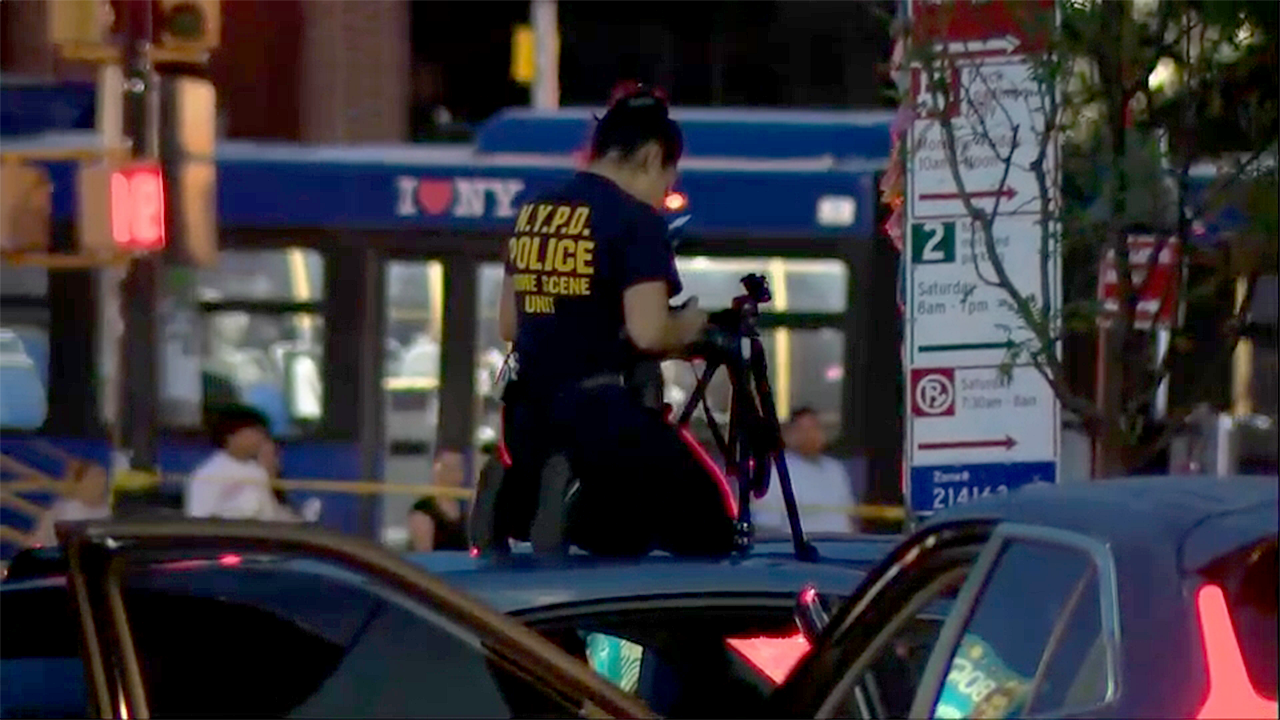
With the sergeant down and the driver continuing his reckless, violent attempt to flee the scene, the situation reached a critical threshold where lethal force became necessary to prevent further tragedy. An officer, who had climbed onto a nearby vehicle to gain a clearer tactical vantage point above the unfolding melee, drew his service weapon and fired, striking the driver and finally bringing the violent rampage to a halt. The immediate aftermath of the shooting was a frantic scramble of adrenaline and emergency medicine, with sirens wailing as additional units and ambulances rushed to the scene on West Fordham Road. The wounded driver was stabilized and transported to Saint Barnabas Hospital, while the injured officers, bruised and shaken from the vehicular assaults, were also rushed to local hospitals. Though the physical wounds of the officers were miraculously deemed non-life-threatening, leaving them in stable condition, the emotional and psychological trauma of surviving such a chaotic, near-death experience is a burden they will carry long after their physical bruises heal.
As the dust settled and investigators began to piece together the details of the confrontation, the public learned a troubling truth about the suspect behind the wheel: he was not a first-time offender making a panicked mistake, but a repeat offender with a violent history. Only months earlier, in February, the very same individual had been arrested for shooting another man, leading to serious felony charges including attempted felony assault, reckless endangerment, and criminal possession of a firearm. This revelation humanizes the systemic frustrations felt by both law enforcement and the communities they serve, raising pressing questions about the efficacy of the justice system and the bail reform policies that allow violent offenders back onto the streets to commit further crimes. For the officers who put their lives on the line, the realization that they were nearly killed by someone who should arguably have been in custody adds a layer of systemic exhaustion to an already perilous profession, highlighting a cycle of crime that leaves communities feeling unsafe and officers feeling increasingly vulnerable.
Now, as the investigation continues and the body-worn camera footage of the incident undergoes rigorous review, charges against the driver remain pending while he recovers under police guard at the hospital. These video recordings will serve as an objective, undeniable digital witness to the terror that unfolded on West Fordham Road, providing a clear record of the split-second decisions made by officers under extreme duress. This incident serves as a stark reminder of the fragile boundary between order and chaos in New York City, and the immense human cost required to maintain it. Ultimately, the survival of the injured sergeant and his fellow officers is a testament to their resilience, but the event leaves an indelible mark on the community, serving as a solemn call for a deeper societal reflection on how to protect both the citizens of New York and the men and women who wear the badge.