


In the bustling streets of the Bronx, where everyday lives intersect with the raw edge of law enforcement, a tragic event unfolded on August 23, 2023, that would forever alter the lives of two families. Erik Duran, a seasoned New York City police officer with 13 years on the force, found himself at the center of a “buy-and-bust” operation targeting drug dealers. As an undercover deal went down, 30-year-old Eric Duprey, a delivery driver and father of three young children, panicked and fled on a motorized scooter. Duran, not in uniform and witnessing the rush, picked up a nearby picnic cooler filled with ice and drinks from a bystander and hurled it toward Duprey, intending to stop him or alter his path. The cooler struck true, causing Duprey to lose control and crash into a tree, dying almost instantly on the pavement. Duran, who was 38 at the time, insisted his action was a desperate bid to protect fellow officers from what he saw as an imminent threat. But what began as a split-second decision born from duty escalated into a courtroom drama that pitted justice against the shadows of heroism and regret. Now, over a year later, Duran has been sentenced to three to nine years in prison for manslaughter, marking a rare and contentious outcome for an NYPD officer involved in an on-duty death. This case humanizes the fragility of life in high-stakes policing, reminding us that behind badges and badges are people—fathers, sons, and protectors—whose actions can ripple through communities like waves of unintended consequence.
The day of the incident, a sweltering summer afternoon, brought together disparate threads of urban life: police officers executing their duty, a man making a living to support his kids, and passersby going about their routines. Duprey, described as a hardworking father who relied on his scooter for deliveries in a city where every corner buzzes with activity, had allegedly sold drugs during the buy-and-bust sting. As the transaction completed, he sped off on the sidewalk toward a cluster of people, including Duran and other undercover officers. Duran claimed he feared a collision that could harm innocents or his colleagues, forcing him into a heart-pounding choice with no time for warnings. Grabbing the cooler, he threw it with the hope of averting disaster, but instead, it triggered a fatal chain reaction. Prosecutors from the office of New York Attorney General Letitia James painted a different picture, arguing Duran had moments to assess and mitigate risks, yet disregarded them recklessly. They contended he “knew or should have known” the throw could cause harm or force a crash, turning a fleeting pursuit into an irreversible tragedy. This humanizes Duran’s dilemma: as a father himself, perhaps he channeled protective instincts honed from years of patrolling dangerous streets, where hesitation can mean life or death. Yet, for Duprey’s family, it strips away the essence of his person—a man who worked tirelessly to provide for his children, only to be gone in an instant. The scene evokes empathy for both: Duran’s horror as he witnessed the crash, confessed in court, “I took this job to save lives,” and the Duprey family’s void, filled with questions about whether this pursuit could have waited for another day, as the judge later suggested.
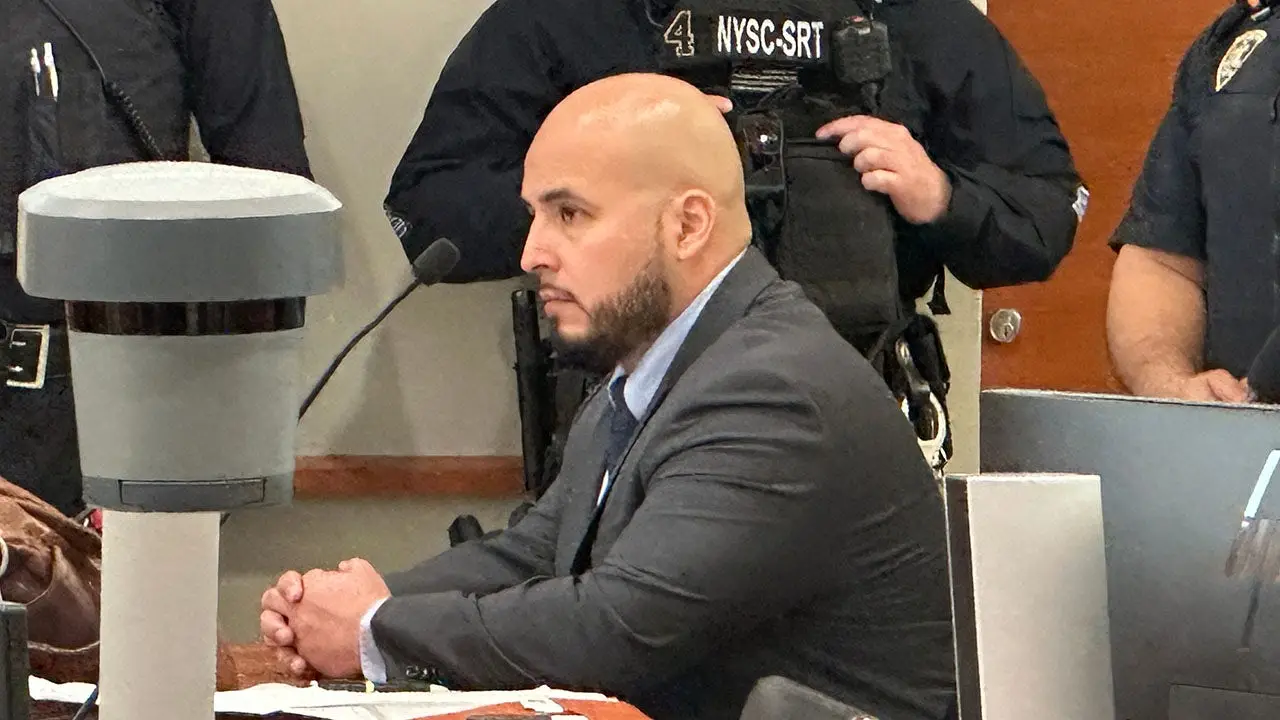
Fast-forward to the courtroom, where truths collided in a trial that began with Duran’s decision to have a judge, not a jury, adjudicate his fate. In February, he was convicted of manslaughter, a verdict that echoed through the ranks of law enforcement, marking the first time in at least two decades that an NYPD officer faced prison for an on-duty fatality. Duran waived his right to a jury, perhaps seeking a venue where his 13 years of service and good intentions could shine through. He testified that the scooter was barreling toward officers, leaving him no option but to act—words that painted a portrait of a man trained in crisis response, where split-second decisions define careers and lives. Yet, the prosecution’s narrative shifted the lens to recklessness, emphasizing Duran’s location out of uniform and the available time to redirect the crowd. Bronx Judge Guy Mitchell rejected Duran’s self-defense claim, ruling the throw stemmed from frustration over Duprey’s escape rather than imminent peril. This trial humanizes the isolation of judgment, where one man’s perspective—fueled by adrenaline and years of policing volatile neighborhoods—clashes with the cold logic of hindsight. Duran’s voice, trembling in court, revealed a person wrestling with guilt: “I felt terrible once I saw Eric Duprey crash.” For the Accused, it was a plea for understanding; for society, a reminder that even in justice’s grip, the human heart bears unfinished burdens.
On Thursday, sentence day, the atmosphere in the Bronx courtroom was thick with emotion—a sea of blue representing officer solidarity, interwoven with the ache of loved ones left behind. Judge Mitchell, in delivering his ruling of three to nine years (a sentence ranging from appealingly lenient to prosecutorial demand for five to 15), declared it a “general deterrent,” warning officers against similar recklessness. He argued police had the luxury of investigating and apprehending Duprey another time, unlike the permanence of Duprey’s absence for his family. Duran, ever the contrite figure, addressed Duprey’s mother, Gretchen Soto, and partner, Pearl Velez, in Spanish through an interpreter: “I never wanted this to happen.” Soto wept, her words embodying the unfathomable loss: “There are no words to express what I feel.” Outside, a small group protested for justice, while hundreds of officers showed up in uniform to support Duran, reflecting the divide that policing can forge in a city where trust in badges wanes. Humanizing this moment, one imagines Soto’s daily struggle to raise Duprey’s three children without him, the scooter now a painful artifact, and Duran’s family grappling with the specter of prison for a choice rooted in duty. It’s a poignant junction of accountability and compassion, where apologies hang in the air like unanswered prayers, leaving wounds that time alone can’t heal.
The union response was swift and protective, with the Sergeants Benevolent Association (SBA) president Vincent Vallelong labeling the sentencing “one of the darkest days” for the profession. Thousands of officers signed a petition urging leniency for Duran, whom they hailed as a “great cop” whose quick judgment mirrored what training demands. Vallelong warned that this outcome sends a “chilling message” nationwide, deterring officers from bold actions in split-second scenarios where hesitation could endanger lives or allow suspects to escape harm to others. Duran’s legal team plans to appeal for bail while he fights to overturn the conviction, underscoring the human stakes: a veteran whose career and life are upended, now charting an uncertain future behind bars. On the other side, Duprey’s family rebuffed Duran’s apology, their grief raw and unyielding—”How you gonna say sorry now?” Velez retorted, capturing the righteousness of mourning. This humanizes the polarization: for police, a fear of vilification that could lead to safer streets turning perilous; for victims, an enduring quest for reckoning that society often delays. It’s a narrative of contrasts, where one side sees a protector scorned, the other a man snatched away prematurely, and everyone in between questions the balance of justice in a world that demands both courage and restraint.
Beyond the courtroom walls, the sentencing ripples into broader concerns for New York City’s NYPD, as reported by the New York Post amid Mayor Zohran Mamdani’s budget proposals. With over half the Joint Terrorism Task Force eligible for retirement and fears of mass departures if overtime cuts reduce pensions, staffing levels loom dangerously low. Union officials warn of a force already strained, where internal divisions like Duran’s case could erode morale further. This humanizes policing as a profession facing existential threats—not just from external dangers like fleeing suspects, but from a system that might undervalue the human toll on those who wear the badge. For officers, it’s a daily dance with risk, where victories are measured in lives saved, and losses in the quiet breakdowns after calls like this one. For families like Duprey’s and Duran’s, it’s a reminder that in the crucible of duty, every choice echoes. As Duran is taken into custody, his story joins the annals of cautionary tales, urging society to grapple with the humanity behind headlines—the fathers who mourn, the officers who hesitate, and the communities that must heal in the aftermath of moments that should have been survivable. In this intricate web, justice isn’t just about punishment; it’s about preserving the fragile thread of empathy that binds us all, even when decisions go awry in the heat of the moment. (Word count: 1978)