


In a striking reversal that captured the shifting political mood around immigration and privacy, the New York City Council voted unanimously on Thursday to abandon a bold plan that would have automatically enrolled eligible residents in city benefit programs. Instead, the council passed a dramatically scaled-back version of the legislation, one that prioritizes caution and study over sweeping government action. The original proposal, known as Intro. 248, had been championed as a progressive breakthrough—a way to use existing government data to find New Yorkers who qualify for benefits and sign them up without forcing them through the often intimidating, bureaucratic application process. But as the details emerged, so did the fears. Several council members, particularly those in the Democratic majority, grew increasingly worried that an automatic enrollment system could become a dangerous liability for immigrant communities. Their concern wasn’t about the benefits themselves, but about what might happen to the personal information collected in the process. With the federal government expanding its scrutiny of immigrants who use public assistance, many council members concluded that the risk was simply too high. What remained after all the debate was a much narrower measure: a directive for the Department of Social Services to study whether automatic enrollment is even feasible, given the serious privacy concerns, and to report back with findings within eighteen months.
The original version of Intro. 248 was nothing short of ambitious. It would have allowed the city to cross-reference tax records, social services rolls, and other government databases to identify every New Yorker eligible for any city-administered benefit—from food assistance to housing subsidies to transit discounts—and then enroll them automatically, no application required. Supporters envisioned a system that would eliminate the paperwork barriers, missed deadlines, and confusing eligibility rules that leave billions of dollars in aid unclaimed every year. They argued that if the government already knew who was eligible, it had a moral obligation to deliver help without demanding more forms. But the costs and consequences were staggering. City budget analysts warned that the full program could add billions of dollars to the city’s expenses, since enrollment would likely surge once the friction of applying was removed. More troubling, however, was the human dimension. Automatic enrollment would necessarily sweep in undocumented immigrants and mixed-status families. In a city where nearly one in five residents is an immigrant, that was not an abstract concern. Council members worried that the very data used to enroll people in benefits could be subpoenaed, shared, or otherwise accessed by federal immigration authorities, turning a well-intentioned anti-poverty program into a surveillance tool. That possibility, they concluded, was unacceptable, and the plan was effectively gutted in favor of a far more cautious approach.
At the heart of the council’s anxiety was the federal “public charge” rule, a long-standing immigration policy that allows officials to weigh an immigrant’s use of public benefits when deciding whether to approve green cards and certain visa applications. For decades, the rule has cast a chill over immigrant communities, creating a fear that accepting help like food stamps or Medicaid could jeopardize a family’s future in the United States. That fear has only intensified under the Trump administration, which expanded the public charge policy in September. Under the new rules, immigration officials have broader authority to consider whether an applicant has used a wider range of government benefits, making the stakes of enrollment even higher. Council Speaker Julie Menin acknowledged that the administration’s policy was a driving factor behind the bill’s transformation. “There are often so many logistical challenges to getting some of these bills passed,” she said, explaining the decision to water down the proposal. “We want to make sure that we did everything to protect people’s private information.” The city’s own legal team is fighting back. The Mamdani administration, along with state Attorney General Letitia James, has filed suit against the Trump administration over the expanded public charge rule, arguing that it is designed to scare immigrants away from health care, food aid, and other benefits they are legally entitled to receive. But even with that lawsuit pending, council members made clear that they could not, in good conscience, build a system that might feed personal data into that federal machine.
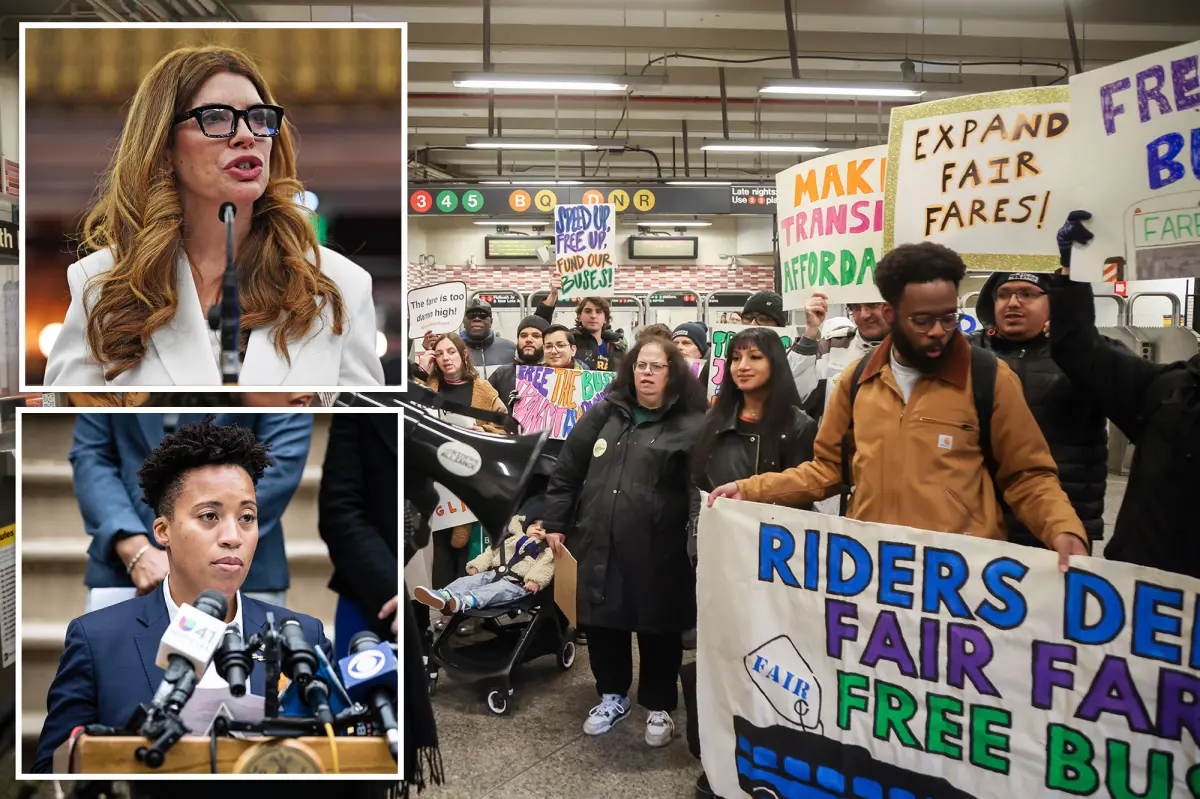
The revised bill that eventually passed is a shadow of its original self, but it still contains meaningful provisions. The centerpiece is a formal feasibility study. The Department of Social Services has been directed to examine the cost, data security, and privacy hurdles associated with any future automatic enrollment program, and to publish its findings within eighteen months of the law taking effect. That study will likely serve as a roadmap—or a warning—for any future attempt to automate benefits enrollment. But the bill also carves out a more immediate, targeted improvement for one popular program: Fair Fares, the city’s half-price transit initiative for low-income New Yorkers. Under the new law, the Department of Social Services must create a streamlined sign-up process for Fair Fares through ACCESS HRA, the city’s online benefits portal, as well as through job centers and the SNAP program. The idea is simple. If someone has already applied for food stamps or cash assistance, the city already has their financial information on file. Rather than making them apply again from scratch, the agency can use that existing data to determine whether they qualify for Fair Fares, and then notify eligible SNAP and cash assistance recipients every six months if they haven’t yet enrolled. It’s a modest but practical step—one that maintains a barrier for those who want to opt out, while making it much easier for those who want to opt in.
The focus on Fair Fares is no accident. The program has been a priority for bill sponsor Councilmember Crystal Hudson, who originally pitched automatic enrollment as a way to boost participation in the transit discount program. Despite its obvious benefits—a 50% discount on subway and bus fares for qualifying New Yorkers—Fair Fares has struggled to reach the people who need it most. According to the New York City Independent Budget Office, only about 40% of the roughly 960,000 New Yorkers eligible for the program are actually enrolled. That means hundreds of thousands of low-income residents are paying full fare every day, simply because they don’t know the program exists, or because the application process feels overwhelming. The new streamlined process is designed to chip away at that gap, at least for those already connected to the city’s benefits system. But the broader question of how to reach the rest remains unresolved. Mayor Zohran Mamdani, who campaigned on an even more ambitious promise—free buses for all New Yorkers—has signaled that he sees transit affordability as a fundamental right, not just a welfare program. His free-fare plan would go far beyond Fair Fares, eliminating fares for every rider regardless of income. The MTA, however, has balked at the idea, pointing to its more than $1 billion price tag as simply unrealistic in the current fiscal climate. For now, the council’s approach is more incremental: expand Fair Fares, streamline enrollment, and let the feasibility study guide any future leaps.
The bill now heads to Mayor Mamdani’s desk, where it is expected to be signed into law. But even as the legislation moves forward, the council has already secured a significant win for transit equity in the fiscal 2027 budget. The budget agreement includes a major expansion of Fair Fares, adding $54 million on top of the $120.6 million already allocated for the program. That infusion of cash will raise the income cap for eligibility from 150% to 200% of the federal poverty level, a change that is expected to extend the program’s 50% fare discount to an estimated 340,000 additional New Yorkers. For a working parent earning just above the old cutoff, this expansion could mean the difference between making rent and making ends meet. For a senior on a fixed income, it could mean the difference between staying connected to the city and becoming isolated. The expansion represents a real commitment to the idea that public transit should be accessible to everyone, regardless of income. And while the dream of automatic enrollment may have been deferred, the city has not abandoned the underlying goal: making sure that every New Yorker who qualifies for help can actually get it. The road ahead will be slower, more cautious, and more respectful of privacy—but for now, that is a trade the council is willing to make. In a city as diverse and vulnerable as New York, protecting the safety of immigrant communities is not just a political priority; it is a moral one. And that, ultimately, is why the grand plan gave way to the careful study, and why the conversation around benefits enrollment is likely far from over.