

The sudden, jarring disruption of a quiet weekday evening is a terrifying nightmare that forty thousand Southern California residents never anticipated when they laid their heads down on Thursday night. In Garden Grove, an otherwise peaceful and vibrant community nestled in the heart of Orange County, the mundane, comforting rhythm of daily life was abruptly shattered by the chilling wail of emergency sirens, flashing red and blue lights reflecting off bedroom windows, and the urgent, persistent knock of police officers ordering families to flee immediately. The source of this widespread terror lay within the complex of GKN Aerospace, a sprawling industrial facility known for manufacturing critical engine components and structures for commercial and military aircraft. What was supposed to be a secure hub of modern engineering and community employment had transformed almost overnight into a ticking chemical time bomb, threatening the very homes of the people who lived in its shadow. At the center of the unfolding disaster was a massive storage tank containing methyl methacrylate (MMA)—a highly volatile, extremely flammable plastic epoxy that had begun leaking. To the thousands of families forced to flee into the chilly night air with nothing but the clothes on their backs, a few hastily grabbed medications, and their beloved family pets, the technical jargon of the aerospace industry mattered little compared to the immediate, visceral fear of losing everything they owned. As they were funneled into crowded, chaotic emergency evacuation centers, these displaced citizens found themselves suspended in an agonizing limbo, watching police cordons expand and wondering if the neighborhoods they left behind would still be standing when the crisis finally abated, transforming the quiet suburbs of Orange County into a national news spectacle of human vulnerability.
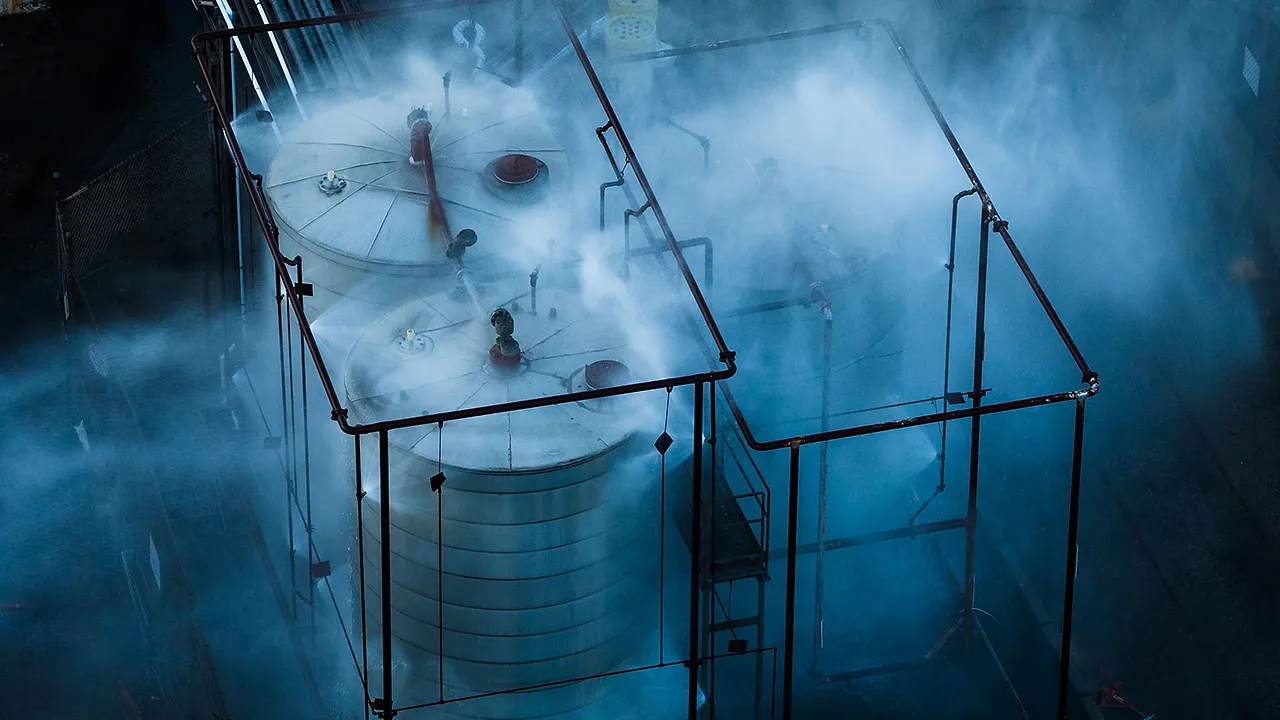
While thousands of families sought refuge in temporary shelters, a heroic and extraordinarily dangerous drama was unfolding under the cover of darkness as emergency crews launched a high-stakes, life-or-death “offensive” mission to neutralize the threat. These modern-day gladiators of public safety, consisting of elite hazardous materials teams, local firefighters, and specialized chemists, actively marched directly into the hot zone while the rest of the world slept. The situation grew exponentially more critical as the internal temperature of the failing primary 7,000-gallon tank began a slow, agonizing climb, rising from 77 degrees Fahrenheit on Friday morning to a blistering 90 degrees by Saturday morning. In an age dominated by remote-controlled drones and high-tech thermal cameras, the human element proved irreplaceable when cooling water continuously sprayed over the facility obscured the tank’s internal temperature gauge from airborne drone lenses. Recognizing the absolute necessity of accurate data to prevent a catastrophic explosion, brave responders voluntarily entered the volatile containment area to manually read the physical dial, facing down the imminent threat of a sudden blast. Armed with nothing but their protective suits, oxygen tanks, and a deep-seated sense of duty, these crews operated under the literal shadow of a chemical reaction that was rapidly spiraling out of control. The steady, one-degree-per-hour climb of the thermometer served as a grim countdown clock, testing the resolve of everyone on scene as they struggled to keep the volatile fluids cool, transforming a routine industrial malfunction into a desperate battle of human endurance against volatile chemistry.
The scientific reality of the crisis presented emergency officials with a pair of terrifying, catastrophic scenarios, leaving absolutely zero margin for error as they fought to prevent a destructive chain reaction. Orange County Fire Authority Interim Chief T.J. McGovern and Incident Commander Greg Covey laid bare the harrowing stakes: if the compromised tank failed structurally, it would unleash a localized environmental nightmare of between 6,000 and 7,000 gallons of highly toxic, corrosive fluid onto the dry Southern California soil. Far more terrifying, however, was the looming threat of “thermal runaway”—a self-sustaining, unstoppable chemical reaction in which the rising heat accelerates the polymerization of the methyl methacrylate, generating even more intense heat in a devastating, runaway feedback loop. This internal pressure cooker threatened to trigger a massive physical explosion, functioning as a colossal detonator that could easily ignite neighboring industrial assets, including a massive 15,000-gallon adjacent chemical tank and multiple nearby fuel reservoirs. To prevent this devastating domino effect, the primary goal of the incredibly risky overnight operation was to neutralize that secondary 15,000-gallon tank, stripping away its explosive potential so that even if the primary vessel detonated, the broader facility would not erupt in a catastrophic, multi-tank firestorm. The tension on the ground was thick enough to cut, with experts from across the United States being frantically consulted in real-time, their collective intellectual minds strained to find a creative cure to a thermodynamic puzzle where a single miscalculation could obliterate the factory and devastate the surrounding community.
Refusing to accept a passive surrender to a catastrophic explosion, emergency crews and chemical experts engineered a highly creative, yet incredibly risky “third outcome” designed to coax the volatile chemical into submission rather than allowing it to erupt. By utilizing a continuous, heavy deluge of master stream water lines, responders hoped to force the volatile, curing plastic epoxy to harden at a slow, controlled rate from the outside in—a delicate process metaphorically compared to the freezing of an ice cube. The success of this desperate operation relied on the fragile hope that the empty void space at the very top of the massive tank would act as a crucial shock absorber, successfully absorbing the extreme overpressure generated by the curing chemical without rupturing the steel containment walls. Simultaneously, heavy machinery operators worked frantically alongside hand crews in the dark to construct an aggressive secondary line of defense on the ground, erecting a complex, temporary network of earthen dikes and dams to redirect any liquid overflows away from municipal infrastructure. The goal of this defensive containment strategy was to guide any escaping toxic fluid down a carefully graded slope and into a secure, commercial holding area, ensuring that the corrosive compound would never seep into local storm drains, delicate river channels, or the vulnerable ecosystem of the nearby Pacific Ocean. This dual-front battle—combining complex molecular chemistry with raw physical logistics—underscored the relentless determination of the responders, who refused to let an industrial failure mutate into a permanent ecological and environmental disaster that would poison the region’s waterways and beaches for generations to come.
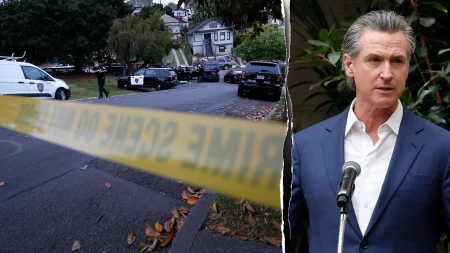
The profound human cost of a potential breach was further emphasized by public health officials, who issued urgent warnings about the invisible, toxic hand of chemical vapors that hung like a specter over the evacuated neighborhoods. Dr. Regina Chinsio-Kwong of the Orange County Health Care Agency provided a chilling, realistic assessment of what would happen if the polymer ruptured and escaped, explaining that the reaction would release a highly toxic, heavy vapor capable of causing severe, long-term damage to the respiratory systems, eyes, noses, and lungs of anyone in its path. This threat of severe inhalation injuries validated the hard decision by Garden Grove Police Chief Amir El-Farra to rapidly expand the mandatory evacuation zone, a move that sent sudden waves of panic through the community but ultimately kept thousands of innocent families safely out of harm’s way. The sheer magnitude of the crisis reverberated all the way to Sacramento, prompting Governor Gavin Newsom to officially declare a state of emergency on Saturday afternoon, a political move that bypassed bureaucratic red tape and cleared the path for massive state resources and personnel from the California Governor’s Office of Emergency Services to flood the region. On the federal level, Representative Derek Tran championed the local cause, maintaining continuous contact with the Federal Emergency Management Agency (FEMA) and the Environmental Protection Agency (EPA) to ensure that the full weight of federal disaster relief stood ready to assist if the worst came to pass. Despite the terrifying stakes, Chinsio-Kwong offered a small sliver of comfort to the weary, anxious crowds watching from temporary shelters: as long as they remained outside the strictly enforced evacuation boundaries, they were perfectly safe, placing their trust in the invisible wall of security built by their local leaders.
As the sun began to dip below the horizon, casting long, dramatic shadows over the silent and abandoned streets of Garden Grove, the battle to stabilize the GKN Aerospace facility ground on with unwavering intensity, embodying the true depth of human resilience in the face of sudden, industrial catastrophe. The eerie silence of the evacuated neighborhoods stood in stark contrast to the buzzing, bright hive of activity at the incident command post, where Commander Greg Covey delivered a defiant, deeply emotional message directly to the displaced community, declaring, “We are not giving up. We are going to do everything we can to mitigate this, protect your residences, protect our environment and get you back home.” This solemn promise served as a crucial beacon of hope for the forty thousand weary mothers, fathers, and children sleeping on hard cots in gymnasium shelters, reminding them that they were not forgotten in the midst of this sterile, high-tech chemical war. The crisis highlighted the profound, often invisible vulnerability of modern suburban life, where the hidden hazards of the high-tech aerospace sector sit cheek-by-jowl with quiet living rooms, family parks, and school playgrounds, requiring constant vigilance and extraordinary bravery to manage when technology fails. As tactical teams continued their tireless vigil through another long, uncertain night—monitoring the slow, dangerous transition of the curing polymer and adjusting the massive water currents—their struggle became a powerful testament to the strength of community, teamwork, and raw determination. The ultimate resolution of the Garden Grove crisis remained unwritten, but the courage of the crews standing on the chemical front lines ensured that whatever the final outcome, humanity had met the challenge with unwavering strength, shielding a community from disaster through sheer will and scientific ingenuity.