




The Crucible of Diplomacy: Inside the High-Stakes Fight Over Iran’s Nuclear Future
The High-Stakes Brinkmanship of a Resumed Diplomatic Gambit
                    __.-:/*/*/*:.-__
                _.-'                '-._
              .'                        '.
             /
            |   [ NUCLEAR NEGOTIATIONS ]   |
            |        U.S. <==> IRAN        |
                                         /
              '.                        .'
                '-._                _.-'
                    '--...____...--'
The impending resumption of high-level U.S.-Iran negotiations marks a critical, potentially volatile juncture in modern geopolitical history, as both Washington and Tehran prepare to confront the most intractable conflict in their modern relationship: the ultimate fate of Iran’s nuclear program. For years, the shadow of a devastating military conflict has hung over the Middle East, driven by President Donald J. Trump’s consistent assertion that his primary geopolitical motivation is the absolute prevention of a nuclear-armed Iran. This long-standing policy objective has acquired a newfound urgency following a series of coordinated, highly destructive U.S.-Israeli military strikes last year targeting Iranian nuclear infrastructure, most notably the sprawling enrichment and research hub outside the historic city of Isfahan. While intelligence assessments suggest these strikes caused severe physical damage to key logistics networks and subterranean vaults, the lack of independent international monitoring has left the true condition of the facility shrouded in mystery. For over half a century, Tehran has maintained that its research endeavors are entirely peaceful, aimed at energy independence, medical advancement, and scientific progress. Conversely, Washington and its allies view these claims with profound skepticism, arguing that Iran’s steady accumulation of near-weapon-grade fissile material is a clear precursor to a weapons program. As negotiators prepare to meet, they do so under the heavy realization that this round of diplomacy represents a final chance to avert an escalatory spiral that could permanently destabilize the region.
The Battle Lines of Enrichment: A Clash of Timelines and Red Lines
ISOTOPIC SEPARATION: THE REFINEMENT SPECTRUM[0.7% Natural U] —> [3.67% Civil/Medical] ———> [60% Near-Bomb] -> [90% Weapons-Grade]
| | | |
Raw Mining JCPOA Limit (2015) Current Stockpile Weapon Target
At the core of the upcoming diplomatic battle is the process of uranium enrichment—the highly complex technological procedure of spinning gaseous uranium in sophisticated centrifuges to isolate the fissile uranium-235 isotope, transforming raw mineral fuel from a low-grade civilian energy source into the explosive core of a nuclear weapon. To eliminate this proliferation pathway, the United States is demanding a strict, verifiable halt on all Iranian uranium enrichment for a minimum of twenty years, a position that the Trump administration views as non-negotiable for any lasting security framework. In response, Iranian negotiators have countered with an offer of a ten-year suspension, framing any longer commitment as an unacceptable violation of their national sovereignty and scientific development. The space for compromise remains exceedingly tight, though President Trump hinted at flexibility during a June 14 phone interview with The New York Times, suggesting he might accept a fifteen-year freeze while emphasizing his desire for a permanent, lifetime ceiling on low-level enrichment. This approach stands in contrast to the 2015 Joint Comprehensive Plan of Action (JCPOA) brokered under President Barack Obama, which allowed Iran to enrich uranium to low levels for fifteen years before its main restrictions expired—a deal that President Trump unilaterally withdrew from during his first term. Leading the current American delegation is Vice President JD Vance, who has adopted a highly hawkish stance, stating that the administration will settle for nothing less than a complete, absolute moratorium on all enrichment activities throughout the suspension period. By publicly contrasting this framework with the 2015 agreement, Vance has signaled that the United States will not accept any mechanism that allows Tehran to maintain operational enrichment facilities, thereby drawing a clear line that will test the limits of Iranian diplomacy.
The Ghost Stockpile: Tracking Iran’s Near-Bomb-Grade Material
                  IRAN'S ESTIMATED URBAN STOCKPILE
                     (Status as of June 2025)

         +-----------------------------------------+
         |  60% Enriched Uranium: ~970 lbs        | ===> Near-Bomb-Grade
         |  (Sufficient for multiple devices)      |
         +-----------------------------------------+
         |  Low-Enriched Uranium: ~11 Tons         | ===> Power & Research
         |  (Requires further centrifugation)      |
         +-----------------------------------------+
Compounding the difficulty of these negotiations is the issue of Iran’s substantial and highly volatile physical stockpile of enriched uranium, which has grown unchecked since the collapse of the 2015 nuclear agreement. Following the U.S. withdrawal, Iranian scientists steadily increased enrichment levels, amassing a stockpile that the International Atomic Energy Agency (IAEA) estimated in June 2025 to include approximately 970 pounds of uranium enriched to 60 percent purity—just a short technical step away from the 90 percent threshold required for a functional nuclear weapon—alongside roughly 11 tons of lower-enriched material. The physical survival of this stockpile remains a major variable following the U.S.-Israeli airstrikes on Isfahan and other facilities, which targeted the secure vaults where the central stores of near-bomb-grade material were believed to be held. Because Tehran barred international inspectors from accessing these sites in the wake of the attacks, global intelligence agencies are currently working without verified data on how much of this material was destroyed, relocated to deep underground micro-tunnels, or remains intact. To resolve this uncertainty, United States negotiators are demanding the total and irreversible elimination of the entire existing stockpile as a prerequisite for any sanctions relief. American officials have floated two potential pathways to achieve this goal: either a comprehensive, internationally monitored “downblending” process to dilute the highly enriched material back to safe, reactor-grade levels, or the complete physical export of the cache to a neutral third country, repeating a successful logistics maneuver from the 2015 agreement that Iran has so far refused to publicly authorize.
Ground Zero of Proliferation: The Fate of Iran’s Subterranean Strongholds
                  UNDERGROUND ARCHITECTURE: NUCLEUS OF TENSION

      [Surface Levels]   =========================================== (Ground Level)
                                  |                       |
                                  v                       v
      [Deep Earth Tunnels]   (Natanz Facility)       (Fordo Facility)
                             Centrifuge Halls        Under-Mountain Vaults
                             *Target of Dismantlement Demands*
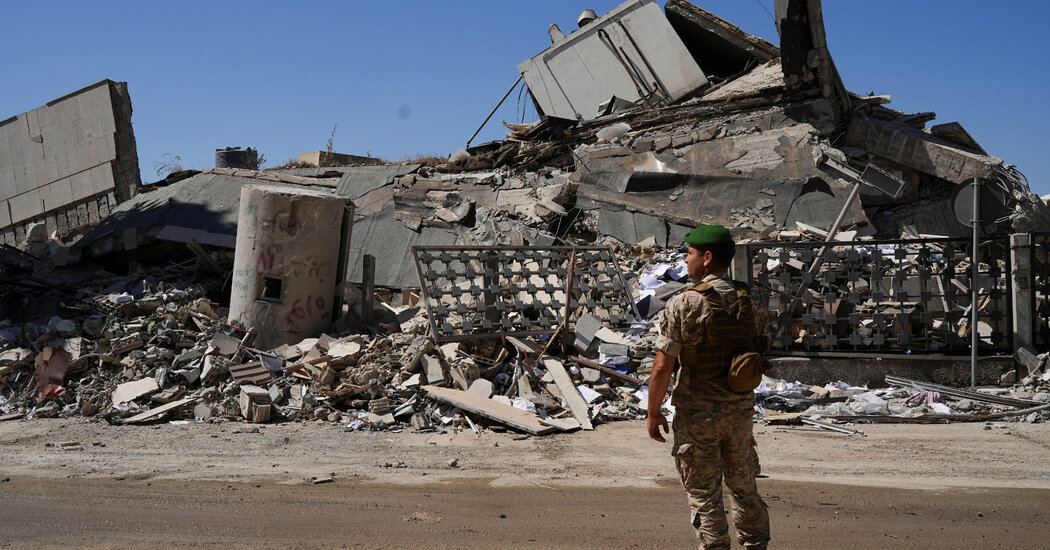
The physical infrastructure of Iran’s nuclear program presents a major challenge for negotiators, with the United States demanding the complete dismantlement of the country’s most heavily fortified facilities. Under the proposed U.S. framework, Iran would be required to completely decommission its primary enrichment plants at Natanz and Fordo, alongside the deep-earth storage tunnels of Isfahan, while also accounting for any potential undeclared military research sites buried deep within the country’s mountainous interior. Tehran has strongly rejected these demands, asserting that dismantling these installations represents a surrender of its sovereign rights under the Nuclear Non-Proliferation Treaty (NPT) and insisting that at least one primary facility must remain operational for peaceful research purposes. This position is a major point of friction for American policymakers, who point to the structural limitations of the 2015 JCPOA as a cautionary tale. That previous accord permitted Iran to maintain its physical installations under the condition that they be repurposed for civilian, non-fissile research—a compromise that critics argue allowed Iranian engineers to maintain and keep their advanced centrifuge infrastructure ready for use. By allowing these sites to remain intact, the deal enabled Iran to rapidly resume high-level enrichment once the diplomatic framework dissolved. As a result, the current U.S. negotiation team is taking a much harder line, arguing that leaving any centrifuge infrastructure intact—even under civilian monitoring—poses an unacceptable risk of a rapid breakout.
The Blind Spot: Restoring International Eyes in the Iranian Desert
THE MONITORING BLACK BOX (POST-STRIKE)[ IAEA Headquarters ] ========== (No Communication Link) ==========> [ Iranian Sites ]
Vienna, Austria Natanz / Fordo
| |
v v
“Demanding Snap Inspections” “Monitors Barred”
Any potential agreement will depend on the establishment of a rigorous, transparent inspection regime to verify compliance and rebuild trust. Currently, the international community is operating in a complete intelligence vacuum; the IAEA has had no direct visibility into Iran’s primary nuclear facilities since Tehran expelled all international inspectors and shut down monitoring equipment in retaliation for last year’s airstrikes. To address this issue, the Trump administration is demanding an intrusive verification framework that would grant international monitors “snap” access to any location within Iran—including undeclared military bases and sovereign research complexes—at any time and without prior warning. Achieving this level of access will require navigating deep-seated Iranian concerns regarding espionage and national security, as Tehran has long accused Western intelligence agencies of using international inspections to gather targeting data for military strikes and sabotage campaigns. Despite these deep divisions, a small opening for diplomacy emerged on Thursday when IAEA Director-General Rafael M. Grossi confirmed that both Washington and Tehran have expressed a desire for his agency to serve as the central verifying authority for any prospective deal. For the IAEA, managing this process will require balancing the U.S. demand for unrestricted access with Iran’s insistence on protecting its sovereign military secrets, all while operating under the shadow of past military actions.
Chasing the Sixty-Day Mirage: The Arduous Path to a Lasting Accord
THE DIPLOMATIC CLOCK: ONE-YEAR OUTLOOK[ Day 1 ] ——————–> [ Day 60 ] ——————-> [ Beyond ]
Talks Begin Initial Target Extended Negotiations?
Baseline Verification Technical Treaties Long-term Implementation
As the negotiations begin, the most pressing issue may be the extremely limited timeline available to resolve these deeply complex technical and political questions. The initial framework sets out a remarkably short sixty-day timeline to reach an agreement, a window that nuclear non-proliferation experts view with considerable skepticism. Darya Dolzikova, an expert in nuclear weaponry and regional security at the London-based Royal United Services Institute (RUSI), has warned that resolving decades of mutual distrust and technical disagreements within two months is an incredibly difficult task. She emphasizes that before any meaningful compromises can be drafted, the two sides must first establish a verified baseline of Iran’s current nuclear footprint—an enormous scientific task that is further complicated by the damage from recent airstrikes and the prolonged absence of international inspectors. While President Trump has sought to ease some of this pressure by clarifying that the sixty-day deadline is not a “hard” cutoff and can be extended by mutual consent, the urgent nature of the situation remains clear. Each day the impasse continues, the risk of miscalculation, technological progress, or renewed military action grows. Ultimately, these negotiations represent more than just a debate over centrifuge counts and enrichment percentages; they are a critical test of whether high-stakes diplomacy can still resolve one of the world’s most dangerous security challenges, or if the path toward conflict has become unavoidable.