





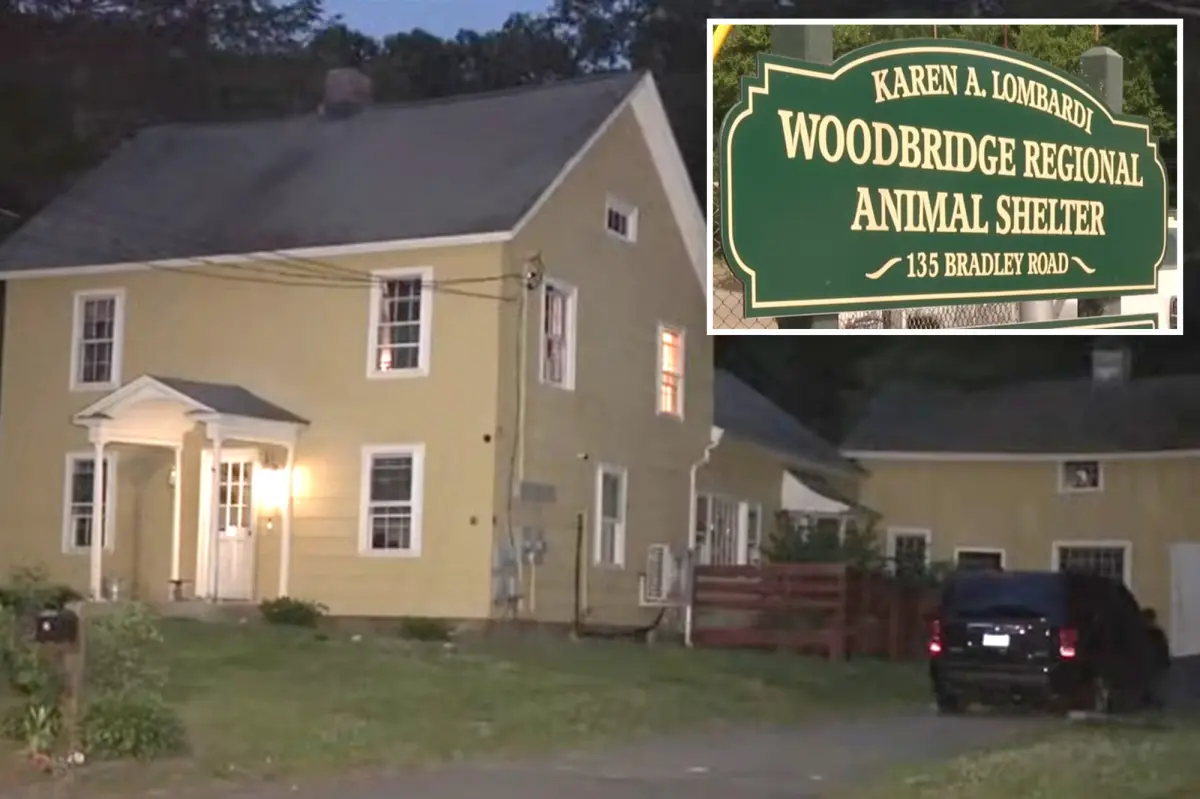
Nested within the rolling, tree-lined hills of New Haven County, Connecticut, lies the picturesque town of Beacon Falls—a place where the chaotic rush of modern life seems to slow down to a gentle, predictable hum. Home to just about 6,000 residents, this historic valley community has long prided itself on its quiet charm, where neighbors recognize each other at local diners, children play safely in open yards, and doors are rarely locked with a sense of urgency. It is the quintessential small New England town, where safety and solidarity are taken for granted, and the local news rarely ventures beyond school board updates, high school sports, or seasonal town festivals. Yet, this comforting veneer of suburban tranquility was violently shattered last week when a fleet of emergency vehicles converged on a residence on Munson Road. Responding to a call regarding a vague and unsettling “suspicious incident,” local authorities crossed the threshold of a seemingly ordinary home, only to uncover a silent, agonizing crisis of animal neglect that has left the entire region reeling. The dark mystery unfolding behind those closed doors has forced this close-knit community to confront a heartbreaking reality, prompting deep soul-searching among residents who are struggling to comprehend how such profound suffering could occur completely unnoticed in their own quiet backyard.
Upon entering the Munson Road residence, police officers and animal welfare specialists were confronted with a sensory and emotional nightmare that defies easy description. Inside the dim, neglected corridors of the home, rescue workers embarked on a grueling search that eventually cataloged dozens of domestic and exotic animals, revealing a tragic microcosm of survival and loss locked side-by-side. Officers successfully rescued 21 living animals who were clinging to life in deplorable conditions: four adult dogs, nine fragile puppies, seven bewildered cats, and a solitary, resilient leopard gecko. However, the relief of saving these survivors was quickly overshadowed by the grim discovery of seven other animals who did not survive the ordeal. Scattered throughout the residence were the lifeless remains of a cat, two chickens, several pet mice, a bearded dragon, and a snake. The sheer variety of species involved points to a chaotic and desperate situation where the basic tenets of care, nutrition, and sanitary shelter had completely collapsed, leaving these vulnerable creatures to suffer in silence. For the first responders who routinely deal with traffic accidents and minor property disputes, the task of documenting and extracting these animals was a profoundly haunting experience, highlighting the immense physical and psychological toll that severe neglect cases inflict not only on the victimized animals but also on the humans who must step in to rescue them.
To understand how a home can transition from a sanctuary into a tomb for household pets, it is necessary to examine the complex, often tragic human dynamics that underlie severe animal neglect and hoarding. While feed-induced anger and outrage are natural reactions to such discoveries, psychologists and social workers note that these situations rarely stem from pure, calculated malice; instead, they are frequently the catastrophic byproduct of severe mental health crises, overwhelming personal grief, cognitive decline, or debilitating isolation. Oftentimes, an individual begins acquiring animals with the best of intentions, driven by a deep love for creatures or a profound desire to rescue those in need, but as their own mental, physical, or financial health deteriorates, their ability to manage the growing population collapses entirely. Shame, fear of judgment, and an inability to ask for help create a clandestine prison of isolation, preventing the individual from reaching out to society until the situation reaches a tipping point of devastation. By humanizing the tragedy to view it not merely as a localized crime but as a symptom of a fractured social safety net, we can begin to understand the critical importance of mental health intervention, community outreach, and the necessity of keeping a compassionate eye on those who may be struggling in silence behind closed doors.
The sudden exposure of the horrors on Munson Road sent shockwaves of disbelief, grief, and confusion radiating through the small streets of Beacon Falls, transforming the neighborhood into a space of collective mourning and urgent speculation. Because the town is so small and communal bonds run so deep, the tragedy felt deeply personal to the residents, many of whom walked or drove past the house every day without ever suspecting the silent crisis unfolding inside. Local resident Courtney Britto captured the widespread sense of disorientation when she noted how incredibly out of the ordinary such an event is for a quiet, supportive community where people genuinely know their neighbors. Brooke Blessing echoes this profound disbelief, explaining that a discovery of this magnitude is simply something one would never expect to happen in their lifetime, let alone in their own peaceful neighborhood. Amidst the swirling rumors and the heavy silence of the ongoing police investigation, residents like Lucy Fernandez have channeled their shock into active empathy, speaking for many when she publicly questioned what can be done to assist the surviving animals and where the community can direct its collective grief and energy to make a tangible difference. This shift from initial horror to a protective, rallying cry of solidarity illustrates the resilient spirit of Beacon Falls, proving that when tragedy breaks the peace of a small town, the community’s natural instinct is to heal the wounds through unified action and compassion.
In the immediate aftermath of the house clearing, the monumental task of caring for the traumatized survivors fell upon the shoulders of the Woodbridge Regional Animal Control, whose staff and volunteers have worked around the clock to provide medical evaluation, physical rehabilitation, and emotional comfort to the rescued animals. The physical reality of managing twenty-one rescued pets—including nine newborn puppies and several cats that require extensive veterinary diagnostics—places an immense, sudden strain on the shelter’s limited space, staffing, and financial resources. Recognizing the steep climb ahead, the organization took to social media to issue an urgent, heartfelt appeal to the public for material support, emphasizing an immediate need for practical everyday items such as pet food, clean towels, Clorox wipes, and laundry detergent to sanitize the highly contaminated environments. The response from the surrounding communities was instantaneous and overwhelming, as donations began pouring into the shelter, demonstrating how a call for help can mobilize an army of quiet heroes eager to restore dignity to these neglected animals. This outpouring of generosity serves as a powerful reminder of the profound, invisible thread that binds human beings to the animal kingdom, illustrating that even in the wake of severe human failure, humanity’s capacity for kindness, restoration, and collective grace remains an unstoppable force for good.
As the healing process begins for the rescued animals, a solemn silence hangs over the legal and investigative dimensions of the case, with the Beacon Falls Police Department, the Woodbridge Police Department, and the Connecticut State Police collaborating to reconstruct the timeline of events that led to this disaster. Law enforcement agencies have remained highly tight-lipped about the identities of the homeowners, potential charges, or the specific circumstances that originally drew officers to the Munson Road property, leaving many questions unanswered as they meticulously build a comprehensive case. This methodical approach is critical to ensuring that justice is served fairly, whether that means prosecuting deliberate abuse or mandate-ordering intensive psychological and social intervention for those responsible. Ultimately, the tragedy on Munson Road is a sobering wake-up call for Beacon Falls and small towns everywhere, highlighting the vital importance of community vigilance, the value of checking in on isolated neighbors, and the necessity of maintaining robust, accessible pathways for both animal and human assistance. As the investigation continues to unfold in the coming weeks, the people of Beacon Falls will undoubtedly carry the lessons of this tragedy forward, emerged not as a community defined by a single dark event, but as one defined by its luminous capacity to protect, heal, and care for the most vulnerable among them.