



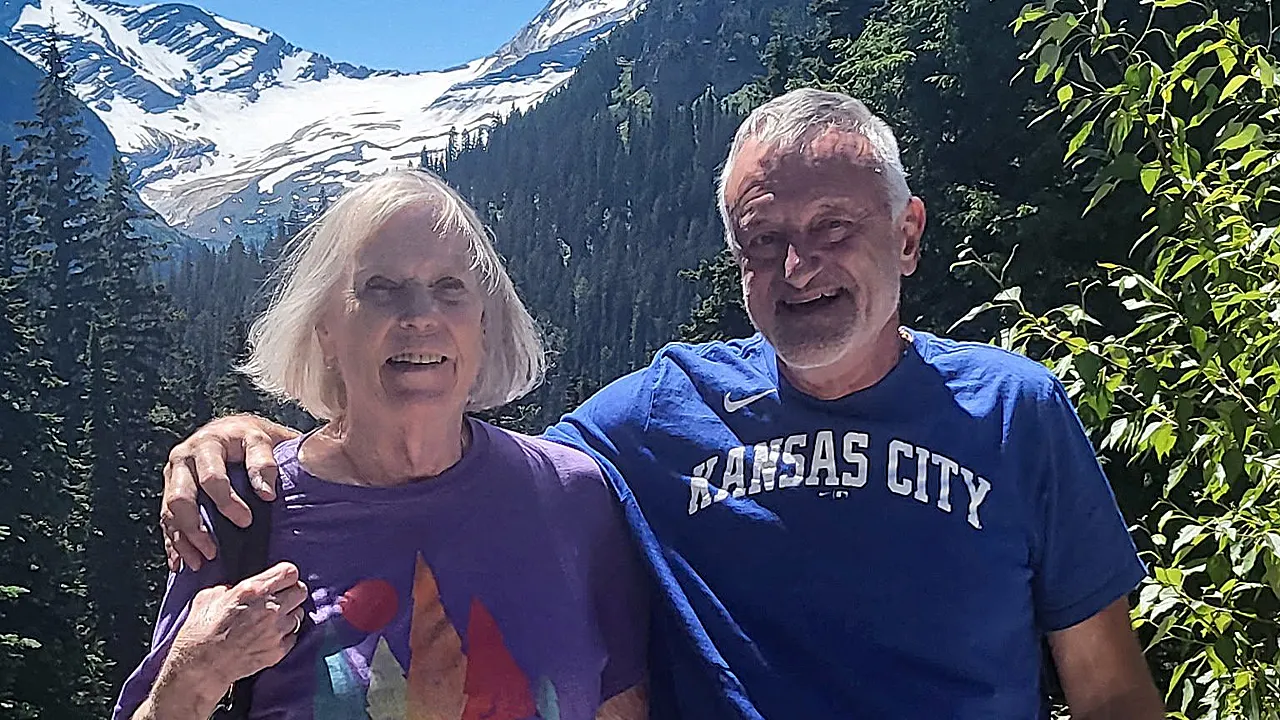
Rex Schowengerdt had always been the kind of person who stopped to look twice at something beautiful. At 72, the Missouri grandfather still carried a boy’s sense of wonder, a deep love for the outdoors, and a quiet eagerness to share that joy with the people he treasured most. That is why his family trip to Glacier National Park in Montana felt so perfect. He was excited, truly excited, to revisit the places that had meant so much to his family over the years, and to make new memories with his wife of 50 years, his sister, and his brother-in-law by his side. But on the afternoon of July 11, a scenic drive along the famous Going-to-the-Sun Road turned into every family’s worst nightmare. Near an area called Rimrocks, a falling rock crashed through the roof of the hardtop Jeep in which Rex was riding, striking him violently in the head. His wife was sitting right beside him, and she watched the entire heartbreaking moment unfold, holding him through the horror as he was gravely injured. What began as a nostalgic journey through towering peaks and sweeping valleys suddenly became a desperate fight for life on the mountain.
The road itself is one of America’s most breathtaking drives, a 50-mile stretch of highway that winds through the rugged landscape of Glacier National Park, known for its sharp curves, steep drop-offs, narrow lanes, and massive rock faces. For millions of visitors, it is a place of awe and adventure. But the same rugged terrain that makes the park so spectacular also makes it vulnerable to falling debris, and on that July afternoon, tragedy struck without warning. Park officials later confirmed that the incident occurred at Rimrocks along the scenic highway, where the towering cliffs crowd close to the road. Rex was airlifted from the mountain by helicopter and rushed to a nearby hospital, but the damage was catastrophic. His daughter, Amy Prince, described receiving a phone call no one could ever forget. It was her mother calling from the mountain, her voice shaking in the wind, saying that something terrible had happened and that Rex would not survive. Those words, spoken in the chaos and fear of that moment, changed the family’s life forever. In the days that followed, Rex fought to hold on, but the brain injury was too severe. He was placed in the intensive care unit, where the family gathered, hoping and praying, yet knowing all the while that the lovable man who had taught them to cherish the world might not be able to stay.
After five agonizing days in the ICU, the family was forced to make what Amy called “unimaginable end-of-life decisions.” The grief of losing a husband, father, grandfather, and brother was already overwhelming, but having to make such choices added an extra layer of devastation. On July 16, surrounded by the people who loved him most, Rex Schowengerdt took his last breath. His wife and daughter held his hand, while his son, aunt, and uncle were also close by, sharing in the profound sorrow of letting him go. The Flathead County Coroner’s Office ruled the manner of death accidental, but that official designation could not soften the pain of a family who had simply come to the mountains to make memories. Amy later wrote about the kind of man her father was: beloved, adventurous, deeply devoted to his family, and someone who loved nature with all his heart. He taught his children and grandchildren to cherish moments, to pause when they saw something beautiful, and to look twice at the world around them. That wisdom now feels both precious and painfully poignant, because it was on such a beautiful mountain, while seeing the world in all its grandeur, that his life was taken so suddenly and so cruelly.
In the midst of their heartbreaking loss, the family found a small but meaningful thread of light. Despite the severity of his injury, Rex’s eyes and tissues were viable for donation, and in his final act of kindness, he gave the gift of sight to others. His wife later received a letter from World Vision telling her that his donation had helped restore the vision of two people. For a family shattered by grief, that news offered a measure of comfort, knowing that the man who loved seeing the world had helped others see it more clearly. Amy described it as “a small measure of comfort in the middle of so much heartbreak.” The family also faced the difficult reality of logistics and cost. They made the painful decision to cremate Rex because bringing him home from Montana was prohibitively expensive. They hoped to honor his life with a memorial in his name, and they leaned on the support of friends, community, and even strangers who were moved by their story. A GoFundMe page organized by the family helped with expenses and became a place for people to express their condolences and share in the family’s sorrow. Amy expressed deep gratitude to everyone who prayed, to the rescuers who worked so hard to save her father, and to the ICU staff at Logan Hospital who cared for him with compassion and dignity.
Even as the family grieves, their story serves as a powerful reminder of the unpredictability of nature. Going-to-the-Sun Road is an engineering marvel, a 50-mile journey that takes travelers from the forested valleys of Glacier National Park into an alpine wonderland of rugged peaks and shimmering lakes. It is a place that draws millions of visitors every year, and the vast majority of those trips are made safely, filled with wonder and joy. But the steep, rocky terrain that makes the park so majestic also carries inherent risk. Rockfall is not uncommon in alpine environments, and falling debris can damage vehicles and cause serious injuries. The incident that killed Rex Schowengerdt was a freak tragedy, an unpredictable stroke of misfortune that no one could have anticipated. Park officials and investigators did their work, and the coroner’s ruling was clear: this was an accident. But for the family, the accident has left a permanent scar. The winding road they may have traveled with excitement will always be a place of loss, a beautiful landscape forever tied to the image of a falling rock and a shattered windshield.
What matters most now, perhaps, is not just the tragedy itself, but how Rex Schowengerdt lived and what he left behind. He was a man who loved deeply, who found joy in simple moments, and who taught his family to slow down and appreciate the fleeting beauty of the world. In the weeks since his death, his daughter has tried to honor that spirit by sharing her father’s story, by expressing gratitude for kindness shown to her family, and by encouraging others to hold their loved ones close. The mountains that took him were also a place he loved, and there is a bittersweet comfort in knowing he spent his last moments in the kind of scenery he so adored, even if it was stolen by an unimaginable accident. Rex’s gift of sight has already changed lives, allowing two people to see the world with new clarity. His family, though crushed by grief, is determined to keep his memory alive, to look twice at beautiful things, and to cherish the moments they still have together. In the end, this is not just a story about a falling rock and a tragic death. It is a story about love, family, and the fragile, precious nature of life itself. It is a reminder to tell the people we care about that we love them today, because tomorrow arrives without warning. And it is a tribute to a grandfather from Missouri who found joy in the outdoors, who gave everything to his family, and who, even in his final moments, taught the world to see more clearly.