


National Guard Troops to Remain in D.C. Through End of Year
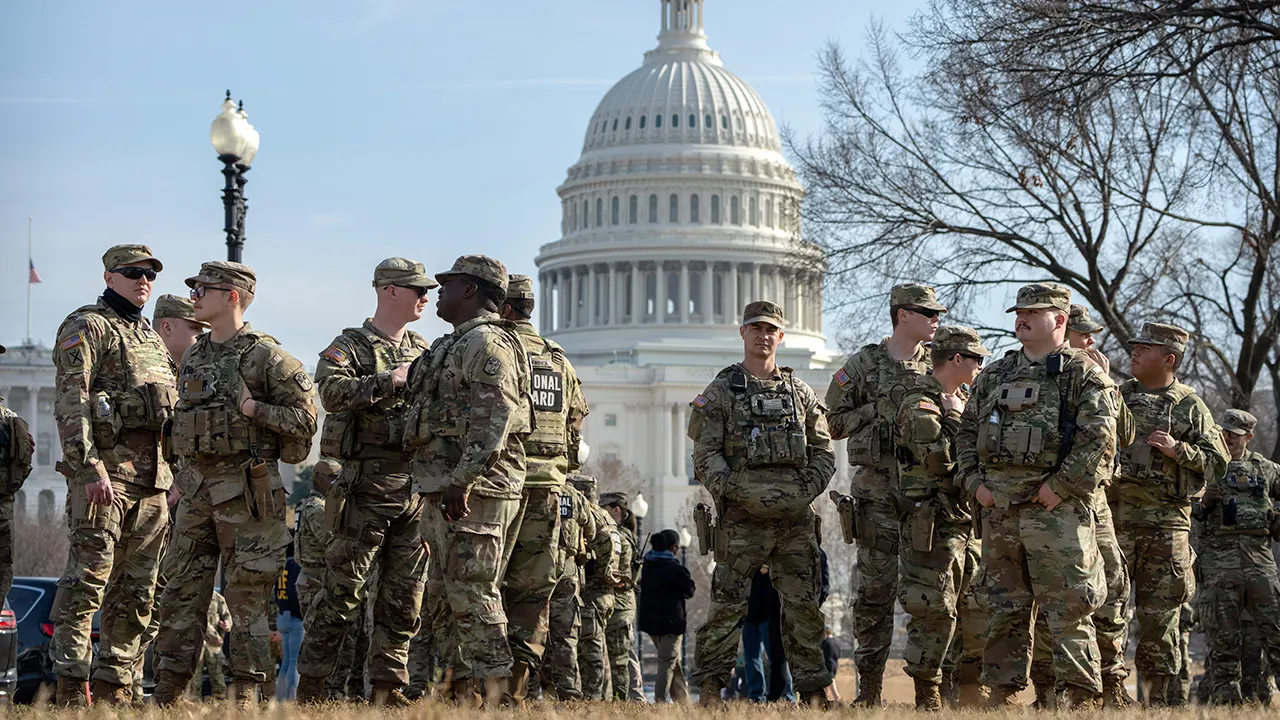
The National Guard presence in Washington, D.C., initially set to conclude at the end of February, will likely be extended through the end of the year, according to a U.S. official speaking to Fox News. Currently, 2,429 troops are serving in the capital, with 712 from the D.C. National Guard and 1,717 from eleven different states. The White House has affirmed President Trump’s commitment to utilizing all available resources to maintain safety in the nation’s capital, including continued National Guard deployments as necessary. Army Secretary Dan Driscoll signed a memo on Wednesday indicating that “the conditions of the mission” justify this extension to support ongoing efforts to restore law and order in the city.
This extended deployment is part of the broader “D.C. Safe and Beautiful mission” launched in August 2025. The initiative represents a coordinated effort between federal agencies, local authorities, and military personnel focused on enhancing public safety and revitalizing the District’s iconic spaces. Multiple agencies have joined forces in this endeavor, including the Department of the Interior, the Department of Homeland Security, and the District of Columbia National Guard. Their shared objective is to protect and preserve the nation’s capital while creating a welcoming environment for residents and visitors alike. The mission reflects a comprehensive approach to urban renewal centered on safety and beautification of public spaces.
The operation has already demonstrated significant impact through enforcement actions across the city. According to the U.S. Marshals Service, by the end of December, the Operation Make D.C. Safe & Beautiful Task Force had arrested over 8,152 violent fugitives. These arrests included individuals wanted for serious offenses: 20 for homicide, 1,343 for narcotics violations, 633 for weapons offenses, 29 for sex crimes, and 48 known gang members. The operation represents one of the most concentrated law enforcement efforts in recent D.C. history, targeting individuals believed to pose the greatest threat to public safety in the capital.
U.S. Attorney for the District of Columbia Jeanine Pirro highlighted the operation’s achievements earlier this month, noting that the surge had resulted in a total of 8,406 arrests and the removal of 856 firearms from city streets. Pirro emphasized the preventative nature of these seizures, suggesting they have likely prevented numerous homicides, assaults with deadly weapons, and other violent crimes. The focus on weapons recovery represents a core element of the operation’s strategy to reduce violent crime in the District, which has faced persistent challenges with gun violence in certain neighborhoods despite its status as the nation’s capital.
The National Guard deployment hasn’t been without sacrifice. Last November, two National Guard members were shot, reportedly by an Afghan national, in an incident that brought renewed attention to the mission. Tragically, 20-year-old Sarah Beckstrom of West Virginia, one of the Guard members wounded in the attack, later died from her injuries in the hospital. This somber reminder of the risks faced by deployed personnel has added emotional weight to discussions about the ongoing mission and highlighted the very real dangers that can accompany urban security operations, even within the United States.
As the National Guard’s mission extends through the remainder of the year, questions remain about the long-term strategy for maintaining security in Washington, D.C. The extension signals the administration’s belief that an ongoing military presence remains necessary for public safety, even as civilian law enforcement continues its enhanced operations. For residents and visitors to the nation’s capital, the sight of uniformed National Guard members will continue to be part of daily life, representing both the extraordinary security measures deemed necessary in these times and the complex challenges facing America’s cities in balancing safety, freedom, and public access to national monuments and institutions.