


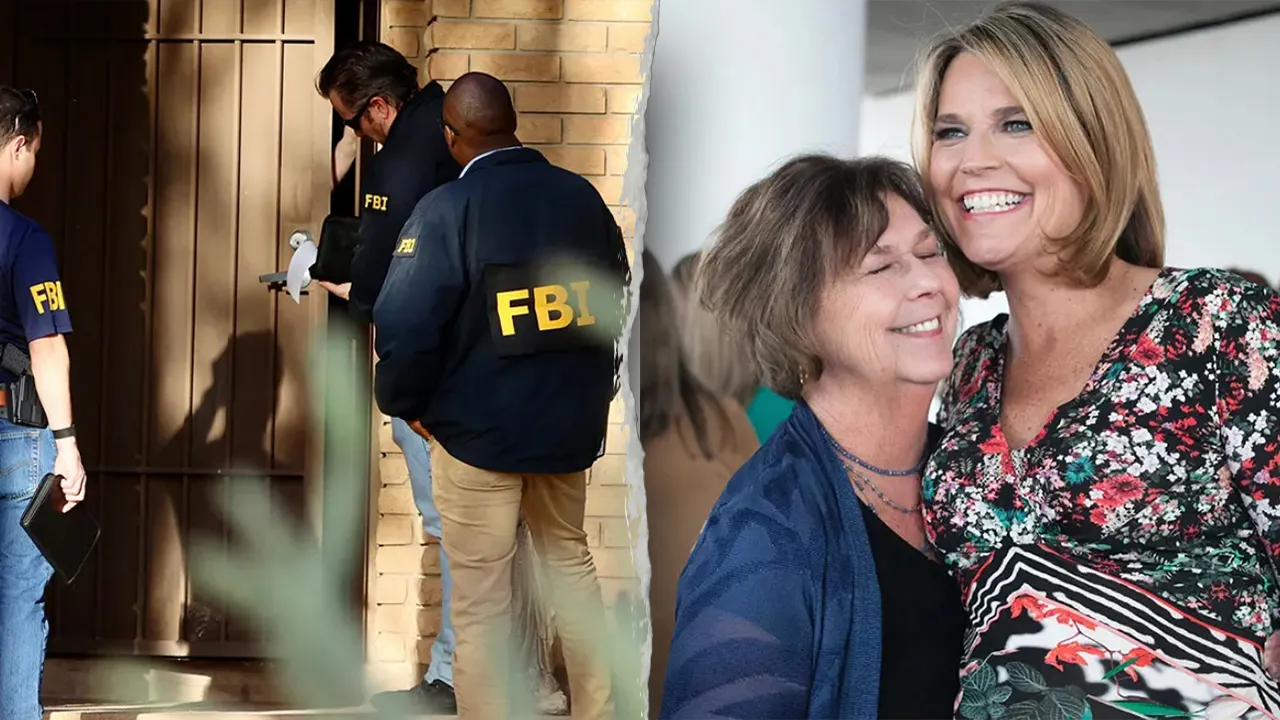
In the quiet hours of early February, when the dry desert air of Tucson, Arizona, settled into a deep, biting chill, an unimaginable tragedy unfolded that would shatter a family and grip a nation. Nancy Guthrie, a gentle and beloved eighty-four-year-old mother, grandmother, and neighbor, vanished from her home in the dead of night on February first, leaving behind a sudden, suffocating silence where warmth and laughter once lived. For her family, including her prominent daughter Savannah Guthrie—a woman who famously anchors the mornings of millions of Americans on the “Today” show—the sudden disappearance transformed their quiet, private lives into a waking nightmare played out under the harsh, unsympathetic glare of the public eye. Having to navigate the agonizing reality of a missing parent is a horror that tears at the very fabric of one’s sanity, but doing so while the world watches adds an excruciating layer of vulnerability to an already unbearable grief. The physical spaces Nancy occupied, from the quiet corners of her Tucson residence to the desert garden she loved, now stand as haunting, empty monuments of a life abruptly interrupted, leaving her loved ones trapped in an agonizing loop of hope, fear, and desperate, unanswered questions. How does an elderly woman, cherished and protected, simply disappear into the shadows of the Arizona night without a single trace? The human cost of this crime goes far beyond the headlines; it is found in the tear-stained eyes of a daughter who must continue to carry the heavy burden of public expectations while her heart remains buried in a desperate search, and in the collective shock of a community that suddenly feels far less safe, wondering what insidious darkness could target a vulnerable senior citizen in the absolute, sacred sanctuary of her own home.
In the search for answers, forensic science and criminal profiling have stepped into the void, offering chilling yet plausible explanations for this baffling abduction. Speaking on the sidelines of CrimeCon Las Vegas, Barbara Butcher, a seasoned forensic investigator who spent decades working with one of the nation’s largest medical examiner’s offices and now hosts Oxygen’s “The Death Investigator,” shared her professional assessment of the tragic situation. Butcher expressed profound disbelief and horror that anyone could target a woman of Nancy’s advanced age, but she proposed a compelling and deeply unsettling theory about the perpetrator’s motives. She suggested that Nancy Guthrie may have been targeted not by an elite, calculated criminal syndicate, but rather by an opportunistic local worker—perhaps a handyman, a delivery driver, or a service provider—who had frequented the neighborhood or worked on her property. According to Butcher, this individual likely discovered the familial connection between the elderly woman and her highly successful, celebrity television host daughter. Driven by a volatile mix of greed, ignorance, and financial desperation, the predatory suspect may have falsely assumed that the family possessed endless, easily accessible wealth, leading them to view the vulnerable eighty-four-year-old not as a human being worthy of respect and protection, but merely as a lucrative pawn in a high-stakes financial scheme. Butcher’s chilling insights paint a terrifying picture of how ordinary, everyday interactions can sometimes be twisted by individuals harboring dark, opportunistic motives, highlighting the fragile line that exists between safety and danger when a family’s hard-earned success inadvertently attracts the attention of a predatory mind lurking within their own community, transforming a quiet retiree’s life into a target for someone whose moral compass had entirely and tragically dissolved.
Even more heartbreaking is Butcher’s second hypothesis regarding Nancy’s fate, which addresses the agonizing absence of any sustained contact from her captors. In many high-profile kidnappings, communication is the lifeblood of the crime, a vehicle through which perpetrators demand money in exchange for their victim’s safety. However, in this case, the lack of a credible, sustained ransom demand or any ongoing proof of life has raised grave concerns among forensic analysts and law enforcement officials alike. Butcher fears that the terrifying trauma of being violently taken from her home in the pitch-dark hours of the morning may have simply been too much for Nancy’s physical body to withstand. At eighty-four years old, the human heart and nervous system are incredibly fragile, and the sudden, overwhelming onset of panic, fear, and terror can easily trigger a catastrophic medical emergency, such as a heart attack or stroke, particularly if there are underlying, unmanaged health conditions. If Nancy tragically passed away shortly after her abduction, the kidnapper would have suddenly found themselves holding a deceased hostage, instantly neutralizing their planned financial leverage and sparking absolute panic. Faced with a situation that had spiraled completely out of control, the desperate, cowardly suspect likely sought to cover their tracks by destroying or hiding evidence, leading them to transport her body deep into the vast, unforgiving Sonoran desert that surrounds Tucson, burying her in an unmarked grave where the shifting desert sands and brutal heat could hide the crime forever. This grim scenario paints a devastating picture of a crime that went terribly wrong from its inception, leaving a family to mourn a loss without even the dignity of a proper farewell, forever haunted by the thought of their mother resting alone in the vast, silent wilderness.
The premeditated nature of this horrific crime is further underscored by a chilling trail of digital breadcrumbs left behind by the suspect before Nancy vanished. Investigators uncovered a deeply disturbing detail in the victim’s digital orbit: an anonymous internet user had actively crawled online for Nancy Guthrie’s physical residence in Tucson, alongside targeted searches focusing on her daughter Savannah’s lucrative television salary and net worth. This revelation exposes a calculated level of stalking that completely strips away any comforting notion that this was a random, spur-of-the-moment home invasion. Instead, it reveals a cold, calculating predator who weaponized the internet to study their target, using easily accessible public databases and search engines to plan an attack based entirely on financial greed. In our modern, interconnected world, where personal details of our private lives are often just a few clicks away, this aspect of the case highlights a terrifying reality for high-profile entertainment and news figures, as well as their aging relatives who may live alone. The digital age has made it tragically simple for bad actors to bridge the gap between idle curiosity and criminal execution, transforming a daughter’s hard-earned professional success in a distant city into a direct, physical threat to her vulnerable mother thousands of miles away in Arizona. This digital footprint serves as an incredibly stark, cautionary tale about the dark side of information sharing, illustrating how the very tools designed to connect society can be exploited by malicious individuals to scout, profile, and ultimately execute a devastating, life-altering crime against an innocent woman who had absolutely no idea she was being scrutinized from behind a cold computer screen, leaving her entirely defenseless against a premeditated, digital trap that silently invaded her home long before the physical break-in occurred. The sheer helplessness of being exposed to such unseen digital surveillance makes the crime feel profoundly and terrifyingly invasive, proving that our homes are no longer secure fortresses when public data can be turned into a direct roadmap for horrific physical violence.
As the days turned into weeks, and weeks became agonizing months, the Guthrie family faced the ultimate psychological torture: a wall of absolute silence broken only by a bizarre and unverified ransom note. In February, a demand was inexplicably sent to the media outlet TMZ, bypassing traditional law enforcement channels and throwing the family into a tailspin of desperation and frantic hope. Despite the suspect’s unconventional, chaotic, and deeply suspicious methods, the family’s response was immediate, resolute, and overwhelming. They offered to meet any and all demands, signaling their willingness to pay whatever sum was required if it meant seeing Nancy’s face again, holding her close, and knowing she was safe. This reaction revealed the raw, unfiltered depth of a family’s love, demonstrating that no amount of money could ever compare to the life of their cherished matriarch. Yet, despite their public declarations of cooperation and their desperate readiness to comply, no further contact was established, and the fleeting hope sparked by the demand evaporated into the arid Arizona air. This agonizing silence has left Nancy’s loved ones stranded in an unbearable limbo, suspended between the dwindling hope of her safe return and the crushing weight of the grim physical realities suggested by forensic experts. The lack of any follow-through on the ransom note represents an act of unimaginable cruelty, whether it was a heartless hoax by a third party exploiting their grief, or a tragic sign that the captor realized they had crossed a line from which they could never return, leaving a family to endure endless, sleepless nights of waiting for a phone call that may never bring the answers they so desperately crave. Each passing tick of the clock becomes a heavy, agonizingly rhythmic reminder of the immense physical and emotional void left behind, forcing them to find strength in each other as they weather this deeply distressing storm of grief, holding onto the hope that their beloved Nancy will finally be found and brought home.
In the face of such profound tragedy, the search for Nancy Guthrie continues with unyielding determination, fueled by a massive cooperative effort between federal law enforcement, local state agencies, forensic experts, and a deeply sympathetic public. The Guthrie family, refusing to let Nancy’s name be forgotten, is making an urgent, heartfelt appeal to anyone who might possess even the smallest shred of information that could break the case. A monumental combined reward of more than one million two hundred thousand dollars has been offered, standing as a testament to the family’s desperation and the community’s resolve to bring those responsible to justice. Investigators are begging the public to look extremely closely at their surroundings, urging anyone who may have noticed any unusual activity, suspicious behavior, or strange individuals near Nancy’s Tucson home around February first to come forward immediately. Information, no matter how minor or trivial it may seem, can be reported directly to the Federal Bureau of Investigation at one-eight-hundred-CALL-FBI, or completely anonymously through Tucson’s local Crime Stoppers affiliate, eighty-eight-Crime, by calling five-two-zero-eight-eight-two-seven-four-six-three. This heart-wrenching case is far more than just a sensational true-crime headline; it is a human story of a vulnerable elderly mother who deserves to be brought home, a family that desperately deserves closure, and a community that must stand together against the shadows of violence and greed. As the investigation tirelessly presses forward, the collective hope remains that answers will eventually surface from the dust of the Arizona desert, offering a glimmer of peace to a devastated family and proving that the light of truth and human connection can ultimately pierce through even the darkest, most terrifying mysteries that confront us. Every single person who reads this story has the power to make a difference, whether by sharing Nancy’s face, checking old surveillance cameras, or keeping alert. We must do everything within our collective power to bring her home, ensuring that love and justice prevail over the shadows of fear and tragedy that have darkened their lives.