


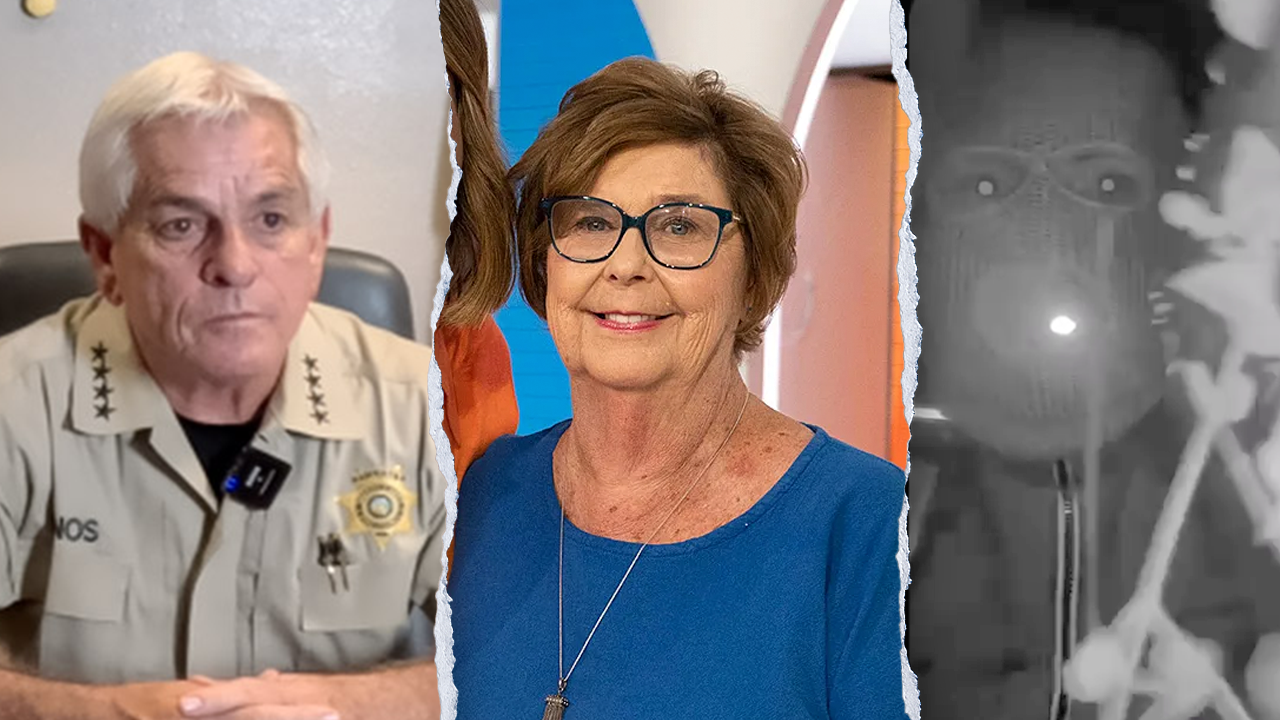
The sudden and unexplained disappearance of a loved one is a harrowing ordeal that fractures a family’s reality, leaving behind an agonizing silence filled with desperate questions. For the family of Nancy Guthrie, and particularly her daughter Savannah, this nightmare became a devastating reality in early February. The quiet sanctuary of their home was shattered, replaced by the sterile, cold atmosphere of an active police investigation. When a person vanishes, those left behind are suspended in a state of torturous limbo, caught between fading hope and rising panic. In a bold and deeply calculated effort to break the silence surrounding this tragic case, the Pima County Sheriff’s Office recently took the extraordinary step of releasing the raw, unfiltered ransom notes sent to Nancy’s family. Releasing such sensitive material is always a high-stakes gamble for law enforcement, a delicate balance between preserving investigative integrity and appealing to the public’s collective conscience. According to Angelica Carrillo, the Public Information Officer for the Pima County Sheriff’s Office, this difficult decision has successfully catalyzed a renewed wave of community engagement. The Nancy Guthrie Task Force has reported a gradual but promising uptick in tips since the letters were made public on July 31. Every single lead, no matter how small or seemingly insignificant, is being meticulously pursued by investigators who recognize that within these community responses lies the potential to finally bring answers to a grieving family.
The first communication, received on a chilling winter day on February 2, represents the terrifying moment a family’s worst fears are committed to paper. Written with a disturbing blend of superficial reassurance and underlying menace, the note began with a direct address: “Hello Savannah.” This immediate personalization stripped away any distance, signaling to the family that they were being watched and directly targeted. The author claimed that Nancy was “safe but scared,” promising her unharmed release upon the receipt of a ransom payment. However, it was the highly specific, intimate details of the crime scene embedded within the message that sent a shiver down the spines of both the family and investigators. The writer noted that “she had a white smart watch on the floor of the foot of her bed” and that “the white flood light in backyard was destroyed.” These details painted a vivid, unsettling picture of the moments Nancy was taken—a struggle in the dark, a broken security light, and a personal item dropped in the chaos. For Savannah, reading these words meant confronting the raw physical reality of her mother’s abduction, visualizing the exact corner of the bedroom where her mother’s safety was violated. It transformed the abstract concept of a kidnapping into a visceral, haunting scene of domestic invasion, proving that the perpetrator had stood in the very spaces where the family felt most secure.
The fragile hope generated by the first note’s promise of a safe return was cruelly shattered just four days later when a second, far more ominous letter arrived on February 6. In a devastating turn of events, the author shifted from demanding money to delivering a confession of tragedy, claiming that Nancy had passed away. “We did not fully grasp the seriousness of her physical condition,” the note pleaded, attempting to paint a picture of accidental tragedy rather than cold-blooded violence. “We never intended to hurt her, that was not our intention. She perished shortly after she was taken. We believe it was heart related.” This sudden whiplash—from negotiating a life to announcing a death—is a psychological cruelty that is difficult to comprehend. The writer’s attempt to minimize their own culpability by blaming Nancy’s physical health is a common tactic among those who seek to distance themselves from the gravity of their actions. It reveals a desperate desire to escape the label of a cold killer, framing the death as an unfortunate medical mishap rather than the direct consequence of a terrifying abduction. For the Guthrie family, this letter effectively extinguished the flickering light of hope, thrusting them into a profound state of mourning while still denied the dignity of a proper farewell or physical closure.
As investigators dissected the communications, a critical timeline emerged surrounding the mention of the white smartwatch, providing detectives with a vital breakthrough. The first ransom note, detailing the watch lying on the bedroom floor, was sent on February 2. Remarkably, authorities and forensic teams did not actually discover or document the presence of the smartwatch at the foot of Nancy’s bed until the morning of February 3. This crucial discrepancy in the timeline is of immense investigative value, as it serves as a powerful validation of the note’s authenticity. The sender possessed highly specific knowledge of the physical state of the crime scene before that information was ever recorded by law enforcement or made available to the public. Jason Pack, a retired FBI negotiator with years of experience analyzing the minds of kidnappers, pointed out that this detail demonstrates an undeniable, intimate familiarity with the residence during the commission of the crime. While the watch on the floor does not necessarily prove Nancy was alive at the time of the writing, it undeniably links the sender directly to the physical space from which she vanished, stripping away any possibility that the letters were a cruel hoax fabricated by an uninvolved outsider.
Beyond the physical evidence of the watch, the very structure of the language used in the notes has become a focal point for behavioral analysts and linguistic profilers trying to construct a portrait of the suspect. Jason Pack’s expert analysis suggests that the writer is almost certainly a native English speaker, noting that the natural flow of the sentences, the appropriate use of idioms, and the correct placement of small connecting words are incredibly difficult for a non-native speaker to mimic successfully over such lengthy passages. The writing lacks the awkward phrasing or grammatical inconsistencies often seen in forced translations or simulated speech patterns. This linguistic fluency suggests someone who is comfortable with the English language, highly capable of expressing complex thoughts under immense pressure, and perhaps integrated seamlessly into the local community. The psychological profile of an individual who can calmly pen a letter detailing a woman’s death while trying to maintain a polite, almost apologetic demeanor is deeply concerning. It depicts a perpetrator who is manipulative, highly observant, and capable of compartmentalizing extreme stress—someone who may very well be living a double life, hiding their dark actions behind a facade of normalcy.
The release of these notes is a poignant reminder of the human cost of crime, illustrating how a single act of violence ripples outward, forever altering the lives of families and communities. The Pima County Sheriff’s Office’s decision to lay bare these painful communications reflects a tireless commitment to exploring every possible avenue in the pursuit of justice for Nancy Guthrie. By bringing the public into the heart of the investigation, authorities are hoping that someone, somewhere, will recognize a specific phrase, a unique handwriting style, or a peculiar manner of speaking that matches the tone of the letters. Angelica Carrillo’s confirmation that tips are increasing provides a glimmer of hope that the wall of silence surrounding Nancy’s disappearance is beginning to crumble. Behind the cold facts of the case file is the memory of a beloved mother, whose life was abruptly cut short, and a daughter who deserves the truth about what happened to her parent. The community now holds a shared responsibility to help solve this mystery, and anyone who may possess even the slightest fragment of information is urged to find the courage to speak up. Whether reaching out directly to the FBI at 1-800-CALL-FBI or choosing to remain anonymous by calling 520-88-CRIME, a single phone call could be the key to unlocking the truth, bringing a perpetrator to justice, and finally granting Nancy Guthrie’s family the peace and closure they have so painfully sought.