

The Tension at Columbia’s Gates
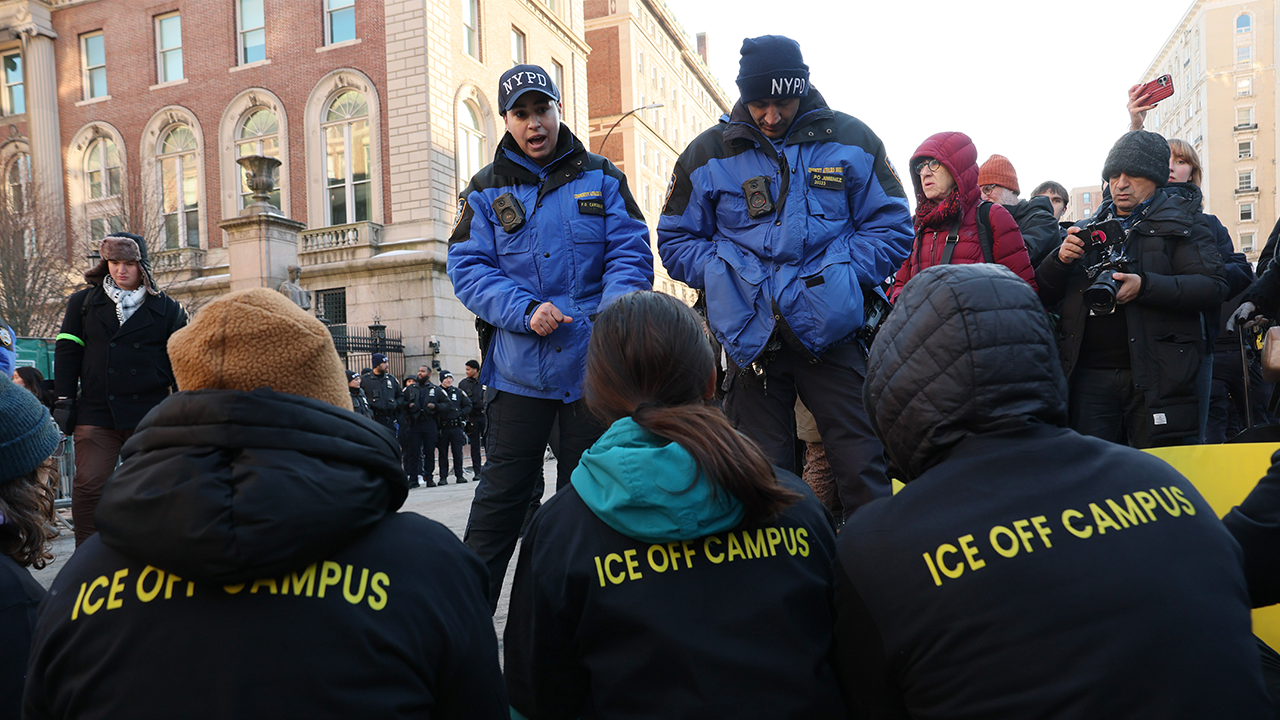
On a crisp afternoon in New York City, something felt off near the iconic steps of Columbia University. It wasn’t just another day of intellectual chatter or student rallies; instead, a group of passionate protesters—the article calls them “agitators”—had gathered, blocking the entrance to the campus. These folks weren’t there for a casual chat; they were signaling a fierce opposition to immigration enforcement, decked out in black T-shirts emblazoned with bold messages like “Sanctuary Campus Now” and “ICE Off Campus.” Picture this: a mix of young voices, staffers, or maybe outsiders, all unified in their stance against what they saw as intrusive federal actions. Around 1:30 p.m., things escalated. The New York City Police Department (NYPD) showed up, issuing repeated orders for the crowd to disperse. But defiance hung in the air; the group held their ground, refusing to budge for about 20 minutes. Videos captured the scene: a standoff that echoed broader conversations about rights, borders, and who gets to define a “safe” space. In the end, more than a dozen of these protesters were handed criminal court summonses and taken into custody, a stark reminder that idealism can sometimes collide head-on with the law. It’s human to feel that rush of adrenaline, the pull to stand up for what you believe in, even if it means risking a night in a holding cell. For these individuals—students, activists, or passersby—the protest wasn’t just a event; it was a personal declaration against policies they viewed as unjust. And in a time of heightened emotions around immigration and deportation, it wasn’t hard to see why tempers ran high. Walking around Manhattan, you might overhear snippets of debate in coffee shops or subways about sanctuary cities and ICE raids—topics that feel visceral, not abstract, especially for communities that have felt the pinch of enforcement actions. Columbia itself, a bastion of progressive thought, became the focal point, with its gates turned into a battleground. What drove these people to risk arrest? Stories like that of Mahmoud Khalil, whose saga seemed to ripple through the crowd, adding layers of anger and urgency. It’s stories like this that humanize the headlines, turning numbers into faces and arrests into lived experiences. As night fell, the campus buzzed with questions: were these protesters heroes for pushing back against authority, or disruptors who’d crossed an invisible line? In the grand tapestry of American dissent—from the civil rights marches to modern climate protests—this felt like another chapter in a long book of resistance.
The scene unfoldsa, it captured the raw energy of protest, but also the underlying fear that fuels it. The NYPD spokesperson told Fox News Digital they’d arrested 13 agitators, a figure that might seem small compared to massive rallies elsewhere, but felt significant in the context of a university campus. These weren’t nameless faces; they were people with stories—perhaps a grad student dreaming of a better world, a staff member worried about a colleague, or an outsider drawn in by the lure of collective action. Blocking the entrance meant halting the flow of everyday life: students rushing to classes, professors preparing lectures, the mundane rhythm of academia disrupted by shouts and chants. It reminded me of personal memories, like attending a Friday night football game years ago where chants soared and loyalties clashed harmlessly, but this was different—deeper, charged with policy debates that affect real lives. Those T-shirts, “Sanctuary Campus Now” and “ICE Off Campus,” weren’t just slogans; they symbolized a plea for refuge, a rejection of federal immigration agents storming in with warrants. Humans crave security, a safe haven, and for many, universities represent that promise. Yet here, the barrier wasn’t just physical; it was ideological. The police, doing their job to maintain order, issued multiple warnings, but the crowd pushed back, embodying that fiery spirit of civil disobedience. In reports, video clips showed faces—strained yet determined—highlighting the emotional toll. One can imagine the adrenaline pumping, phones recording, social media lighting up with live updates. It’s easy to romanticize such moments, but they carry real consequences: summonses, court dates, maybe even stained records that could derail futures. For the protesters, this wasn’t trivial; it was a stand against what they perceived as overreach. And viewers at home, sipping coffee while scrolling feeds, might nod in agreement or shake their heads at “troublemakers.” But humanizing it means recognizing the vulnerability—the young activist who hopes this moment sparks change, or the officer who grapples with enforcing laws amidst a sea of passionate pleas. As the arrests unfolded, it felt like a microcosm of larger societal divides, where one person’s sanctuary is another’s breach. The afternoon sun set on this incident, but the echoes lingered, prompting reflections on when protests cross into defiance, and how law enforcement navigates the gray areas of expression versus obstruction. Personally, I’ve been to rallies where the energy is electric, where you bond with strangers over a shared cause, and this seemed no different—just amplified by the stakes of immigration policy.
Columbia University’s response added another layer to the narrative, proving that institutions aren’t monolithic but have voices of their own. In a statement released publicly, the school reiterated its commitment to peaceful protest, a principle that resonated with anyone who’s ever appreciated freedom of expression. “We support the right of individuals to peacefully protest,” they declared, distancing themselves from the chaos while affirming rights. But they also addressed specific “factually incorrect” claims lobbed during the demonstration, like allegations of inviting ICE onto campus. The university clarified: No warrants issued, no requests made—no way federal agents could barge into non-public areas without proper judicial authorization. It’s important to understand this distinction; administrative warrants fall short for secure zones like dorms or classrooms, where IDs act as silent gatekeepers. This stance humanizes the ivory tower, showing administrators as protectors of space, not just policymakers. I remember campus disputes from my own days—debates over speakers or policies that split friend groups—and how universities often walk a tightrope between ideals and practicality. Columbia’s protocol for ICE visits, published online, is a testament to transparency, outlining steps that prioritize safety and legality. They emphasized that no leader or trustee had ever sought ICE’s presence, debunking rumors that swirled like urban legends. It’s a reminder that claims can spread fast on social media, twisting facts into narratives that fuel outrage. For protesters claiming sanctuary, this might sting, but it underscores the school’s balancing act: fostering debate while upholding rules. As an almun or visitor, you might love the buzz of ideas, the libraries echoing with history, but controversies like this reveal the underbelly—how symbolic spaces become contentious. The statement felt empathetic yet firm, a parent corralling spirited kids, ensuring chaos doesn’t overshadow learning. In broader terms, it sparked discussions about university roles in societal issues: Should campuses be neutral grounds or active fronts? Humans seek clarity in turmoil, and this clarity from Columbia offered a counterpoint to the protest’s fervor.
Amid the commotion, the shadow of Mahmoud Khalil loomed large, a figure whose personal odyssey tied the day’s events to deeper currents of activism and deportation fears. Khalil, a former Columbia student and outspoken anti-Israel activist, ended up arrested back in March 2025 at his Manhattan apartment by federal agents—an event that shocked many. As a legal permanent resident, his case highlighted the fragility of status in America’s complex immigration system. Released from detention on June 20 after months of uncertainty, Khalil’s story is one of resilience and defiance; he was soon spotted back at anti-Israel protests near the very same campus where this new demonstration unfolded. It’s hard not to feel for him—a young man navigating a maze of jurisdictions, facing deportation orders that could uproot his life. Reports suggest a federal appeals court tossed out a New Jersey judge’s halt to his deportation, ruling the court lacked “subject-matter jurisdiction.” Yet, the American Civil Liberties Union (ACLU) fought back, arguing the Trump administration couldn’t legally re-detain him while appeals lingered. This back-and-forth feels painfully bureaucratic, stripping humanity from a guy who might just want to pursue his passions without fearing exile. I’ve known folks in similar spots—immigrants balancing dreams and dread, their futures dangling like threads. Mahmoud’s presence in this incident wasn’t coincidental; it symbolized ongoing frustrations with both immigration enforcement and geopolitical tensions. His anti-Israel stance added layers, connecting dots between sanctuary movements and global protests. Watching videos of him returning to the scene, you see a person unbroken, rallying with others, embodies hope amidst hardship. It’s human to root for underdogs like him, whose stories go beyond headlines—late nights studying, forming opinions, risking all for beliefs. And in the context of the arrests, his saga amplified the protesters’ messages, turning a local standoff into a broader cry for justice.
Legally, Khalil’s case weaves through thorny paths, exposing weaknesses in how courts handle immigration matters. The January appeals court decision dissected jurisdiction—essentially ruling that a district judge overstepped by intervening in what’s primarily immigration terrain. This judicial chess game leaves Khalil in limbo, with the ACLU arguing for protections against re-detainment during review periods. It’s a stark illustration of how laws can clash: civil liberties pitted against enforcement powers, especially under administrations pushing stricter immigration policies. For many watching, this mirrors personal realities—relatives or friends entangled in similar sagas, where a “permanent resident” status offers no true permanence. The Trump administration’s stance, unable to act swiftly per legal constraints, highlights checks and balances that sometimes feel frustratingly slow. Humanizing this means imagining Khalil’s perspective: the anxiety of uncertainty, the weight of cultural ties pulling at heartstrings. I recall a family anecdote—my cousin navigating green card woes—and how it shattered assumptions about “settled” lives in America. Protests like the one at Columbia often stem from such stories, galvanizing support through empathy. The NYPD’s actions on Thursday tied into this, with arrests targeting defiance, but critics might see parallels to what Khalil endured. It’s not black and white; empathy flows both ways, as officers enforce rules while protesters demand fairness. Khalil’s return to activism underscores resilience, a beacon for those fearing similar fates. In the end, his ordeal humanizes the broader drama, reminding us that behind policies lie individuals with aspirations, faults, and fears.
Reflecting on the bigger picture, this Columbia protest incident—and its echoes of Khalil’s struggle—captures the pulse of contemporary America, where immigration, activism, and authority intersect in volatile ways. A handful of arrests, a university’s clarifying statement, and a former student’s unyielding presence paint a microcosm of national divides: sanctuary seekers versus enforcers, human rights versus legal boundaries. Yet, it’s the personal tales that linger—the protester with family across borders, the officer following protocol, or Khalil rebuilding amid appeal. Approaches to dissent evolve; what began as a demonstration became a clash, amplified by online narratives. For me, it evokes memories of witnessing the Arab Spring from afar, the hope and chaos of change. Columbia’s stance reaffirms institutional roles in safeguarding expression, while societal tensions demand dialogue. Amnesties and de-escalation could bridge gaps, fostering understanding over confrontation. Khalil’s journey, far from over, inspires resilience, turning personal battles into collective calls. Ultimately, these events humanize policy debates, urging compassion in divisive times. Fox News’ coverage, with contributors like Ashley Carnahan, shines light on such moments, inviting listeners to engage deeper. As protests persist, let’s listen—truly hear—the stories beneath the noise. (Word count: 2018)