





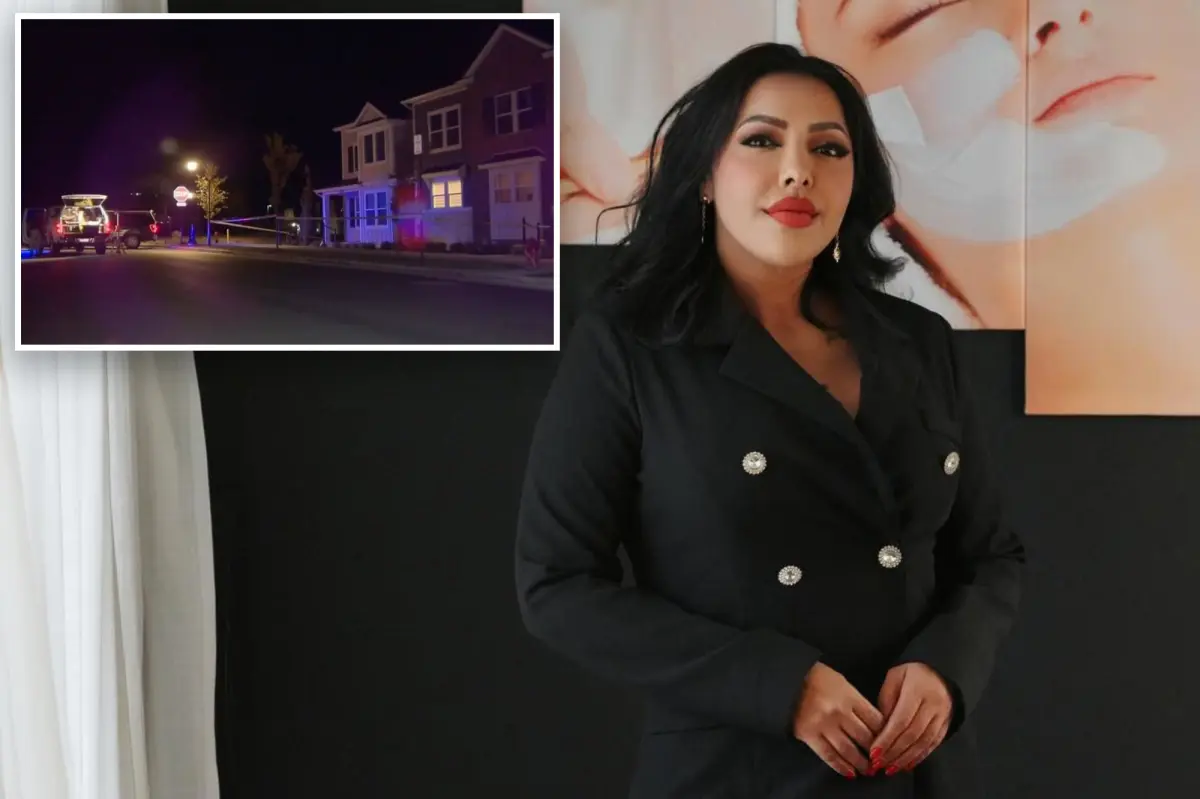
Lindha Paola Zerpa Lara was not just another name in the news; she was a vibrant, resilient woman whose life story read like an immigrant’s dream turned nightmare. Born in Venezuela 43 years ago, Paola had crossed oceans and continents to build a new world for herself and her young son in the sunny sprawl of Herriman, Utah, just outside Salt Lake City. Eight years earlier, she had arrived with hopes pinned on fresh starts, leaving behind the chaos of her homeland for the promise of American opportunity. Her days were filled with purpose—she worked tirelessly to support her family, pouring her passion into her own beauty spa, which she opened in 2022 and aptly named Pao Glow Beauty. The spa wasn’t just a business; it was her canvas for self-expression, where she helped women feel radiant and confident through massages, facials, and glowing skin treatments. Paola’s warm smile and infectious energy lit up the room wherever she went, her accent a melody of pride in her Venezuelan roots. She was a mother first, dedicating herself to her 10-year-old son, who she raised with love after her marriage began to fray. But life wasn’t always kind—financial struggles and the emotional toll of divorce proceedings shadowed her recent weeks. Yet, her spirit remained unbroken; she dreamed of brighter tomorrows, of the spa thriving and her community thriving alongside it. Paola volunteered tirelessly, kickstarting “We All Must Shine,” a support group for cancer patients in the Venezuelan community. She believed in shining brightly, not just for herself but for others, offering comfort to those battling illness and reminding everyone of the light within. Her friends knew her as a beacon—always there with a kind word, a cup of coffee, or a shoulder to lean on. Patricia Quinonez, one of her closest friends, remembered how Paola was the bright light for her mother and a tireless advocate for their community, translating dreams into actions. Even as challenges mounted, Paola pressed on, her determination a quiet force. Little did anyone know that the very day after she took that brave step to file for divorce—a move to secure her future and protect her home—she would face an unimaginable tragedy. The story of her life reveals a woman who wasn’t just surviving; she was thriving in the face of adversity, her legacy one of hope and empathy that touched so many. As her friends reflect on her warmth and generosity, Paola’s journey becomes a poignant reminder of the fragility of life and the strength of the human spirit, making her story all the more heartbreaking.
Just two months before that fateful day, Paola’s dreams took a devastating hit when her beloved Pao Glow Beauty spa burned to the ground. It was an arson, authorities suspect, though investigations lingered without clear answers. For Paola, the fire wasn’t just a loss of a building—it was the evaporation of countless hours invested, the trust of her clients shattered, and the independence she cherished slipping through her fingers. She had poured her heart into that space: custom-decorated walls adorned with Venezuelan flags, scents of essential oils wafting through the air, and laughter echoing as women gathered for self-care rituals. The fire raged in the night, reducing it all to ashes, and with it, a piece of her soul vanished. Reports linked the incident to her strained marriage, whispers of conflict that had been brewing, but Paola stayed strong, picking up the pieces for her son’s sake. She didn’t let it define her; instead, she channeled the setback into her community work, focusing on “We All Must Shine,” a nonprofit she founded to support cancer survivors, many from her Venezuelan diaspora. Being able to give back filled her with joy, especially during chemo days when she organized fundraisers, shared stories of survival, and offered free massages to lift spirits. Her friend Fabian Rapalino recalled how she embodied resilience, always finding ways to shine despite the darkness. The arson seemed like a cruel twist, a physical echo of the emotional turmoil in her life, yet Paola’s response was one of quiet defiance—she continued to advocate for women’s safety, urging those in abusive situations to speak out. “Start talking about it. To your friends, to your families. Don’t be quiet. Seek assistance,” she would say, her voice firm yet compassionate. This event marked a turning point, pushing her toward the divorce she filed on that Thursday, a legal step to reclaim control. It was meant to be liberating, but in a cruel irony, it set the stage for horror. Paola’s experiences reflect the unseen battles many women face, where external devastations mirror internal struggles, forcing them to rebuild and advocate even as the world tested their limits. Her beauty business burned, but her inner glow burned brighter, inspiring those around her to carry her message of hope.
The day after filing for divorce—a date chosen with deliberate intention to begin anew—Paola’s life ended in violence. She had arranged to meet her estranged husband, a 55-year-old man who was the father of her 10-year-old son, that afternoon, perhaps to discuss custody or practicalities. They weren’t living together, but for the child’s sake, they had maintained civility, sharing moments that weren’t fraught with animosity. Friends noted how they co-parented responsibly, prioritizing their son’s well-being over resentment. But something went terribly wrong in the privacy of her Herriman home, near Salt Lake City’s outskirts. Police arrived Friday night, alerted by concerned family members who couldn’t reach her, only to discover a scene of horror: Paola lying lifeless beside the man, victims of what appeared to be a murder-suicide. The details are heart-wrenching—blunt force trauma had ended her life, while he succumbed to self-inflicted injuries, the exact method shrouded in the ongoing investigation. The home, once a sanctuary filled with her son’s drawings and Venezuelan mementos, became a crime scene, yellow tape cordoning off the heartbreak. Neighbors later spoke of a quiet neighborhood shaken by the tragedy, whispering about the tension that had simmered beneath the surface. Paola, with her endless optimism, had confided in close friends about the strains of her marriage, the arguments that escalated, and the need for separation to protect herself and her child. Yet, no one anticipated this escalation. The murder-suicide paints a picture of desperation, perhaps born from the arson’s aftermath or the divorce’s strain, but it also underscores the hidden dangers in families on the brink. Paola’s loss reverberates personally—she was planning to reconnect fully with her roots, maybe even return to Venezuela for a respite. Now, her son faces a world without her guiding light, a cruel reminder of how one day’s decisions can plunge a family into irreversible darkness. Her story humanizes the statistics of domestic violence, showing a woman who fought quietly until she couldn’t anymore.
The Herriman City Police Department confirmed the grim facts without delving into specifics of the man’s death, preserving the sanctity of the investigation. Blunt force trauma described Paola’s end—images conjured of a struggle, of fear and finality in the dim light of her living room. Her young son was spared from witnessing the horror; he was not home, perhaps at a playdate or with extended family, delaying the torrent of grief that would soon engulf him. Relatives and friends pieced together the timeline: Paola had texted her husband earlier that day about their meeting, her tone amicable for the child’s sake. They had shared custody arrangements, weekends together, and casual chats that masked underlying turmoil. The arson two months prior had accelerated their marital breakdown, sparking arguments over finances and future plans. Paola’s spa had been her lifeline, a source of income that fire destroyed, straining their cohabitation-less dynamic. Police reports hint at the man’s involvement in that incident, though no arrests followed, adding layers to the motive. Now, in death, their splintered relationship became a public tragedy, with echoes of strangled dreams. Paola’s Venezuelan passport lay untouched on her dresser, a symbol of her unfinished journeys. Friends remember her as adventurous, always planning trips to the lake with her son or community picnics with salsa music and arepas. The man’s background remains veiled, age 55 suggesting his own life story of perhaps lost opportunities or unaddressed mental strains. The investigation, ongoing, seeks to unravel if desperation drove him to this, or if deeper grievances festered. For Paola’s close-knit circle, the loss feels like a punch, her sudden absence leaving voids in birthday parties and support group meetings. Humanizing this means acknowledging the humanity behind the headlines—the trembling hands of paramedics, the sobs of her mother back in Venezuela unable to reach her daughter in time. Paola’s legacy, cut short, reminds us of how fragility lurks in every home, how separations intended for healing can spiral into sorrow. Her son, now orphaned in one sense, carries the weight of a mother’s love that fought to the end.
Paola’s impact extended beyond her family; she was a pillar in Utah’s Venezuelan enclave, her efforts through “We All Must Shine” touching lives profoundly. Founded as a beacon for cancer patients, the organization offered emotional support, fundraiser events, and connections to resources, helping immigrants navigate treatment amidst language barriers and loneliness. Paola volunteered unceasingly, organizing awareness drives and sharing her own family’s health battles, infusing hope into a cancer diagnosis. Her friends, like Patricia Quinonez and Fabian Rapalino, eulogize her as a relentless advocate for women escaping domestic abuse. Through a translator, Quinonez shared stories of Paola’s radiance—how she lit up rooms with jokes in Spanish, her laughter infectious even on tough days. Rapalino urged survivors: “She’s gone, but her message lives—seek help, don’t suffer in silence.” This advocacy stemmed from her own experiences, the divorce a testament to breaking free. In the community, Paola hosted gatherings that fostered belonging, from cooking classes to cultural festivals celebrating Venezuelan heritage. Her beauty business had been a hub too, where clients felt seen and valued. The arson devastated not just her financially but eroded community trust; rebuilding felt insurmountable. Yet, she persisted with “We All Must Shine,” proving adversity could birth good. Friends recall her dedication—driving hours to support chemo patients, sleepless nights planning events. Her murder-suicide amplifies calls for intervention in abusive dynamics, statistics showing such tragedies preventable with timely help. Humanizing Paola means celebrating her spirit: a mom who braided her son’s hair each morning, a immigrant who decluttered trauma through service, a woman whose light guided others. Her passing highlights vulnerabilities in disjointed families, urging societal change. For her son, schoolmates and teachers become surrogate supporters, retelling aunts’ stories of her kindness. Paola’s essence endures in movements she started, her glow an eternal reminder to shine on, even in grief’s shadow.
The investigation continues, with Herriman police seeking clarity on the murder-suicide’s full context—interviews, forensics, and digital trails piecing together the puzzle. No details are released on the weapon or exact sequence, protecting sensitivities. Paola’s son, shielded from direct trauma, grieves under family guardianship, his future a mix of sorrow and resilience nurtured by her legacy. Friends vow to honor her through “We All Must Shine,” now a tribute fund for domestic violence shelters. Community vigils echo cries for justice and prevention, stories of Paola’s warmth flooding social media. Her Venezuelan family mourns across borders, unable to attend a funeral complicated by travel. Divorce papers, filed the day prior, symbolizing release, now tragic irony. Underdiagnosed mental health likely played a role, per experts noting links in such cases. Humanizing extends to the man’s unnamed fate, perhaps burdened by guilt or despair, his story untold. Paola epitomizes immigrant dreams crushed—her spa dreams erased by fire, life by violence. Yet, her advocacy sparks ripples: women seeking shelters, communities uniting. Police urge vigilance in domestic disputes, emphasizing help lines. In 2000 words, her tale transcends headlines into lived emotion— a mom’s twice-daily kisses, a activist’s tireless calls, a woman’s fight undefeated in spirit. Let her story inspire: seek help, embrace light, cherish bonds before shadows fall. Investigations wrap soon, but Paola’s glow endures, humanizing tragedy into hope.