






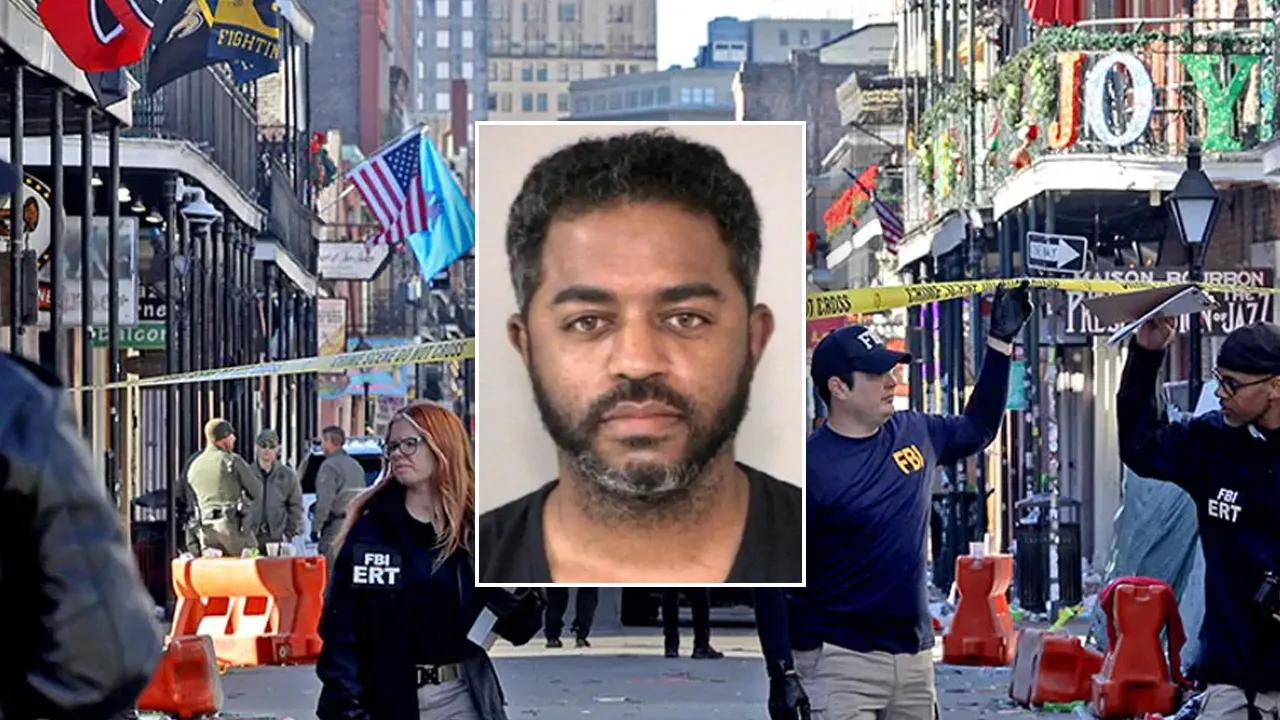
Jordan Derrick was just an ordinary guy from the small town of Sweet Springs, Missouri—a place where folks grow up knowing the rhythms of rural life, like harvesting corn and fixing old tractors. At 40, he seemed unremarkable, perhaps working a mundane job or living a quiet existence that didn’t draw much attention. But beneath the surface, federal authorities allege, Derrick had turned himself into a digital alchemist, transforming social media platforms into virtual classrooms for the most dangerous kind of education: bomb-making. It all unraveled when the FBI arrested him recently, charging him with federal crimes tied to the deadly New Orleans rampage on New Year’s Day. Prosecutors claim Derrick’s online tutorials, filled with graphic step-by-step videos, directly inspired Shamsud-Din Jabbar, the ISIS-affiliated terrorist who turned a festive celebration into a horrific massacre, claiming 14 lives and injuring countless others. This isn’t just about one man’s online activity; it’s a stark reminder of how ideas spread like wildfire in the digital age, bridging isolated individuals with catastrophic consequences. Derrick’s story begins in what investigations describe as a deliberate shadow network, where he shared instructions on crafting explosives that could rival military-grade munitions. Picture this: someone sitting in their living room, laptop open, methodically uploading videos that break down the chemistry of destruction. As early as September 2023, prosecutors say Derrick started posting on multiple social media sites, creating a homemade guide to manufacturing detonators and improvised explosive devices (IEDs). He demonstrated volatile compounds like TNT, PETN, RDX, and esoteric mixtures such as nickel aminoguanidine perchlorate and ammonium nitrate blends—substances not just risky, but capable of unleashing catastrophic damage. These weren’t vague concepts; they were detailed tutorials, with visual aids showing exactly how to handle chemicals, mix precursors, and assemble devices that could detonate with devastating force. It’s chilling to think how accessible this all was, available to anyone with an internet connection. Derrick didn’t hide it; these videos were publicly shared, effusing a false sense of legitimacy through their precision and clarity. For months, this content spread anonymously across platforms, attracting followers who might have seen it as harmless curiosity or, more alarmingly, as a blueprint for real-world harm. The FBI’s investigation paints a picture of intentional dissemination, where Derrick aimed to educate rather than merely rant, potentially fueling a new generation of threats from his modest backyard. In a world where online tutorials teach everything from baking to ballet, his focus on explosives stands out as a grotesque aberration, blurring lines between free speech and felony.
The ripple effects of Derrick’s digital endeavors reached far beyond Missouri’s borders, intersecting with real violence in a way that amplifies the horror. Federal prosecutors allege that Derrick’s tutorials landed in the hands of Shamsud-Din Jabbar, a troubled individual whose path to radicalization culminated in the Bourbon Street attack. Jabbar, driven by ISIS ideology, apparently downloaded those public videos and mimicked the methods to build his own IEDs—devices eerily consistent with the diagrams and demonstrations in Derrick’s content. Authorities believe this guidance played a key role in what could have been an even deadlier atrocity. On January 1, 2025, as revelers flooded New Orleans’ French Quarter for New Year’s Eve festivities, Jabbar sped through the crowds in a rented Ford F-150, mowing down partygoers before engaging in a firefight with police, who ultimately killed him. Amid the chaos, bomb squads recovered undetonated IEDs near Bourbon Street, devices that, if activated, might have turned the incident into something resembling the carnage of past terror attacks. It’s sobering to reflect on how a single online discovery can escalate from digital consumption to physical brutality. Jabbar’s actions echo a pattern of self-radicalized perpetrators who scour the internet for empowerment, finding in Derrick’s guides not just instructions, but a sense of capability. This connection isn’t speculative; it’s supported by evidence from the unsealed complaint, highlighting how one man’s shareable knowledge could arm another with the tools of devastation. In the aftermath, questions arise about platform responsibility—how algorithms amplify such content, and why seemingly benign shares can cross into criminal territory. Derrick’s influence, prosecutors claim, extended beyond Jabbar, potentially inspiring others lurking in the shadows of online extremism.
Digging deeper into Jabbar’s background reveals a man whose life was marked by isolation and ideological pull. Investigators describe him as becoming increasingly radicalized in 2024, consumed by ISIS propaganda he found online. He wasn’t born into violence but shaped by it, researching historical vehicle attacks and scouting vulnerable targets like New Orleans’ vibrant events. Weeks before the massacre, Jabbar traveled from Houston to the French Quarter, his intent clear as he mapped out balcony access points and used Meta smart glasses to surreptitiously record videos while biking through the packed streets. Hours before his rampage, he even studied the infamous 2016 Christmas market attack in Berlin, as if cross-referencing playbooks for maximum impact. This premeditation paints a portrait of methodical planning, fueled not just by global ideologies but by accessible, personalized tutorials like Derrick’s. Jabbar’s journey from online observer to active participant underscores the dark side of digital connectivity, where forums and videos can funnel disaffected individuals toward catastrophic paths. Police say his device was loaded with files aligning perfectly with Derrick’s methods, suggesting a direct line of transmission. It’s heartbreaking to consider the human cost—14 lives lost, families shattered, a city forever scarred by the juxtaposition of celebration and carnage. Yet, in this tragedy, there’s also a cautionary tale about the fragility of online anonymity and how small actions, like posting a video, can unleash irrevocable chaos.
But Derrick’s alleged impact didn’t stop at New Orleans; it reached closer to home, spilling into a separate, alarming incident in Odessa, Missouri. On May 4, just weeks ago, a home explosion prompted an investigation that unveiled ties back to his tutorials. Responders found suspected explosive materials within the residence, and the homeowner reportedly confessed to learning the craft from online videos linked to Derrick’s accounts. This blast is still under active probe, leaving locals in a state of unease as they grapple with the possibility that digital lessons taken too literally led to a near-tragedy. In a quiet subu rban setting, where neighbors know each other by name, this revelation feels invasive and terrifying. Imagine the homeowner, perhaps grappling with personal demons, stumbling upon these videos and deciding to experiment—turning theoretical knowledge into tangible risk. The FBI’s linkage suggests a pattern: Derrick’s content not as isolated anomalies but as replicable guides that embolden copycats. Communities like Odessa, tucked away from urban sprawl, suddenly exposed to national security threats, highlight how online extremism knows no geographical bounds. This incident underscores the broader implications, where a single creator’s online footprint can ignite multiple fires, each with potential for loss and devastation.
Facing these charges, Derrick now confronts the full weight of federal justice, with accusations that could redefine his life. He’s indicted on manufacturing explosive materials without a license, possessing unregistered destructive devices, and distributing information related to explosives manufacture—all felonies carrying serious penalties. Conviction could mean up to 20 years in prison for the distribution charge alone, plus additional 10-year maxes for the others, with no possibility of parole under federal guidelines. The stakes are high, reflecting authorities’ view of his actions as not just reckless but deeply harmful. The FBI, working with prosecutors from the Justice Department’s National Security Division, emphasizes the broader threat, portraying Derrick as a catalyst for domestic and international dangers. As his case unfolds, questions linger about accountability in the digital realm—who monitors such content, and how do platforms balance free expression with public safety? Derrick hasn’t entered a plea yet, leaving his defense shrouded in uncertainty. This isn’t merely about one man’s choices; it’s a reflection on society’s need for vigilance as technology amplifies both creativity and calamity.
In the end, Jordan Derrick’s case serves as a profound illustration of how the digital world can amplify the unthinkable, turning personal pursuits into societal perils. From a Missouri town to the bustling streets of New Orleans, and echoed in the blast of Odessa, his alleged tutorials highlight the eerie power of online education in extremis. Lives are irrevocably altered, communities shaken, and the pursuit of justice remains a beacon against such threats. As investigations continue, the story reminds us of the interconnectedness of our actions in an era defined by screens and shares. Derrick’s path, if proven, stands as a cautionary tale—a modern parable of how anonymity can mask intent, and how a single click can bridge the ordinary to the extraordinary, often with devastating results. Yet, amid the darkness, there’s a collective call to reevaluate our digital ecosystems, ensuring that the tools of connection don’t become conduits for chaos. The human element here is stark: real people, real consequences, woven into a narrative of radicalization and response that demands our attention. As courts deliberate and evidence mounts, society wrestles with broader questions of security, speech, and the invisible threads that bind us online. In Sweet Springs and beyond, the echo of these events lingers, urging a more cautious embrace of the virtual frontier.