

Awakening the Midwest: A Storm’s Fierce Embrace
As the first whispers of spring erupt into a full-blown roar, a powerful storm front is unleashing its fury across the Midwest, painting the sky in ominous shades of gray and unleashing havoc on Monday afternoon. Meteorologists from the National Weather Service have their eyes sharply trained on key hotspots in Missouri and Illinois, where the air is thick with the building blocks of destruction—warm, moist air colliding with cooler masses aloft, fueling the kind of atmospheric chaos that births tornadoes. Christine Wielgos, a seasoned meteorologist at the Paducah, Kentucky office, isn’t mincing words: “If these tornadoes do form, they could be on the stronger side for sure.” We’re talking about twisters that could tear through homes like paper, uproot trees with effortless grace, and leave communities scrambling for shelter. For residents in these areas, the day might start innocently enough—kids playing outside before school lets out, adults sipping coffee at their desks—but by late afternoon, the skies could darken into a tempest of sound and fury. This isn’t just any weather disturbance; it’s the kind of event that reminds us of nature’s raw power, where a simple shift in wind direction can tilt the balance from routine showers to life-altering disasters. As we dig deeper, it’s clear this storm carries the weight of history, echoing past outbreaks that have scarred the landscape and hearts alike, urging everyone to stay vigilant and connected to local warnings.
Brian Hays, who keeps watch from the St. Louis Weather Service office, drives home the urgency with straightforward advice that could save lives. If tornado warnings blare from sirens or flash across your phone, don’t hesitate—head to an interior room or basement, away from windows, and hunker down as if the world outside is unraveling. Imagine the adrenaline rush: The distant rumble of thunder builds into a cacophony, winds howl like beastly roars, and in that interior sanctum, families clutch each other, kids wide-eyed as the tempest battles the walls. This warning isn’t overblown; it’s a lifeline in the face of potential EF-scale tornadoes, gauging strength from EF0 (gentle winds) to EF5 (catastrophic forces tearing structures from their foundations). The storm’s anatomy is fascinating yet terrifying—cold fronts diving south, feeding off Gulf moisture to create supercells, those towering thunderstorms that spawn the most dangerous spouts. For those outside the immediate danger zones, empathy flows: Think of farmers whose crops might be flattened, or travelers whose commutes turn perilous, the highway suddenly a battleground with gusts pushing cars sideways. Humanizing this is about realizing we’re all threads in the same fabric, vulnerable to the whims of the weather gods, and even meteorologists, armed with radar and models, feel the tension as they predict paths that can shift like a serpent’s coil.
But the drama doesn’t peak here; a second wave later in the afternoon promises even greater peril, stretching damaging winds, hail, and lingering tornado risks from the sun-soaked plains of Texas all the way up to the Great Lakes refugee of Wisconsin. This isn’t a isolated squall—it’s a domino effect of instability, where early showers pave the way for more violent successors. Picture it: In Texas, the afternoon heat already swelters, but as clouds gather, residents might spot hailstones the size of oranges plummeting from the heavens, shattering windshields and denting roofs like meteor impacts. Moving north, the storms evolve into multistorm systems, hail turning from golf-ball sized nuisances to basketball-bound threats capable of pummeling vehicles and homes. For communities in between, like Oklahoma or Arkansas, the transition feels like a relentless march, with winds howling up to 70 miles per hour—enough to snap power lines, uproot billboards, and force people indoors, peering through blinds at a world gone mad. Rich Thompson, chief of forecast operations at the Storm Prediction Center, underscores that this outbreak traces back days of buildup, with warm air pushing boundaries and leaving a trail of disrupted lives. Empathizing with victims, we see the benefits of preparation: Stocking emergency kits with water, flashlights, and radios, checking on neighbors, and heeding evacuation routes. It’s a human moment where resilience shines; stories of communities rallying post-storm abound, from impromptu barbecues turning into shelters to strangers united in cleanup, turning tragedy into triumph.
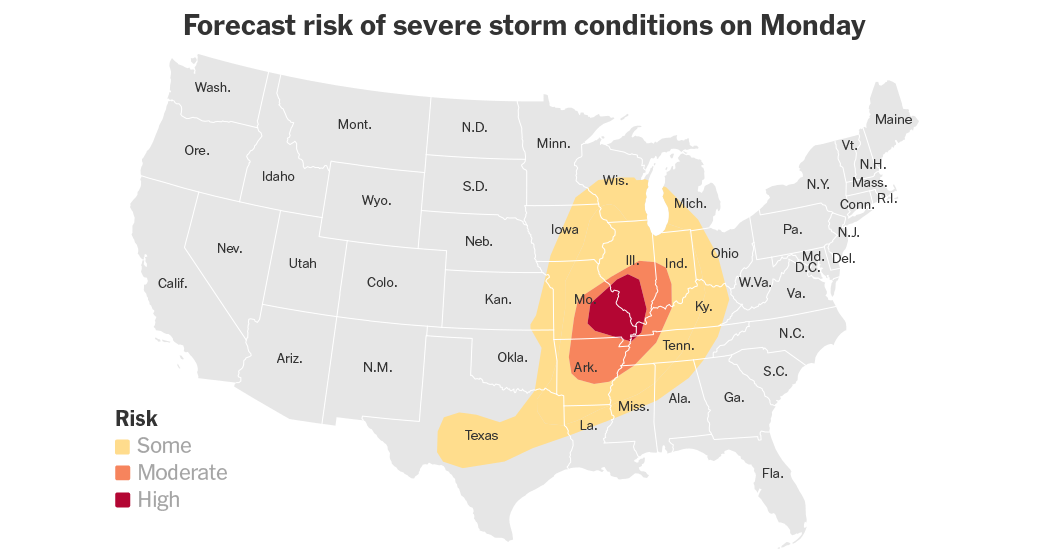
Monday stands out as the crescendo in this symphony of storms, not just another day but the heart of the action, where the greatest concentration of severe weather converges on densely populated areas, multiplying the stakes for damage and disruption. Thompson’s insights reveal how these events aren’t random; they’re orchestrated by atmospheric choirs—moisture from the Gulf, shear winds aloft, and lift from warm fronts aligning to create a perfect storm. In cities like Kansas City or Chicago, the impact cascades: Schools close early, traffic snarls, and workplaces shutter as preemptive measures kick in. It’s personal here—the mom racing to pick up kids from soccer, the elderly couple whose power flickers out, isolating them in the dark. The Storm Prediction Center’s Evan Bently highlights the populated punch, where urban sprawl amplifies flash flooding risks, as concrete channels rainfall into overwhelmed sewers, turning streets into rushing rivers. In Springfield, Illinois, imagine neighborhoods flooding knee-deep, families wading to higher ground with pets in tow, while in St. Louis, the Mississippi River’s banks threaten to encroach on historic districts. This intensity comes with a human cost—economic tolls from canceled flights and repairs, emotional strains on first responders stretched thin. Yet, it also fosters connection; apps buzz with weather updates, families share stories on social media, and communities form support networks. Bently’s “goldilocks” analogy—where conditions are just right for maximal mayhem—captures the eerie precision, like a cosmic joke where too hot and too cold meet at perfect to brew catastrophe, ultimately reminding us of our shared fragility before the elements.
Zoning in on Missouri and Illinois, that elusive “goldilocks” sweet spot stretches from St. Louis southward to Memphis, where the probability of epic storms towers, blending ingredients like a master chef crafting danger. Bently explains the recipe: Just enough instability for upsurges, balanced by shearing winds that twist air into vortex nobility, resulting in tornadoes that could rank high on the enhanced Fujita scale, demolishing buildings and scattering debris miles away. For St. Louisians, the worst might culminate from late afternoon till sunset, painting evenings with dramatic lightning spectacles amid the thunder, families gathering for dinner only to dash for cover. Further south, into Arkansas and beyond, the nightmare lingers into night, under moonlit skies where storms rage unseen, amplifying isolation for rural residents without the cacophony of city sirens. Broadening the canvas, threats expand to a vast area from the Mississippi Valley into the Ohio region, encompassing vibrant hubs like Chicago, Nashville, and Milwaukee, where damaging winds up to 70 mph could topple structures and hail up to three inches in diameter—think grapefruit-sized missiles— might inspire creative curses in event of a broken window. Adding to the mix, flash flooding looms, particularly in northern and central Missouri, Illinois, and Indiana, where repeated storm rounds could dump up to two inches of rain per hour, overflowing creeks and tributaries into raging torrents. The Weather Prediction Center warns of this domino effect, where early showers saturate soils, making later downpours catastrophic, imagined through poignant tales of basement rescues and flooded homes where family treasures float away.
This Monday outbreak fits into a tapestry of relentless weather drama stretching back to Thursday, when the Plains and South endured over 50 tornado reports, punctuated by a preliminary EF4 in Enid, Oklahoma—a beast that levels structures and claims lives with winds bridging 200 mph. In North Texas, hail as large as tennis balls pummeled areas, and gusts up to 89 mph clobbered houses, tragically claiming at least two lives and displacing numerous families in a blink. Humanizing these tragedies means acknowledging the real people: A grandmother in Oklahoma clinging to her great-grandchildren in a destroyed home, volunteers in Texas sorting donations for the homeless, their spirits unbroken amid rubble. As the threat tempers slightly Tuesday, shifting south to North Texas and Oklahoma, Thompson refers to it as a “step down,” typical for late April’s capricious moods, where tornadoes still swirl but with milder zeal. Post-Tuesday, the menace wanes gradually, but echoes linger—crop losses, infrastructure repairs, and a collective exhale as skies clear. In this narrative, we’re not just passive observers; we’re interwoven, learning from each gust and drop, honoring the forecasters’ vigilance and the communities’ tenacity, ever aware that tomorrow’s calm might birth next storm, urging us to cherish resilience in nature’s unforgiving dance.