



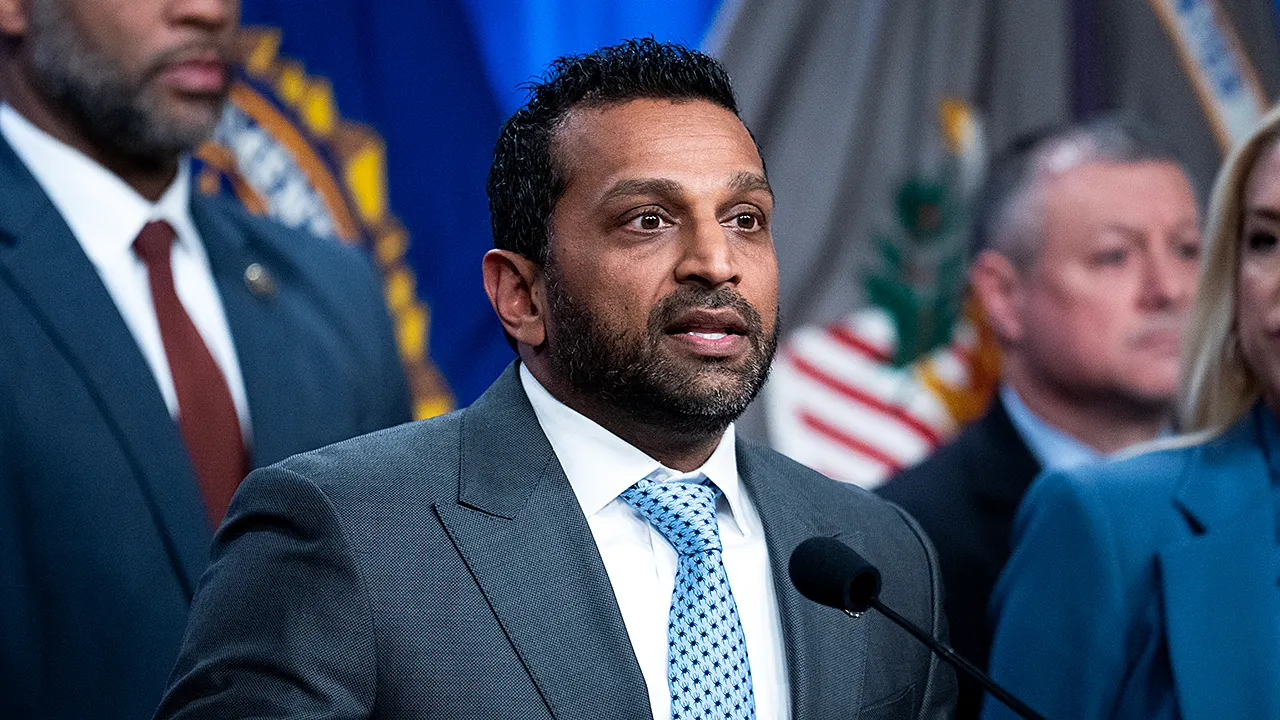
In a powerful demonstration of federal resolve and swift law enforcement action, the newly minted federal crusade against pandemic-era corruption achieved a historic milestone on Wednesday. FBI Director Kash Patel announced that Said Abdullahi Ereg, a 47-year-old former south Minneapolis grocery and deli owner, had officially surrendered to federal authorities. This high-profile custody marks the very first capture of an individual featured on the FBI’s newly established “Most Wanted Fraudsters” list, a public registry designed to unmask and apprehend the nation’s most elusive white-collar criminals. Ereg, who had been avoiding justice for months, suddenly found himself thrust into the national spotlight when his name and face were splashed across the Justice Department’s registry. Facing staggering federal charges that include conspiracy to commit wire fraud, wire fraud, and money laundering, his surrender signals a dramatic shift in how the federal government hunts down those accused of exploiting public emergencies for private gain. His capitulation to law enforcement occurred less than a week after the FBI, in coordination with a newly formed White House Task Force to Eliminate Fraud, unveiled the public list. FBI Director Patel lauded the arrest as a historic breakthrough, emphasizing that the days when Washington turned a blind eye to systemic financial deception are firmly over, sending a resounding warning to anyone who thinks they can easily run from the law after plundering the public treasury.
To truly understand the gravity of Ereg’s arrest, one must look closely at the vibrant but struggling south Minneapolis neighborhood where he operated his business, Evergreen Grocery and Deli. During the peak of the devastating COVID-19 pandemic, when families were locked in their homes, schools were shuttered, and thousands of low-income children faced the very real threat of starvation, the federal government released unprecedented levels of relief funding. Among these initiatives was the Federal Child Nutrition Program, designed to flow through state agencies and trusted community nonprofits to ensure that vulnerable children received free, nutritious meals. Ereg’s small neighborhood market operated under the official sponsorship of the Minnesota-based nonprofit organization Feeding Our Future, which has since been exposed as the epicenter of one of the largest pandemic relief scandals in United States history. Rather than serving as a vital lifeline for a community in crisis, prosecutors allege that Ereg used his business as a front to systematically siphon off more than $4.2 million in taxpayer money meant exclusively for hungry youth. The betrayal feels deeply personal to the local Minneapolis community, where the contrast between a neighborhood grocery store’s public face and its alleged behind-the-scenes criminal greed has left deep scars.
The operational reality of the fraud allegedly orchestrated within the walls of Evergreen Grocery and Deli was baseline math applied with jaw-dropping audacity. According to detailed federal court documents, the small deli claimed to have prepared and served more than 3,000 meals twice daily, seven days a week, to neighborhood children—a physical and logistical impossibility for a business of its modest size. To support these massive, fabricated claims, fraudulent paperwork was generated to secure millions of dollars in undeserved government reimbursements. Instead of buying crates of fresh produce, milk, and bread for impoverished children, the stolen millions were allegedly routed through complex financial networks. Prosecutors argue that Ereg laundered the illicit proceeds through various foreign accounts, effectively hiding the money from domestic regulators while simultaneously financing a lavish lifestyle that stood in stark contrast to the economic suffering of his neighbors. This staggering level of greed is part of a broader, systemic pattern discovered by federal investigators, who revealed that co-conspirators in the massive Feeding Our Future scheme ultimately stole approximately $250 million, using those stolen funds to purchase multimillion-dollar mansions, luxury Mercedes-Benz vehicles, and high-end properties both across the United States and abroad.
This unfolding legal drama is not just a story of corporate greed, but a deeply personal family tragedy of shared criminal enterprise and subsequent ruin. The collapse of the Ereg family’s operation began long before Said’s eventual surrender, as federal investigators slowly unraveled the inner workings of Evergreen Grocery and Deli. His wife, Najmo Ahmed, who actively worked at the family grocery and received payroll payments funneled directly from the suspicious Feeding Our Future nonprofit, was previously indicted and ultimately pleaded guilty last year to money laundering charges. She is currently scheduled to be sentenced later this month, facing the prospect of years behind bars while their children and community watch the family legacy crumble in real time. Facing the reality of his wife’s impending imprisonment and the sudden, overwhelming global exposure of his own face on the FBI’s “Most Wanted Fraudsters” list, Ereg’s world grew incredibly small. Within twenty-four hours of the list going live, realization set in that there was nowhere left to run; Ereg contacted federal authorities through his defense attorney, expressing an immediate willingness to return to the United States and surrender, choosing the certainty of the American legal system over a lifetime spent searching over his shoulder as an international fugitive.
This landmark arrest serves as the opening salvo in an aggressive, highly coordinated national strategy championed by the highest levels of the federal government. The newly established “Most Wanted Fraudsters” registry, as well as the creation of a specialized National Fraud Enforcement Division within the Department of Justice, was designed specifically to support President Donald Trump’s Task Force to Eliminate Fraud, an aggressive oversight committee led directly by Vice President J.D. Vance. The administration has taken a starkly proactive approach to dismantling systemic waste, with Vice President Vance’s task force already flagging nearly $6.3 billion in active government contracts that have been awarded to potentially fraudulent or highly suspicious businesses. By placing high-profile fugitives on a beautifully designed, highly public digital registry, law enforcement officials are actively leveraging the power of public engagement, social media, and modern communications to locate suspects who previously believed they could fade into obscurity. FBI Director Kash Patel publicly praised the seamless coordination between the FBI, the Justice Department, and the White House, asserting that this new strategy has successfully weaponized transparency to restore accountability and protect the integrity of the American taxpaying public.
Ultimately, the surrender of Said Abdullahi Ereg is more than just a successful arrest; it is a profound testament to the power of public accountability and a stark warning for the future. Following the arrest, FBI Director Patel took to social media to deliver a uncompromising message directly to other white-collar fugitives who believe they can escape the consequences of their actions, warning that this historic arrest is merely the beginning of an unyielding global pursuit. For the families of south Minneapolis and taxpayers across the nation, this case brings a much-needed sense of justice and a hope that the massive, systemic thefts of the pandemic era will finally be answered for in a court of law. As federal prosecutors prepare for Ereg’s upcoming court appearances and his wife’s sentencing, the narrative of the Feeding Our Future scandal continues to evolve from a tale of unprecedented corruption into an inspiring epic of judicial reckoning. The message sent from the federal government is clear: those who chose to profit off the hunger of children and the generosity of the American people during a national crisis will be hunted down, exposed to the world, and held fully accountable for their crimes. Assessment and audit policies are finally translating into immediate action on the ground, proving that even the most complex international financial nets can be untangled when federal agencies are united in their pursuit of justice.