


Minneapolis Police Chief Condemns ICE Tactics in Controversial Arrest
In a striking rebuke of federal law enforcement practices, Minneapolis Police Chief Brian O’Hara has publicly condemned Immigration and Customs Enforcement (ICE) agents following a disturbing incident caught on video. The footage shows an agent dragging an allegedly pregnant woman through snow-covered streets and kneeling on her back during an attempted arrest on Monday. The scene, which unfolded in a Minneapolis neighborhood not far from where George Floyd was killed in 2020, has reignited tensions between local and federal authorities and raised serious questions about appropriate use of force during immigration enforcement operations.
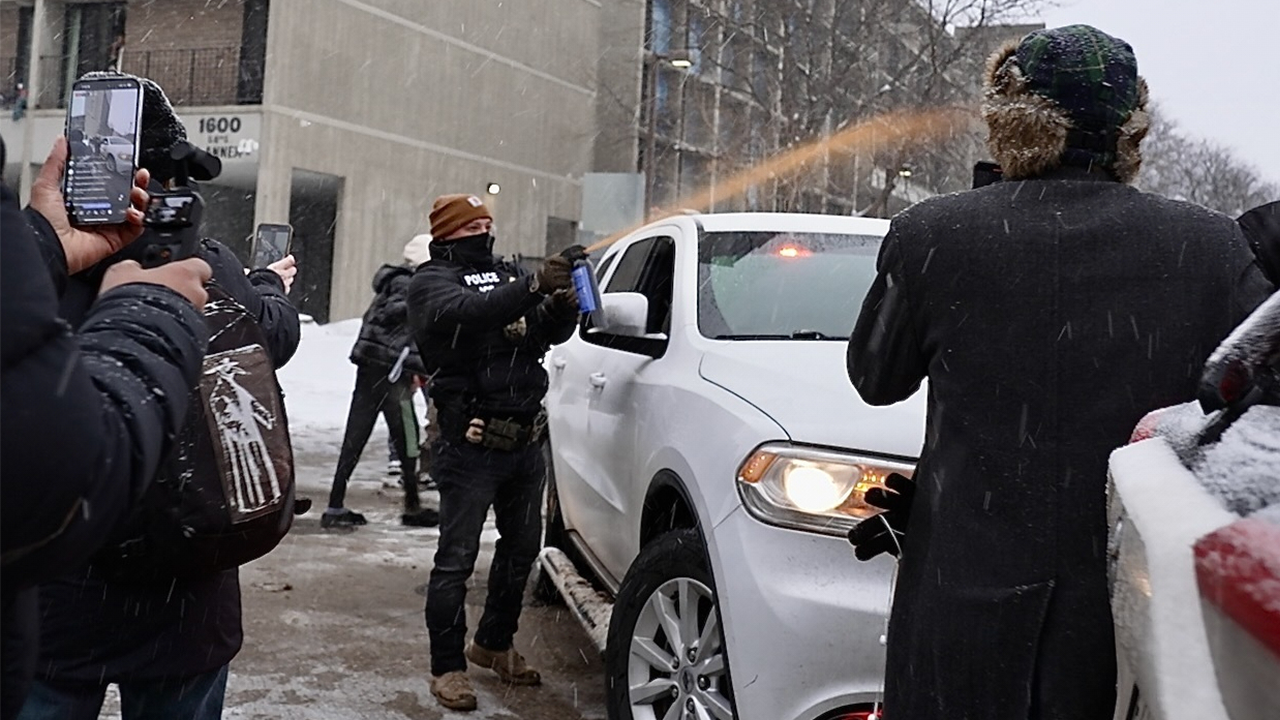
The video, captured by passerby Lauryn Spencer during her lunch break, shows bystanders pleading with ICE agents to release the woman, repeatedly shouting that she was pregnant and couldn’t breathe. Spencer described a chaotic scene where federal agents showed immediate aggression rather than attempting diplomacy. “They were being very aggressive from the beginning,” Spencer told The Associated Press, noting that she was shoved back by an agent when she attempted to ask the detained woman’s name. Spencer and other witnesses reported being sprayed with chemical irritants as the situation escalated. The footage also captured the moment an agent dragged the woman by one arm through the snow toward a vehicle before eventually releasing her. Earlier in the incident, agents had detained a male driver after breaking the window of his vehicle.
Chief O’Hara’s response was unequivocal, calling the footage “profoundly disturbing” and condemning what he described as an “egregious disregard for human dignity.” At a Tuesday news conference, O’Hara explained that Minneapolis police had been called to the scene by a federal agent claiming officers needed assistance. However, upon arrival, local police found no violence occurring against federal officers and subsequently disengaged. O’Hara pointedly contrasted his department’s intensive training in de-escalation techniques with what he characterized as “questionable methods” employed by other agencies operating in the city. “It is deeply concerning that there appears to be a lack of accountability from our federal partners,” O’Hara stated, highlighting a growing rift between local and federal law enforcement approaches.
Department of Homeland Security spokeswoman Tricia McLaughlin offered a markedly different account of the incident. According to McLaughlin, federal agents were targeting a vehicle when protesters “threw rocks, chunks of ice, assaulted officers and used pepper spray.” She claimed two individuals were charged with assaulting federal officers and that agents sustained injuries including cuts. McLaughlin further alleged that agents attempted to arrest the woman seen in the video because she “rushed an ICE vehicle and attempted to vandalize it,” but abandoned the arrest after being surrounded by protesters. The video does show some protesters throwing snowballs at agents, who responded with chemical irritants. At one point, an agent was recorded using a taser before challenging the crowd with “Who wants more?”
The confrontation represents a flashpoint in what many local residents describe as increasingly aggressive immigration enforcement operations in the Minneapolis-St. Paul area. Former Minnesota state legislator Hodan Hassan observed a troubling escalation in ICE tactics as the operation has continued: “The first week, they were not very aggressive. They were stopping people. Second week, we saw them really aggressive.” The incident occurs amid heightened immigration enforcement efforts under the current administration, which has prioritized mass deportation operations. The location of the incident—just miles from where George Floyd was killed by then-officer Derek Chauvin in 2020, sparking nationwide protests for racial justice and police reform—adds another layer of significance to community concerns about law enforcement tactics.
The stark contrast between local and federal approaches to law enforcement highlights broader tensions in American policing. While Chief O’Hara emphasized his department’s commitment to de-escalation techniques—a direct response to reforms implemented after Floyd’s death—the actions of federal agents appear to reflect different priorities and methods. The incident has reopened wounds in a community still healing from past traumas and raised important questions about accountability, proportionate use of force, and coordination between different levels of law enforcement. As immigration remains a contentious political issue nationally, this Minneapolis confrontation serves as a powerful reminder that enforcement policies have real, sometimes violent consequences in communities across the country.