


The Stir in Maple Grove: A Night of Clashing Visions
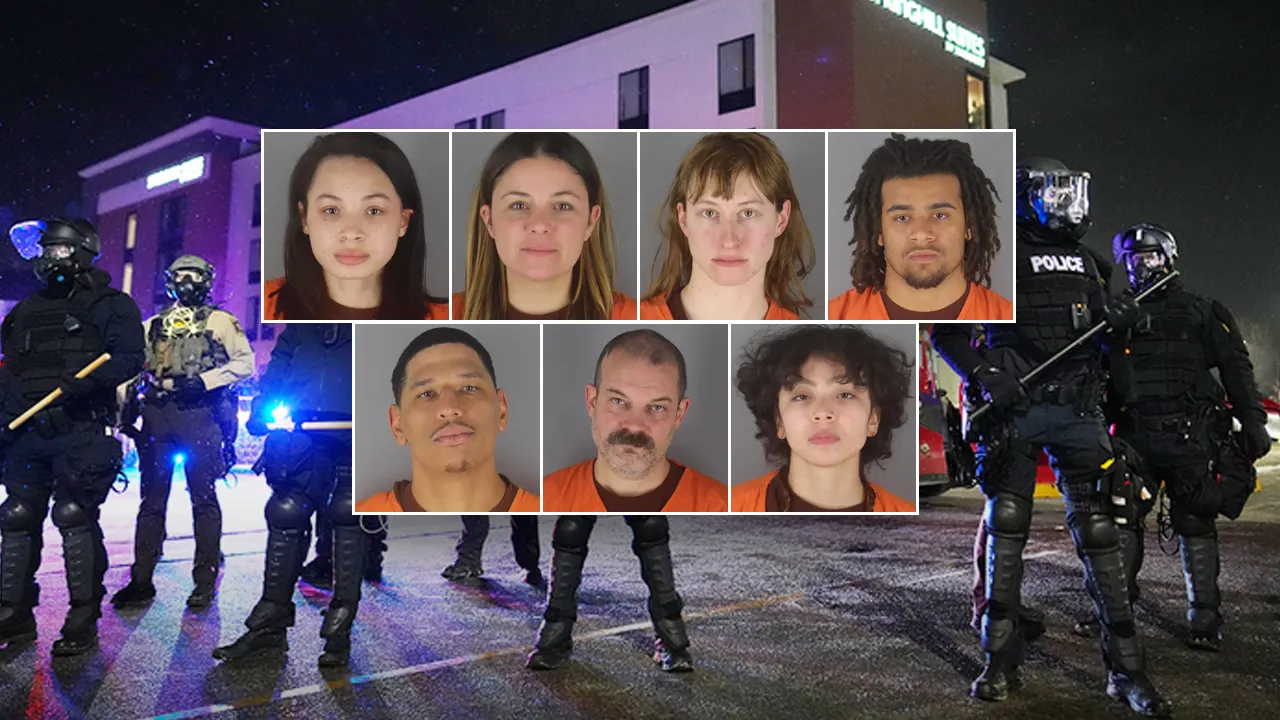
In the quiet suburb of Maple Grove, Minnesota, tensions boiled over on a crisp Monday night outside the SpringHill Suites by Marriott. A group of activists had gathered, fueled by rumors that Border Patrol Commander Gregory Bovino was staying there—a man they saw as a symbol of aggressive immigration enforcement. These protesters, many young and idealistic, carried signs and chanted slogans, driven by a deep passion for justice and reform. Some had personal stories tied to immigration, perhaps friends or family affected by policies they viewed as unjust. The air was electric, a mix of determination and adrenaline, as they hoped their voices would echo far and wide. But as the demonstration intensified, with shouts turning into challenges and peaceful assembly giving way to chaos, local authorities stepped in. Police reported that the crowd began damaging property and hurling objects at officers, leading to declarations of an unlawful assembly. Arrests followed swiftly, with 13 individuals taken into custody after refusing to disperse. This was no ordinary protest; it was a clash between First Amendment rights and public safety, highlighting the fragile line between expression and disruption in a divided America. For those who marched, this was about fighting systemic wrongs, dreams of a fairer society where borders aren’t walls but bridges of compassion. Yet, in the eyes of the law, the night transformed from a rally into a riot, leaving participants grappling with consequences they’d never anticipated.
What started as a peaceful expression escalated into something far more volatile, according to Maple Grove police. Officials responded to calls about a protest at the hotel, initially respecting the group’s right to gather and voice opinions on immigration and ICE’s role in Minnesota. But the tone shifted dramatically when agitators allegedly vandalized the property and threw objects at law enforcement. Personal stories from the sidelines paint a picture of young activists fueled by social media campaigns, Instagram posts proliferating #DisruptDisturbResist hashtags that urged nationwide actions like January 30’s “shutdown”—no work, no school, no shopping. Among them were law students and nurses, working-class folks and academics, all believing in shaking up the status quo. Imagine Freya Ebbesen, a 23-year-old birth assistant at a local clinic, who had traded shifts to be there, her nursing degree from UW-Madison a testament to her commitment to healing lives. Or Jaylynn Marie Rodriguez, a bright 24-year-old first-year law student at the University of Minnesota, whose Macalester College experiences in sociology and social justice programs had ignited her fire for change. These weren’t faceless mobsters; they were individuals with dreams—of reforming ICE, protecting vulnerable communities, and ensuring no one else suffered from policies they deemed cruel. Yet, as officers issued dispersal orders, the fervor didn’t wane, leading to a standoff where freedom of speech collided with the imperative of safety. The police statement was clear: while they uphold First Amendment rights for peaceful assembly, criminal acts like property damage strip away that protection. For the protesters, it felt like a betrayal of their ideals, a moment where passion turned into peril.
Amid the arrests, Justin Neal Shelton stood out as a complex figure with a troubled past that bore weight on this night. Arrested for obstructing legal process, Shelton’s criminal record dated back to 2007, where he pleaded guilty to first-degree aggravated robbery. The details were grim: he and an accomplice had attacked a pregnant woman, knocking her down and continuing the assault even after she begged them to leave. Miraculously, her unborn child was unharmed, but the incident left emotional scars on all involved. Shelton, expressing remorse at his sentencing, vowed to turn his life around, blaming intoxication for his actions but owning his mistakes. “First of all, I want to say how sorry I am. Even though I was intoxicated at the time, that does not justify my wrongdoing,” he said back then, his words echoing a man seeking redemption. More recently, in 2020, he faced convictions for possessing a firearm or ammunition after a prior violent crime, further entrenching his legal battles. On this protest night, Shelton joined others, perhaps hoping to channel his past regrets into a fight for broader justice, to protect others from societal failures that had once ensnared him. Abraham Nelson Coleman, 45, arrested for damage to property, carried a heavier load of convictions since 2003: multiple thefts, felonies, and repeated property damage charges. Each entry told a story of struggles, maybe financial hardships or addiction, leading to repeat offenses that painted him as a habitual offender. Coleman’s presence highlighted how societal challenges could push individuals toward activism, seeking communal solutions when personal ones faltered. These men, with their checkered histories, didn’t protest in isolation; they brought lived experiences of loss and regret, blending with the marchers’ collective anger against systemic oppression. It was a poignant reminder that protest lines often draw from life’s harshest lessons, where yesterday’s wrongdoings fuel today’s cries for change.
The younger protesters added layers of youthful energy and aspiration to the gathering, their arrests on riot charges underscoring a generation grappling with global injustices. Rayna Michelle Alston, just 21 and from Minneapolis, embraced the “disrupt disturb resist” mantra prominently on her Instagram bio, her recent stories amplifying calls for a nationwide shutdown. For Rayna, this wasn’t just activism; it was a feast of defiance, with posts rallying friends to boycott daily routines on January 30. Visualize her, a young woman brimming with conviction, pausing her studies or job to stand up, inspired by stories of migrant families torn apart. Cashmere Hamilton-Grunau, 19, brought athletic grit from his days playing football at Morehouse College, his Facebook profile reflecting a proud alumni background. What drove him to risk arrest? Perhaps a deep-seated belief in fairness, where sports taught him team spirit now channeled into societal battles. Similarly, Oliver Kilgore Jones, 27, faced charges beyond rioting—damage to property—his quiet resolve hinting at internal conflicts. These millennials and Gen Zers mixed academic eloquence with raw street smarts, like Josephine Jay Guilbeau, 37, who had previously disrupted a Senate hearing on accusations of genocide in Israel, labeling lawmakers complicit. Her Instagram video from that night labeled the police action a “military operation,” a dramatic flair that captured the group’s lens of oppression. Guilbeau’s history showed a pattern of bold stances, from advocacy to confrontation, reflecting a life devoted to exposing inequities. For Samantha Faye Muchowski, 24, or Baley Rae Schlosser, 26, the riot charge was a rite of passage into activism’s high stakes. Megan Ashley Larson, another 24-year-old, and John Linden Gribble, 40—with his own record of DWI offenses—rounded out the list, each carrying personal burdens like guilt over drunken mistakes or broader societal disillusionment. Yet, in their unity, they embodied hope: nurses like Freya Ebbesen dreaming of birthing a better world, law students plotting legal reforms, athletes pushing for communal strength. Their stories wove a tapestry of ambition amid vulnerability, where past failures—Gribble’s alcohol-related convictions—mirrored America’s wounds, fueling protests that demanded accountability from ICE and beyond.
Expanding on these individual narratives reveals a larger human drama unfolding in American protests. Think about Freya Ebbesen’s day job: as a clinic nurse and birth assistant, she witnessed life’s beginnings firsthand, perhaps extending that nurturing to advocating for immigrants—human life in its most fragile forms. Her UW-Madison nursing degree symbolized a path of service twisted toward direct action, where rage at maimed ICE agents or escaped criminals pushed her onto the streets. Meanwhile, Jaylynn Rodriguez’s role as a Latinx Student Union coordinator during college hinted at cultural roots, likely drawing from heritage stories of displacement and resilience. Her studies at Macalester College in social justice programs would have exposed her to theories of resistance, transforming academic lessons into real-world defiance. For young adults like Rayna Alston, the Instagram activism wasn’t vanity; it was mobilization, resonating with peers who shared viral calls for disruption. Cashmere’s football background added dynamism, a metaphor for tackling systemic issues head-on, where college stadium cheers morphed into protest chants. Older figures like Abraham Coleman or Jlguilbeau brought wisdom from repeated setbacks, their multiple convictions not deterring but deepening commitment to fight recurring injustices—whether theft stemming from poverty or congressional complacency. Even incidental to rioter charges, Oliver Jones’s property damage hinted at mishaps in the heat of passion, perhaps accidental amid the chaos. These stories humanize the statistics: behind each arrest lay dreams deferred, families at risk, and a yearning for empathy in a polarized world. The thugs label rang hollow; they were seekers of change, willing to face jail for principles that, to them, outweighed comfort.
Sarah Nicole Workman, 28, and Baileys 26, rounded out the group with riot charges, their quiet entries in the news underscoring how ordinary lives blend into extraordinary moments. For Workman, perhaps a local worker or student, the protest represented a break from routine, a chance to voice frustrations over immigration crises she’d read about or seen in headlines. Schlosser, too, might have personal triggers—friends affected by deportation rumors—driving her into the fray. Across the board, these individuals weren’t anomalies; they echoed broader national sentiments, where frustration with border policies led to marches like the “Thousands March” through Minneapolis, demanding ICE’s removal. The article’s context tied back to larger events, like a violent mob aiding a criminal’s escape and injuring an agent—a backdrop of real dangers that activists aimed to confront. Police stressed respect for peaceful assembly, but the line blurred when objects flew and property suffered. Humanizing this, one imagines the adrenaline of crowds, the fear in officers’ eyes, and the inner conflicts of protesters weighing idealism against legality. Justine Sheltons apology from years past lingered, a ghost in the machine, reminding everyone that people carry baggage into battles. As the night concluded with arrests and statements upholding rights, it left lingering questions: Was this disruption a spark for reform, or a cautionary tale of unchecked fervor? In Maple Groves winter chill, human stories of struggle, hope, and consequence played out, reminding us that behind every headline are lives seeking meaning amid turmoil.
Ultimately, the Maple Grove incident encapsulated tensions rippling through America, where protests for change meet rigid responses. Police echoed dedication to safety: “The Maple Grove Police Department respects and upholds the First Amendment rights of individuals to peacefully assemble and express their views. Our priority remains the safety and security of all residents, visitors, and property within our community… Individuals participating in criminal acts are not protected under the First Amendment and were subject to arrest.” This stance balanced free speech with order, but for the arrested, it felt like suppression of vital dialogue. Humanizing Fox News’ report reveals depth beyond charges—passionate youths with compelling backstories, from felonious pasts to professional aspirations, all converging on a shared platform of resistance. Thousands elsewhere demanded ICE’s ousting from Minnesota, amplifying national calls for humane borders. Reflecting, one sees not villains in the crowd, but flawed humans striving for justice, their actions a mirror to societal divides. As radio listens to such articles emerge—a “You can now listen to Fox News articles!” promo underscoring accessibility—the stories invite empathy, urging readers to ponder the human cost of ideological clashes. In this narrative, the agitators weren’t mere disruptors; they were dreamers, scarred by life’s inequities, marching toward an uncertain but hopeful future. Their arrests, while enforcing law, highlight fragility of democracy, where voices fade into cells but ideas endure, sparking debates on reform, redemption, and the true meaning of peace. Landon Mion’s contribution to Fox News Digital etched these tales, transforming data into human portraits for the ages.