






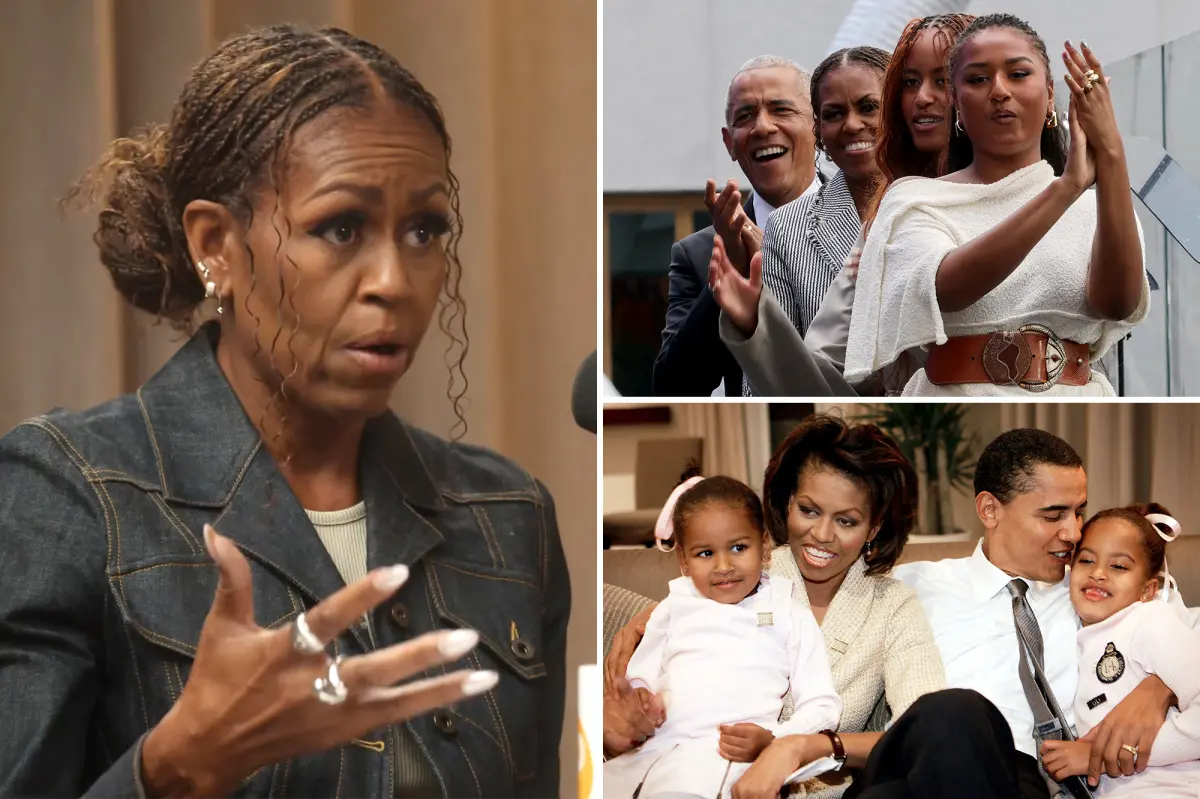
In the aftermath of a candid podcast appearance, Michelle Obama has found herself at the center of a familiar and uncomfortable public conversation about motherhood, expectation, and the right of women to speak honestly about their own lives. During an episode of Jon Stewart’s “IMO” podcast, the former first lady responded with a simple, unadorned “I’m good” when Stewart asked whether she missed the daily demands of parenting her now-adult daughters, Malia and Sasha. The remark, which was immediately framed as a dismissive or even resentful comment by some critics, quickly ignited a wave of commentary across social media and conservative news outlets. Stewart had been describing how parenting gave structure and meaning to his life, and Obama’s terse reply stood in stark contrast to his earnest reflection. But the fuller context of her answer—one in which she immediately clarified that she loves her daughters, was planning to see them for dinner that very evening, and expressed relief at no longer experiencing the visceral terror of waiting for teenagers to come home on Friday nights—was largely lost in the ensuing uproar. Her words became a flashpoint in a broader cultural argument over how mothers are supposed to feel, especially when they have access to resources, support, and freedom that most women could scarcely imagine.
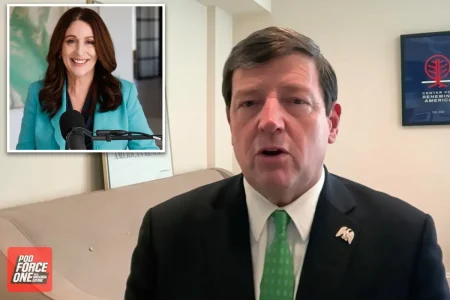
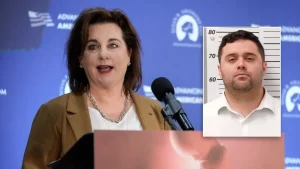
The criticism was swift and sharp, led by figures who saw in Obama’s comment a deeper character flaw rather than a moment of relief after decades of intensive caregiving. Elizabeth Barcohana, a California Republican Party delegate and mother of seven, told Fox News Digital that she heard something more troubling than simple exhaustion in Obama’s phrasing. Barcohana argued that there is a meaningful difference between a mother saying she is tired—which she called real and relatable—and a mother expressing something closer to resentment. She connected Obama’s remarks to the ongoing Lindsay Clancy trial, a heartbreaking case involving a Massachusetts mother accused of killing her children amid a severe mental health crisis, and suggested that Obama’s lighthearted admission felt particularly painful in that context. Conservative commentator Matt Walsh went even further, accusing Obama of being unable to tolerate even the “minor demands” her children placed on her time and energy, and calling her a “total raging narcissist.” Political commentator Link Lauren joined in, characterizing the podcast as little more than a wealthy woman complaining about her life of luxury while openly despising her husband and children. These reactions reflect a deep discomfort with the idea that a mother might feel anything less than grief when her children leave home, and they reveal the impossibly narrow emotional lane that public women, particularly first ladies, are expected to occupy.
Yet a closer look at Obama’s actual comments, and at the broader context of her public statements about parenting, paints a more nuanced and deeply human picture. On the podcast, she did not say she disliked being a mother, nor did she disparage her daughters. She said, “I don’t miss them. I don’t. I love them. I’m going to see them tonight for dinner. I love them.” She went on to describe her empty-nest experience with characteristic frankness, noting that while Barack Obama cried when their daughters went to college, she felt an unexpected lightness. “Bye, little—goodbye,” she recalled saying, and she spoke of the freedom of having a schedule that was entirely her own after years of coordinating her life around school runs, extracurricular activities, and the relentless anxieties of adolescence. She emphasized that she had spent so much quality time with her children that she knew them inside and out, and that their independence was not a loss but a natural and welcome transition. In previous interviews, she has praised Barack Obama’s parenting and described how both parents consciously carved out time during his presidency to ensure their daughters felt secure, anchored, and deeply loved during their formative years. None of this sounds like a woman who resented her children; it sounds like a woman who gave deeply, took her responsibility seriously, and eventually reached a stage of life where she was ready to exhale.
There is a deeply human truth embedded in Obama’s answer that gets flattened by outrage. Motherhood is not a single, pure feeling. It is a swirling mixture of love, exhaustion, joy, boredom, pride, fear, and sometimes a quiet, guilty longing for autonomy. Many mothers love their children more than anything in the world and still, at times, find themselves dreaming of empty rooms and unclaimed weekend mornings. The empty nest is rarely an uncomplicated experience. It can bring grief and relief in equal measure, sometimes in the same breath. For a woman who spent eight years in the White House while raising two daughters under a microscope, whose every parenting decision was scrutinized by people who questioned her patriotism, her femininity, her loyalty, and her competence, the moment when her daughters left for college may have felt less like an ending and more like a release. She was no longer responsible for raising young Black women in a world that so often fails them. She was no longer expected to embody the image of the perfect mother while also being a lawyer, a first lady, a public figure, and a private person. Saying “I’m good” was not a rejection of her children; it was an acknowledgment that her shifting role allowed her to be something other than a parent for the first time in decades. That is not narcissism. That is growth, self-awareness, and far more honesty than most public figures are willing to offer.
At the same time, it is worth acknowledging why Obama’s words landed the way they did for some listeners. The national conversation around motherhood is currently raw, partly because of the Lindsay Clancy tragedy and partly because of an ongoing cultural reckoning over the pressures women face. Mothers are told to be selfless, endlessly patient, and lovingly available, and those expectations are often intensified for women of color and for women in the public eye. When a wealthy, privileged woman like Michelle Obama says she doesn’t miss her daughters, it can feel jarring to mothers who are struggling to conceive, who have lost children, who have watched their kids battle addiction or illness, or who have had to work multiple jobs while their children drifted off to bed alone. It can feel like a confirmation of the suspicion that many mothers secretly can’t wait for their children to leave. But the answer to that discomfort is not to police the feelings of every mother who dares to be honest. The answer is to create more space for the full spectrum of maternal experience—including the messy, ambivalent, and unflattering parts. Mothers need room to say, “I love my children and I also need my life back,” without being accused of narcissism. They need room to say, “Raising kids was the hardest thing I’ve ever done, and I don’t want to do it again,” without being judged as cold. And they need room to say, “I miss my children every day, and I also feel lighter now that they’re independent,” because both of those feelings can be true at the same time.
In the end, Michelle Obama’s comment should not be treated as a scandal or a confession, but as a window into a universal stage of life that all parents eventually reach. Her critics are entitled to their own feelings about her tone and timing, but reading malice into a mother’s relief is a choice—and it is a choice that reveals more about our cultural anxieties than about Obama herself. The former first lady has spent years advocating for healthy families, for the importance of parental presence, and for the idea that children need both structure and freedom. She has written openly about the sacrifices she made during her husband’s political career and about the importance of protecting her daughters from the crucible of public life. She has earned the right to speak honestly about her own experience, even if that honesty makes others uncomfortable. Perhaps the most human response to this entire controversy is not to take sides, but to imagine what it must feel like to be Michelle Obama—to have loved your children publicly, raised them under impossible scrutiny, and then, finally, to watch them walk out the door with the knowledge that you did your job well. That kind of parenting does not end with grief. It ends with a deep, earned peace. So when she says she is good, maybe we should believe her. And maybe we should let that be a reminder that mothers everywhere deserve the freedom to define their own happiness, not according to the expectations of strangers, but according to the quiet, private truth of their own hearts.