





Welcome to another edition of Late Night Roundup, that delightful nightly recap where we sift through the hilarious chaos of late-night television so you can catch up without staying up until dawn—and, hey, someone has to get paid to laugh at all this for a living. It’s like being the party pooper who shows up the next day to tell you what you missed, but with fewer regrets and way more punchlines. Last night, the hosts were dishing on everything from political scandals to self-deprecating sketches, proving once again that comedy thrives in the absurdity of real life. Think of it as your fast-forward button through the absurdity: we’ll break down the top bits, the wild allegations, and the stars who keep us entertained while the world spins a little faster than usual. And as a bonus teaser, we’re highlighting the 50 best movies streaming on Netflix right now—because after a long day, who doesn’t need a good movie marathon to unwind? But let’s dive into the meat of the night: the laughs, the zingers, and the people who probably woke up feeling a tad less amused. From embattled Cabinet secretaries to lawsuit-happy directors, the comedians had a field day, and we’re here to unpack it all in a way that’s as entertaining as it is informative.
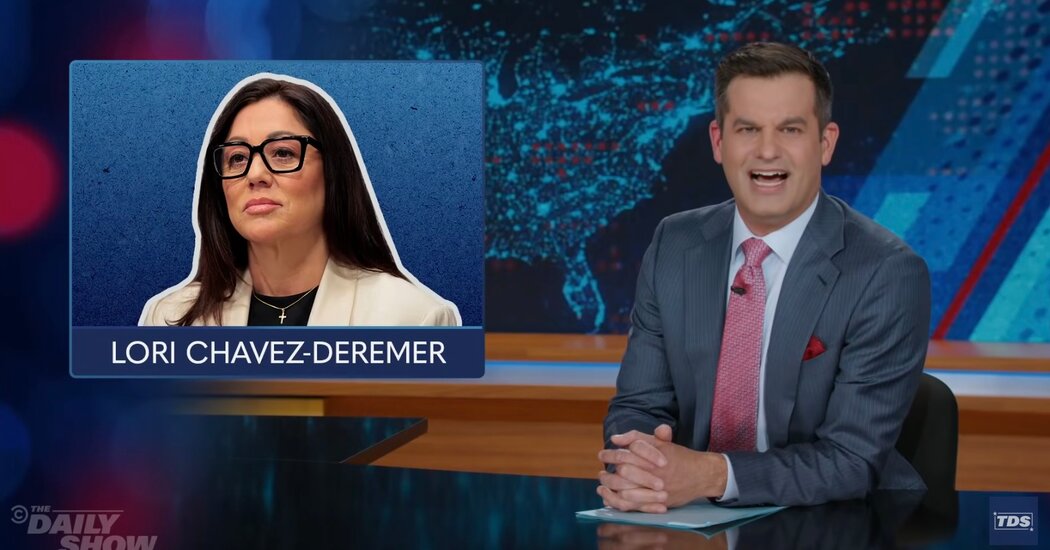
One of the biggest stories shaking up the late-night airwaves this week revolves around Lori Chavez-DeRemer, the former labor secretary whose abrupt resignation has become the punchline du jour. Stepping down amid an internal probe into allegations of professional misconduct, Chavez-DeRemer found herself at the center of a storm that’s equal parts scandalous and, well, bizarre. On Tuesday’s “Daily Show,” Michael Kosta pointed out her relative obscurity in Trump’s cabinet, quipping, “Not you, too, Lori! It’s always the ones you never heard of.” It’s a fair observation—politicians like this often fly under the radar until the headlines hit. The charges are serious: an alleged affair with a member of her security team, drinking on the job (because who hasn’t had a bad day?), improper use of government resources for personal trips (talk about perks gone wrong), and inappropriate text messages sent to female staffers by her own father and husband. Kosta nailed it with his comeback: “What the hell? Was she going through her workplace anti-harassment training like, ‘Challenge accepted’?” It’s the kind of irony that screams for a punchline, highlighting how everyday human foibles can explode in the harsh light of public scrutiny. And then there’s that family tag-team angle: “They’re saying her dad is trying to tag-team his daughter’s staff with his son-in-law? Well, no wonder she’s drinking at work!” It’s crude, sure, but it underscores the personal dramas that seep into professional realms. We’ve all dealt with dysfunctional family dynamics, but when Daddy and Hubby are part of the equation, it turns into a sitcom with higher stakes. The comedians aren’t letting this one go easy—they’re amplifying the chaos to reflect society’s fascination with these moral slip-ups, reminding us that power doesn’t exempt anyone from bad decisions. As we chuckle, it’s worth pausing to think about the real folks affected: the staffers who endured awkward messages, the department now scrambling for a replacement, and Chavez-DeRemer herself, who must be weathering a personal and public maelstrom. Yet, in the world of late-night TV, it’s all fodder for satire, transforming tragedy into mirth.
Delving deeper into the Lori Chavez-DeRemer saga, it’s fascinating how these scandals reveal the underbelly of American politics, where private indulgences clash with public expectations. Imagine holding a high-stakes job in the labor department, advocating for workers’ rights, only to have your own house of cards come tumbling down over booze and bad romances. The “Daily Show” team dissects this with razor-sharp wit, reminding viewers that even the “obscure” figures in government have lives as messy as ours. Kosta’s jabs paint a picture of a workplace gone wild, where drinking isn’t just a coping mechanism but a symptom of deeper dysfunction. It’s relatable for anyone who’s ever mixed personal drama with professional obligations—think office parties turning into office soap operas. But for Chavez-DeRemer, it’s played out on a national stage, with investigators poring over texts and travel logs. The affair accusation alone is juicy enough to fuel gossip for weeks, but coupling it with familial interference adds layers of awkwardness that feel almost scripted. We live in an era where family values are touted, yet real families often complicate rather than simplify our lives. Her resignation underscores the fragility of reputation in politics: one misstep, and you’re out. Comedians like Kosta humanize this by drawing parallels to everyday slip-ups, making us empathize even as we laugh. It’s a balancing act—satire exposes flaws without turning into outright bullying. As viewers, we might shake our heads at the allegations, but we also recognize the human element: stress from high-pressure jobs can lead to poor choices, and family meddling isn’t unique to the elite. The late-night treatment elevates this story from tabloid fodder to teachable comedy, prompting us to reflect on our own boundaries between work and play. Ultimately, Chavez-DeRemer’s downfall serves as a cautionary tale about power’s intoxicating lure and the comedians’ role in keeping the powerful accountable through humor.
Shifting gears to another high-profile figure, the late-night crowd couldn’t resist piling on F.B.I. Director Kash Patel’s recent legal gambit. Patel filed a whopping $250-million defamation lawsuit against The Atlantic magazine yesterday, sparked by an article claiming he abused alcohol—a claim he promptly denied, only to quip, “Oh man, I did?” on his way out the door. Seth Meyers caught wind of this on “Tonight Show,” delivering lines that cut deep with their observational punch. But it was Kosta who amplified the absurdity, joking that Patel “is not going to take this laying down—’cause then they’d have to get the SWAT team in to wake him up.” It’s a vivid image, evoking the chaotic takedowns of infamous foes, and it sticks because it plays on Patel’s role in high-stakes law enforcement. Weiss highlights Patel’s populist hangouts with young, injury-prone hockey players, suggesting perhaps the director’s judgment might be as compromised as his liver: “I guess in retrospect, if a room full of 21-year-old concussed hockey players thinks you’re a good hang, you probably shouldn’t be in charge of the F.B.I.” We’ve all had those questionable friendships in our youth, but for someone heading the F.B.I., it’s a red flag. Kosta’s final zinger ties it back to legendary operations: “I’ve been hung over, but I’ve never been so hung over they had to wake me up the same way they killed Bin Laden.” It’s hyperbolic genius, equating a hangover to a military raid, underscoring the over-the-top nature of Patel’s denial. These bits humanize the man behind the badge, portraying him not as an impervious authority figure but as someone grappling with very human vices. Alcoholism is a serious issue, touching millions, and while comedy isn’t a cure, it destigmatizes it by poking fun. Patel’s lawsuit feels like a defensive swipe, more vanity than vindication, and the hosts are relentless in calling it out. It’s a reminder of how public figures’ personal struggles become public spectacles, amplified through media and mirth. As we digest these jokes, we can’t help but wonder about the toll of power on individuals—Patel’s story, wrapped in humor, invites empathy for a man whose life seems as chaotic as his accusations.
On a lighter note, Tuesday’s “Tonight Show” had Jimmy Fallon flaunting his inner kid by showcasing MAD Magazine’s fresh issue, complete with a cover caricature of him alongside other late-night titans. Fallon’s excitement was palpable as he paraded the comic genius, turning a spotlight on how even giants of comedy get roasted by iconic satire. It’s a meta moment: Fallon, the king of silly impressions and charades, embracing a piece of pop culture that’s been skewering celebrities for decades. The cover juxtaposes his affable, everyman charm with exaggerated, often merciless drawings of him and peers like Jimmy Kimmel and Stephen Colbert—think bloated heads and absurd poses that exaggerate their on-screen personas. Fallon didn’t just show it off; he laughed along, reminding us that true comedians can laugh at themselves. This bit ties into the theme of self-deprecation that runs through late-night TV, where hosts willingly step into the funhouse mirror to entertain. MAD Magazine, a staple since the 1950s, thrives on irreverent humor that pokes at politics, pop stars, and pundits, and Fallon’s nod to it feels like a full-circle homage. For viewers, it’s a nostalgic tug—many of us grew up with MAD’s iconic Spy vs. Spy strips or fold-ins revealing risqué answers. Fallon’s enthusiasm humanizes him, showing a side that’s not just scripted banter but genuine appreciation for comedic tradition. In an age of digital satire on TikTok and memes, props to Fallon for spotlighting this print relic. The segment also subtly comments on the late-night landscape, where these hosts form a brotherhood of barbs, united in their craft. It’s wholesome chaos, proving that behind the cameras, there’s camaraderie amidst the competition. We walk away from this bit feeling that warmth, a break from the heavier scandals covered elsewhere on the airwaves.
Wrapping up the roundup, our eyes turn to Wednesday night’s lineup, where anticipation is building like a comedy gold rush. Kimmel wasn’t short on star power, promising appearances that promise laughs aplenty. One of the night’s highlights is expected to be Adam Scott, the charming star of “Hokum,” gracing “Jimmy Kimmel Live” with his presence. Scott, known for his witty roles in shows like “Severance” and films like “Parks and Recreation,” brings that effortless relatability that’s perfect for Kimmel’s irreverent style. Fans are buzzing about potential bits delving into his mysterious sci-fi projects or just plain oddball impressions—after all, Scott’s repertoire includes everything from hot-dog-loving Everymen to enigmatic corporate drones. It’s the kind of guest spot that blends scripted sketches with off-the-cuff banter, keeping audiences on their toes. Beyond Scott, Kimmel’s show often surprises with unexpected dives into current events, celebrity feuds, or random games that veer into absurdity. Imagine how Adam Scott might wedge into the political punchlines we saw earlier—his laid-back persona could soften the edges of tough topics or amplify them with deadpan delivery. The late-night circuit thrives on these collabs, where actors like Scott step out of character to trade jokes with hosts. It’s a symbiotic relationship: actors promote their work, hosts pad their shows with talent, and viewers get prime entertainment. Scott’s appearance is just one thread in the broader tapestry of Wednesday’s programming, which might include musical acts, viral video roundups, or cryptic promos for upcoming series. What’s exciting is the possibility of meta moments, where late-night staples intersect with Hollywood heft. As we gear up for these outings, it’s a reminder of why we tune in night after night—the promise of connection, surprise, and that elusive joy of shared laughter.
Finally, as we wind down this roundup, don’t forget to check out the 50 best movies on Netflix—if you’re anything like us, you’ve already got a queue lined up from last night’s inspiration. It’s the perfect way to extend the night’s vibes into your downtime. The comedians did their part in unpacking the week’s follies, from scandalous secretaries to suing directors, and it’s left us reflecting on the power of humor to dissect the human condition. As we sign off, here’s to hoping your sleep is sound, your mornings brighter, and your evenings filled with the kind of witty repartee that makes life a little less daunting. Until next time, keep laughing—it’s the best medicine for whatever absurdity comes our way.