







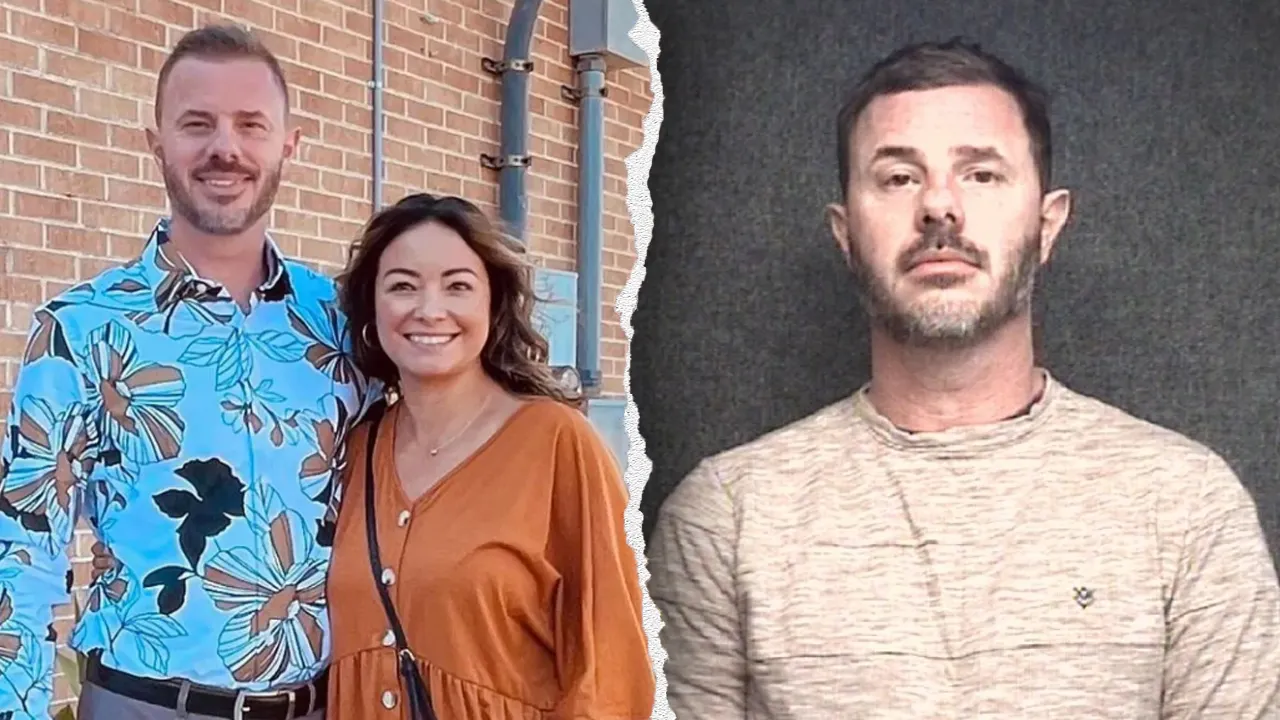
The serene, pine-scented woods of Lumber River State Park in North Carolina now carry a heavy, tragic weight that no amount of sunshine can fade. It was there, on a quiet day in late April 2024, that the life of 30-year-old Mica Miller came to a devastating and violent end. The news shattered the community surrounding Solid Rock Church in South Carolina, where Mica had served as a beloved worship leader alongside her husband, Pastor John-Paul Miller. To outsiders, they appeared to be the perfect pastoral family, but the veneer of their seemingly blessed life shattered mere days before her death. Just 48 hours after Mica had finally summoned the courage to serve her husband with divorce papers, her body was discovered, and authorities would later rule her death a self-inflicted gunshot wound. The official investigation closed, but for Mica’s family, the story was far from over. Now, the world is getting a glimpse of the darkness they claim lurked behind closed doors, thanks to a gripping new three-part Netflix true-crime series titled Death of the Pastor’s Wife, which premiered this week and delves deep into the harrowing final months of Mica’s life, the troubling allegations of abuse, and the haunting question of what truly drove her to that remote state park.
In the documentary, Mica’s siblings paint a chilling portrait of a marriage that was anything but holy—a relationship they describe as a systematic prison of torment and control. They allege that John-Paul Miller subjected his wife to a grotesque spectrum of abuse, encompassing emotional manipulation, sexual coercion, spiritual domination, financial suffocation, and outright physical violence. Perhaps the most disturbing revelation centers on an alleged involuntary hospitalization. Mica’s family claims that Miller, using his pastoral influence and position of authority, orchestrated having Mica forcibly committed to a mental health facility against her will. They describe this as a calculated power play, a way to gaslight her, isolate her from her support system, and make her question her own sanity. While she was institutionalized, the siblings allege, Miller seized total control of her life, confiscating her vehicle, her phone, and her laptop. Adding an extra layer of violation, they claim her personal computer contained intimate photographs of her, which they believe were used as leverage and a means of intimidation. For the family, this hospitalization wasn’t about care; it was a weapon used to break her spirit and cement his dominance over every aspect of her existence.
The Netflix series frames these events as a textbook case of coercive control—an insidious pattern of behavior designed to strip a victim of their autonomy and independence. The siblings argue that the involuntary commitment was not an isolated incident but rather a cornerstone of a broader, calculated campaign to dominate Mica. They recount how she was diagnosed with bipolar disorder during this period, a diagnosis they deeply question, suggesting it was a convenient label utilized by her husband to discredit her and justify his despicable actions. The documentary weaves together interviews with relatives, former church members, and Mica’s divorce attorney, all of whom describe a vibrant, loving woman slowly being eroded by a man who used scripture and spiritual authority as a cudgel. They describe a husband who demanded absolute obedience, monitored her every move, and systematically cut her off from friends and family. The emotional weight of these testimonies paints a picture of a woman trapped in a psychological nightmare, where the man who was supposed to cherish and protect her was instead the very source of her terror, leaving her with no safe harbor and no escape from his relentless grasp.
The tragic narrative takes a legal turn as federal prosecutors step in to dismantle Miller’s façade of innocence. In December 2025, a federal grand jury handed down a damning indictment against him, charging him with cyberstalking and making false statements to investigators. The specifics of the indictment are as gruesome as they are revealing. Prosecutors allege that Miller engaged in a relentless campaign of harassment that included posting a nude photograph of Mica online without her consent—a vicious act of public humiliation—and secretly placing tracking devices on her vehicle to monitor her every movement. The intimidation reached a fever pitch when he allegedly contacted her over fifty times in a single day, bombarding her with calls and messages in a clear attempt to terrorize her. Furthermore, the indictment details how he interfered with her finances, attempting to leave her penniless and dependent, and even went so far as to damage her tires, a potentially lethal act designed to leave her stranded and vulnerable. The legal document chillingly states that his conduct placed Mica in “reasonable fear of death or serious bodily injury” and was intended to cause, and did cause, “substantial emotional distress.” Investigators later discovered that Miller purchased a tire-deflation device, a piece of evidence that directly linked him to the sabotage of her vehicle, further cementing the prosecution’s case against him.
Despite the severity of these federal charges, the justice system has drawn a stark line between Miller’s alleged campaign of terror and the physical act that ended Mica’s life. The Robeson County Sheriff’s Office concluded its investigation into her death, ruling it a suicide, and has not charged Miller with her murder. Miller himself has consistently and adamantly denied any involvement in her death, maintaining his innocence. In response to the federal indictment, he entered a plea of not guilty to both charges—cyberstalking and making false statements—and was released on a $100,000 bond pending trial. While he faces a maximum penalty of five years in prison for the cyberstalking charge and an additional two years for the false statements charge, along with fines up to $250,000, the family remains haunted by the philosophical question: even if he didn’t pull the trigger, did he not build the weapon? They argue that his relentless psychological warfare and the systematic dismantling of her willpower directly contributed to her tragic decision. The federal case, while not addressing her death, meticulously documents the calculated cruelty he inflicted upon her while she was alive, painting a damning picture of a man who used every tool at his disposal—technology, faith, and the legal system—to destroy his wife.
As her family mourns, they are channeling their grief into a powerful crusade for legislative change, determined to ensure Mica’s story saves other lives. They are actively championing a proposed South Carolina bill, known as “Mica’s Law” (Bill 702), which seeks to formally recognize coercive control within the state’s domestic violence statutes. Currently, the law heavily focuses on physical violence, often overlooking the insidious, non-physical forms of abuse that can be just as devastating—the isolation, the financial manipulation, the psychological torment, and the technological surveillance that Mica endured. While the bill was referred to the state Senate Judiciary Committee, it unfortunately did not advance during the 2026 legislative session, a setback that has only intensified the family’s resolve. They believe that had such a law existed, Mica might have had a clearer path to safety and legal recourse before her life was so cruelly cut short. Through the Netflix documentary and their relentless advocacy, Mica’s siblings are ensuring her voice is heard beyond the grave, transforming their sister’s heartbreaking story into a clarion call for heightened awareness and systemic change. Her song may have been silenced in a North Carolina forest, but her legacy is now a powerful testament to the urgent need to recognize the invisible chains of abuse and to protect the vulnerable who are suffering in silence.