


In the late summer of 1989, a deceptive tranquility hung over the sun-drenched, palm-lined avenues of Beverly Hills, masking a darkness that would soon capture the attention of the entire world. For Peter M. Hoffman, then a towering figure in the entertainment industry as the president and chief executive officer of Carolco Pictures—the powerhouse studio behind iconic cinematic triumphs like Terminator 2: Judgment Day, Basic Instinct, and the Rambo franchise—this era was defined by a dizzying ascent to the peak of Hollywood influence. Yet, decades later, looking back from the reflective vantage point of his memoir, Karmic Winds: Reflections from the ‘Smartest Guy in Hollywood’, Hoffman does not just remember the glitz, the glamour, or even his own subsequent legal battles and federal prison sentence following a Louisiana film tax credit fraud case. Instead, he recalls a profound and chilling shift in the atmosphere of Southern California, a moment he describes with visceral gravity: the day the devil came to Los Angeles. The brutal double shotgun slaying of Jose and Kitty Menendez inside their Elm Drive mansion on August 20, 1989, shattered the illusion of safety in America’s wealthiest neighborhood, leaving an indelible stain on the lives of everyone who crossed paths with the family, and launching a haunting mystery that Hoffman still struggles to reconcile thirty years after Lyle and Erik Menendez were convicted of the slayings.
To truly comprehend the tragedy, Hoffman believes one must first understand the complex, formidable humanity of Jose Menendez, a man whose public persona was defined by an uncompromising, relentless drive. Jose was a self-made Cuban immigrant who carried the heavy weight of high expectations, both for himself and for those around him. Hoffman first encountered him during Jose’s tenure as an executive at RCA, where his sharp business acumen helped shepherd the Puerto Rican boy band Menudo—which later launched Ricky Martin into global superstardom—to English-speaking audiences. Recognizing his sharp, no-nonsense executive style, Hoffman eventually hired Jose to spearhead Carolco Pictures’ rapidly expanding home video business. In their daily dealings from 1986 until Jose’s untimely death, Hoffman saw a fiercely conservative patriarch who harbored grand dreams of converting his corporate wealth into a second act in Florida politics, perhaps even a seat in the United States Senate. Yet, Jose was also a notoriously difficult man who operated under the absolute conviction that he knew better than anyone else, creating an intense, high-pressure environment for his colleagues and, as would later be revealed, an suffocating atmosphere for his family. The first subtle tremors of domestic structural collapse came in 1988, when Jose urgently requested a multi-million-dollar withdrawal from his deferred compensation plan to facilitate an immediate move from Calabasas to Beverly Hills. It was only later that Hoffman discovered a heartbreaking truth: the move was not for convenience, but a desperate, expensive attempt by an embarrassed father to bail his teenage sons out of trouble and hushed up local burglary charges, trying to buy a fresh start for a family already spiraling out of control.
When the news of the gruesome murders broke, the initial shockwave caught the entire Hollywood community completely off guard, spiraling into a bizarre, paranoid circus where suspicion initially pointed in the most unlikely directions. Because Jose was an aggressive executive in an industry notorious for cutthroat dealings, early press speculation and police inquiries focused heavily on the possibility of a professional mob hit, casting a dark shadow over Carolco Pictures and specifically targeting Hoffman and the studio’s chairman, Mario Kassar. While the executives grappled with the absurdity of being viewed as murder suspects, Lyle and Erik played the part of grieving, traumatized orphans, deflecting suspicion with stories of mysterious intruders. But the facade began to crack for Hoffman during an incredibly unsettling phone call he received from Lyle shortly after the funeral. Rather than expressing grief or seeking comfort, the young man was intensely focused on one pressing question: when could he and his brother expect the payout on their father’s rumored $20 million life insurance policy? The sheer coldness of the inquiry sent a shiver down Hoffman’s spine, a feeling that intensified when he learned that Jose had never actually completed the physical exam required to validate the policy’s death benefits. Months later, investigators discovered that Lyle had actively searched his father’s home computer looking for this specific contract, convincing Hoffman that the brothers’ true motivation was not survival or self-defense, but an insatiable, impatient greed that could not wait for their demanding father to pass away naturally.
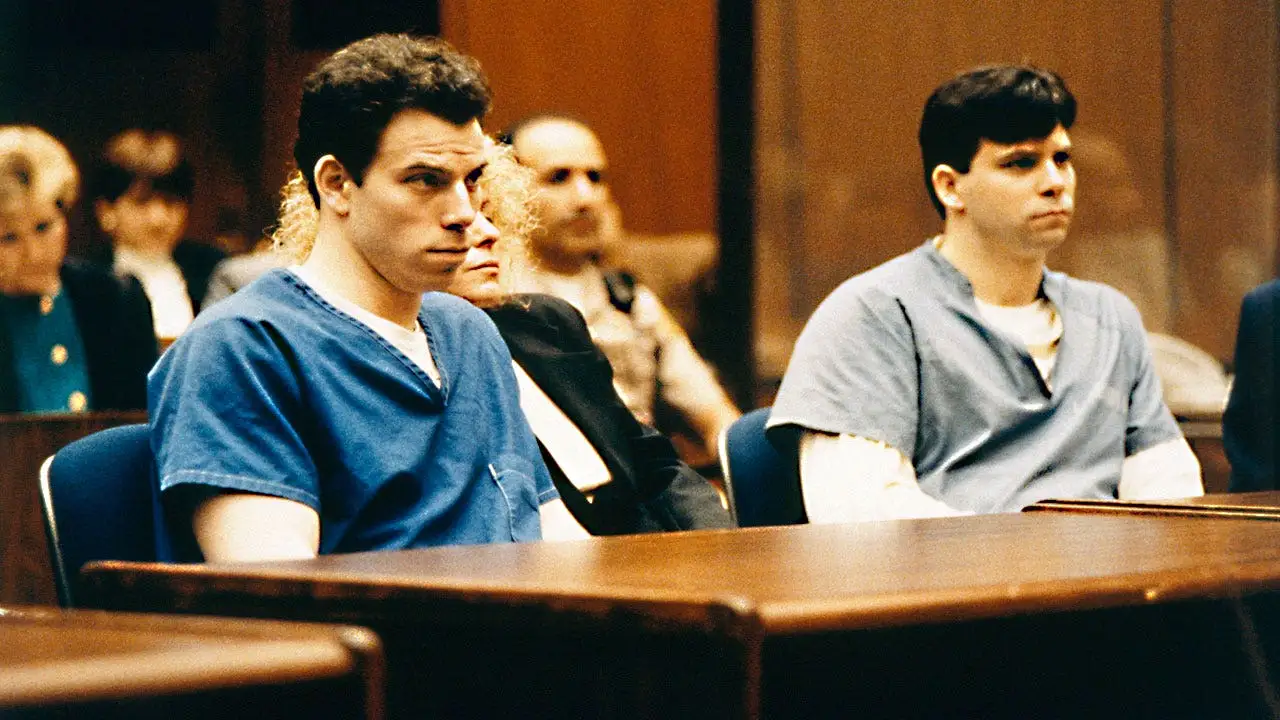
This perception of a financially motivated crime stands in stark, irreconcilable contrast to the harrowing defense narrative that would eventually dominate the American consciousness during the trials. When Erik’s emotional confession to his therapist was leaked to the police by the therapist’s mistress, the subsequent arrests of twenty-two-year-old Lyle and nineteen-year-old Erik set the stage for a cultural war. Their defense team argued that the brothers had lived in a private house of horrors, subjected to years of systematic emotional, physical, and sexual abuse by a sadistic father while a dysfunctional, complicit mother looked the other way. However, Hoffman, who watched the sensationalized trials unfold from a unique insider’s perspective, remains entirely unmoved by these allegations, firmly holding the line that Jose’s strictness was merely the tough love of a traditional, demanding disciplinarian. To Hoffman, the modern wave of media sympathy, spearheaded by high-profile advocates like Kim Kardashian and dramatized in hit Netflix series, glosses over the fundamental personality dynamics of the brothers. He remembers Lyle as the smooth, highly polite, and deeply calculating driving force of the pair—a young man who wore a perfect mask of the dutiful son—while Erik possessed a suggestible weakness that made him easy to manipulate. For Hoffman, no amount of modern psychological re-evaluation can erase his belief that the abuse narrative was a calculated, post-facto fabrication designed to escape the gas chamber, turning a cold-blooded execution into a tragedy of victimhood.
The legal journey of the Menendez brothers has been a slow, agonizing saga stretching across nearly four decades, mirroring the shifting cultural attitudes of the American public toward trauma and justice. In 1993, their first trial ended in a sensational deadlock, with separate juries unable to agree on whether the brothers acted out of greed or terror, a division that perfectly captured the fractured opinions of a captivated nation. By the time of their 1995 retrial, however, the judicial landscape had shifted; the judge excluded the vast majority of the defense’s abuse evidence, leading to a 1996 conviction of first-degree murder and a sentence of life in prison without the possibility of parole. For decades, this seemed to be the definitive end of their story, but the passage of time has a way of eroding even the most permanent-looking judicial decrees. In May 2025, amidst a renewed national conversation about juvenile sentencing reform and the long-term effects of trauma, a Los Angeles judge reduced their sentences to fifty years to life, suddenly bringing the brothers to the precipice of a freedom they had not tasted since their youth. The emotional rollercoaster peaked again in August 2025, when a parole board ultimately denied their release for another three years, ruling that the brothers must wait a little longer before they can be deemed fully rehabilitated and safe to reintegrate into a society that has changed beyond recognition since they last walked its streets.
As the dust begins to settle on this latest chapter of the Menendez odyssey, Peter Hoffman looks upon the possibility of their eventual release with a mixture of pragmatic acceptance and philosophical caution. Having experienced the harsh realities of the federal prison system firsthand during his own life’s turbulent second act, Hoffman does not harbor a simple, vindictive desire to see the brothers rot in prison forever; he genuinely believes in the human capacity for transformation and redemption. However, he aligns himself closely with the perspective of the progressive district attorney, emphasizing that true redemption can only begin on a foundation of absolute truth. Before Lyle and Erik can walk free, Hoffman believes they must shed the decades-old defense narrative of abuse and finally come clean about the financial greed that he is convinced drove them to pull those triggers on that fateful August night. Looking back on the tragedy that permanently altered his own life and the landscape of Hollywood, Hoffman is left with a profound, lingering sadness for a family destroyed from within. In the end, he views the empty mansion on Elm Drive not just as a crime scene, but as a cautionary tale of the American Dream curdled into a nightmare—a dark testament to a quiet, destructive evil that inhabited a house of wealth, waiting for the perfect, tragic moment to destroy everyone in its path.