







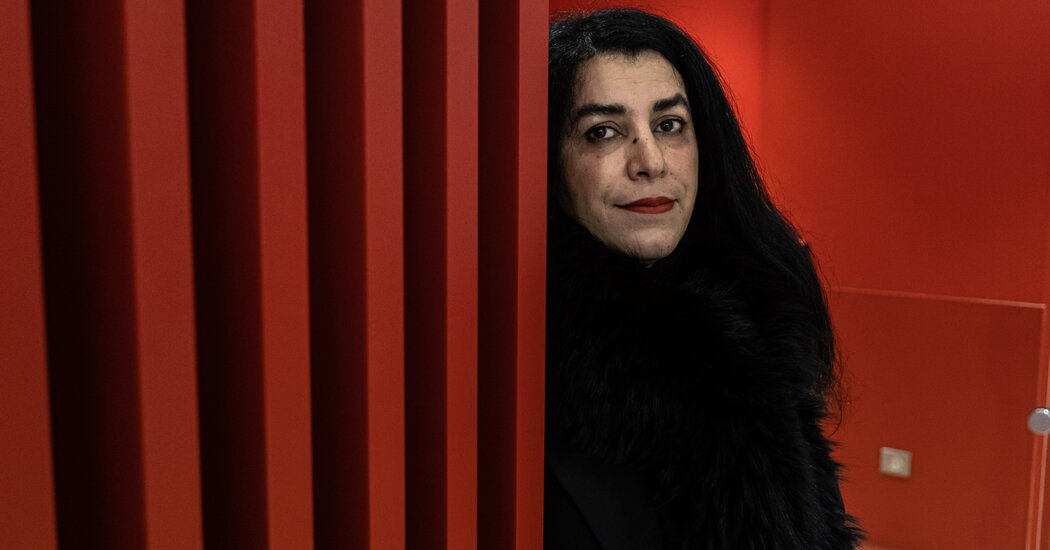
The world of literature and human rights lost one of its most vivid, unapologetic truth-tellers with the passing of Marjane Satrapi at the age of 56. Announced in a poignant tribute by the office of French President Emmanuel Macron, her death was mourned not simply as the loss of a celebrated French cultural figure, but as the quiet departure of a global icon who taught millions how to look at Iran with eyes of empathy, nuance, and humor. Decades after she first picked up her ink pens to draw the story of her childhood, Satrapi’s legacy had transcended the pages of her books. She had evolved into a symbol of artistic resistance, someone who could translate the terrifying, colossal shifts of history into the intimate language of schoolgirl rebellions, parental sacrifices, and the universal quest for identity. Her election to the prestigious Académie des Beaux-Arts in 2024 stood as a testament to this extraordinary journey, proving that a self-described outsider from the Caspian Sea could redefine the very pinnacle of French cultural royalty through nothing more than her fierce spirit and a bottle of black ink.
To understand the raw, emotional marrow of Satrapi’s work, one must return to her origins in the ancient soil of Iran. Born on November 22, 1969, in the northern city of Rasht, Marjane grew up in a Tehran intellectual household that was both cosmopolitan and politically charged. Her parents—her engineer father and her fashion designer mother—were leftist aristocrats who watched with a mixture of hope and mounting horror as the oppressive regime of the Shah was dismantled, only to be replaced by the rigid, fundamentalist rule of the Islamic clerics. When the devastating Iran-Iraq War began to claim the lives of neighbors and shake the foundations of her home, her parents made the agonizing decision to send their headstrong, fourteen-year-old daughter to Vienna for her own safety. What followed was a brutal, lonely descent into a foreign culture that Satrapi later recounted with devastating honesty. Far from finding an easy sanctuary, she grappled with intense cultural dislocation, eventually sliding into homelessness, selling drugs to survive, and nearly dying of bronchitis on the cold streets of Europe. Stripped of her identity and broken by the harshness of exile, she chose what she viewed as a surrender: she put on the mandatory veil and returned to Tehran, seeking solace in her homeland, only to discover that the place she had left no longer existed.
It was from the ashes of this displacement that her masterpiece, Persepolis, was born after she migrated to Paris in 1994. Named after the ancient ceremonial capital of the Persian Empire, the graphic memoir was Satrapi’s attempt to reclaim her country’s rich heritage from the narrow, terrifying caricatures painted by Western media. Published in France between 2000 and 2003, and subsequently translated into English to massive international acclaim, Persepolis did not read like a dry historical textbook; rather, it danced with a rare blend of tragedy, warmth, and insouciant wit. Her stark black-and-white drawings, inspired by the high-contrast aesthetic of Art Spiegelman’s Maus and the intricate details of ancient Persian miniatures, captured the terrifying absurdity of living under fundamentalist rule. Millions of readers worldwide fell in love with Marji, the young protagonist who secretly listened to Iron Maiden, argued with God, and wore punk buttons on her denim jacket under the watchful eyes of the morality police. When the book was adapted into an Oscar-nominated animated film in 2007, it cemented Satrapi’s place in the cultural zeitgeist. Yet, she remained delightfully uncorrupted by her fame, famously dismissing the high-brow label of the “graphic novel” as a snooty term invented for the bourgeoisie so they would not feel embarrassed about reading comic books.
Satrapi’s creative appetite, however, was far too expansive to be confined to a single medium or a single narrative. She went on to create works that demystified the private lives of Iranian women, most notably in Embroideries, a deliciously candid comic depicting three generations of women sipping afternoon tea and speaking with shocking, liberating freedom about love, marriages, divorces, and sex. She also explored familial grief in Chicken with Plums, the melancholic story of her musician great-uncle who decided to die after his beloved tar instrument was broken, which she also adapted into a live-action film. This transition to filmmaking demonstrated her multifaceted genius, leading her to direct mainstream international films such as the dark comedy The Voices, starring Ryan Reynolds, and Radioactive, a sweeping biopic of Marie Curie starring Rosamund Pike. Across all these diverse projects, Satrapi’s signature voice remained intact: she championed the deeply personal over the political, the messy truth over the polished lie, and the quiet dignity of individuals trying to survive the crushing gears of history.
Despite her global success, Satrapi’s heart remained bound to the ongoing struggles of the women she left behind in Iran. In 2022, when twenty-two-year-old Mahsa Amini died in the custody of the morality police for allegedly wearing her hijab improperly, sparking a historic wave of mass protests, Satrapi felt a familiar fire ignite. She mobilized an international coalition of artists, journalists, and historians to create the 2024 collaborative anthology Woman, Life, Freedom, serving as the project’s director to document this new era of Iranian fury and hope. For Satrapi, the protests were a beautiful, long-overdue continuation of the rebellion she had started as a teenager in Tehran. She spoke out fiercely against the regime’s systematic theft of human joy, lamenting how the government had outlawed the most fundamental elements of the human experience—singing, dancing, and laughing in the streets. Through her art and her advocacy, she became a vital megaphone for a generation of young Iranian women who were tearing off their veils and demanding their basic human rights, proving that her brush remained a formidable weapon against tyranny until the very end.
In her final years, Satrapi’s life was quieted by personal tragedy, particularly the death of her beloved husband, Mattias Ripa, who had not only been her life partner but had also helped translate her early work into English. She lived out her days in her adopted home of Paris, a city she adored for its beauty, its artistry, and its indulgent tolerance of her lifelong love of smoking, an eccentricity she defended with humorous passion. Yet, even as she embraced her French identity, Satrapi lived with the chronic, aching homesickness that plague all those who exist in perpetual exile. She wrote movingly of this duality, explaining that while Paris had her heart, Tehran—with all its soot, its traffic, and its concrete scars—was the eternal “bride” of her imagination, the only place she could ever truly call home. In her passing, Marjane Satrapi leaves behind a world that is infinitely richer and more empathetic because she dared to share her personal grief, her loud laughter, and her unyielding hunger for freedom with us all.