



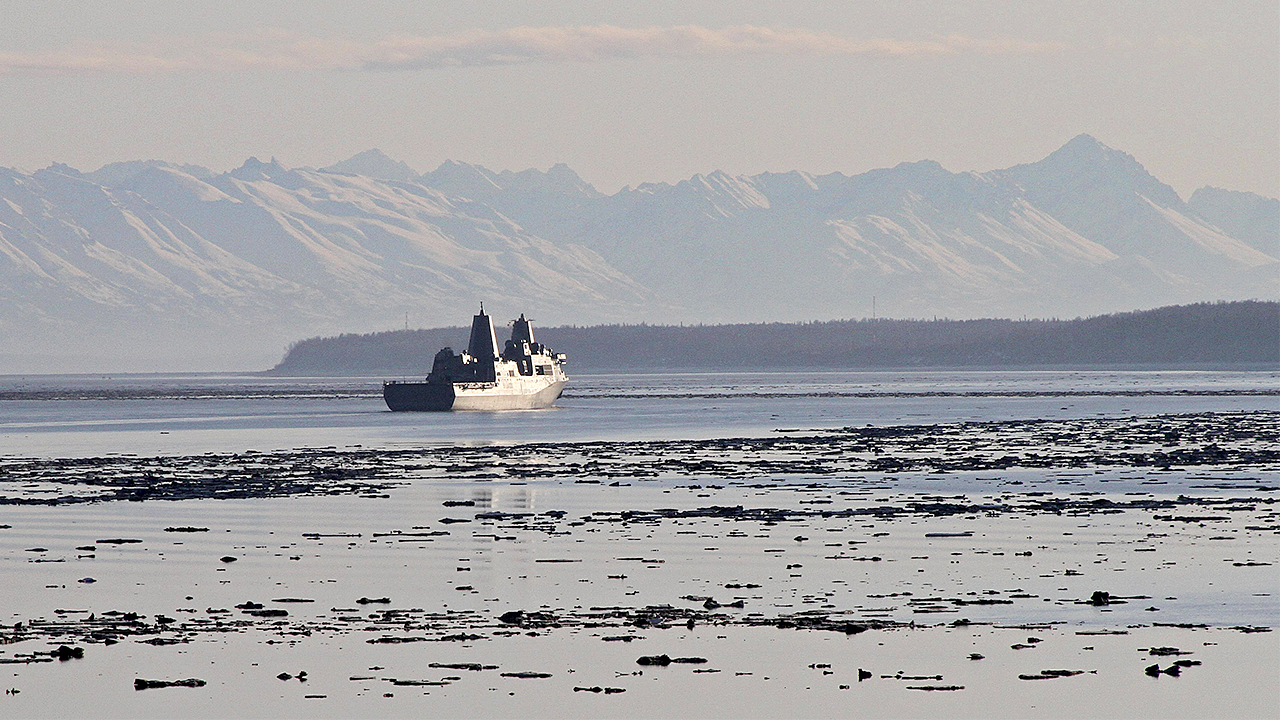
The transition from a rescue mission to a recovery operation is a quiet, devastating pivot that every military family fears in the depths of their hearts, turning hope into a heavy, lingering grief that refuses to yield. Off the sunlit but notoriously treacherous coast of Southern California, this somber reality gripped the crew of the USS Anchorage and the wider defense community when a routine, integrated training exercise dissolved into frantic desperation. A Marine, whose identity is rightfully guarded in these initial, agonizing hours to protect next of kin from the sudden onslaught of public tragedy, went missing from the deck of the amphibious transport dock ship. Stationed out of Camp Pendleton with the prestigious 13th Marine Expeditionary Unit and operating alongside the battle-ready Makin Island Amphibious Ready Group, this individual was engaged in the grueling, highly coordinated rehearsals designed to prepare young men and women for the chaos of global conflict. Yet, before they could ever face an overseas adversary, the unforgiving Pacific Ocean asserted its own quiet, indifferent power, swallowing a life in an instant. The shift from hope to acceptance in any maritime search-and-rescue operation is marked by a heavy, almost imperceptible change in language and posture; it is the moment when the ticking clock of survival gives way to the solemn, agonizing duty of bringing a fallen warrior home. In the busy offices of Naval Base San Diego and throughout the sprawling barracks of Camp Pendleton, the atmosphere transformed instantly from the rigid, high-energy discipline of tactical training to the heavy, reverent hush of a brotherhood mourning one of its own. It serves as a stark, deeply humanizing reminder that the men and women who wear the uniform do not only risk their lives on foreign battlefields under enemy fire, but also in the dangerous, daily grind of training. This quiet labor, undertaken far from the spotlight of public awareness, carries its own silent toll, showing that the preparation for national defense is paved with constant, deeply personal sacrifices made by ordinary citizens who step forward to serve.
When the alarm first sounded on that fateful Thursday, it triggered an immediate, massive mobilization that highlighted both the terrifying vastness of the sea and the unyielding commitment of the armed forces to leave no one behind. Over the course of the next thirty-six hours, a small armada assembled in the dark and choppy waters, launching a desperate race against time and tide. The sheer scale of the operation was staggering, covering approximately 2,400 square miles of open ocean—an expanse of watercolor blue and gray so immense that finding a single human being is akin to searching for a needle in a fluid, ever-shifting desert. To comb through this gargantuan grid, the military deployed a highly coordinated task force consisting of three massive surface ships and twelve specialized aircraft. These assets represented a unified front of American rescue capability, drawing from the Navy, the Marine Corps, the Coast Guard, and the Air Force to create a net of eyes in the sky and on the waves. High-tech sensors, thermal imaging, and the raw, strained eyesight of dozens of lookouts scanned the cold swells of the Pacific, hoping against hope for a sign of life, a reflective patch of a uniform, or the flare of an emergency beacon. This was not merely a mechanical exercise in search grid execution, but a deeply emotional, adrenaline-fueled crusade driven by the collective desperation of comrades who knew that every passing minute meant the ocean temperature was slowly stealing away their friend’s chances of survival. The crews of these aircraft and vessels pushed themselves to the absolute limits of physical and psychological endurance, flying patterns through the night and staring into the dark waters until eyes burned, united by the unspoken promise that they would exhaust every possible avenue before admitting defeat. No stone was left unturned, and no technology ignored, as these brave searchers fought against the elements to find their lost companion, proving that the sacred bond between American service members is a lifelong commitment that persists through the most desperate and dark, chaotic circumstances.
Behind the dry, official press releases issued by naval public affairs officers lies a delicate, painful ecosystem of human emotion, waiting, and profound vulnerability. When the Navy publicly stated that their thoughts and prayers were with the family and all those affected, they were acknowledging a quiet storm of grief that was beginning to break over a household somewhere in America. The decision to withhold the Marine’s name pending the notification of family is a time-honored military protocol, a buffer of respect designed to ensure that a mother, father, spouse, or child does not learn of their worst nightmare through a cold breaking-news alert on their phone or a social media post. This agonizing waiting period is a crucible for those left behind, as casualty assistance officers prepare to make the dreaded walk up a driveway to deliver news that permanently shatters a family’s universe. Onboard the USS Anchorage itself, the atmosphere was thick with a complex mixture of professional resolve and personal devastation. Sailors and Marines do not live in isolation; they sleep in cramped berthings, share meals in tight mess halls, trade stories of home, and forge bonds of kinship that are unique to military service. To lose a member of this tight-knit community under such circumstances cast a long, inescapable shadow over the vessel, forcing young service members to continue standing their watches and performing their duties with heavy hearts and a phantom presence lingering in the spaces where their teammate used to work. The psychological burden carried by these crew members is immense; they must grapple with the sudden, shocking absence of a peer while remaining hyper-focused on the dangerous operations of a warship. Every station on the ship became a quiet memorial, reminding everyone on board of the razor-thin margin of safety that dictates their lives, and the shared, heavy silence during evening mess became a monument of collective grief. This profound, heavy sadness ripples outward, deeply touching friends, neighbors, and fellow citizens who recognize that each lost service member represents a vital, irreplaceable piece of the nation’s core.
To truly understand the tragedy, one must appreciate the complexity and inherent danger of integrated amphibious training aboard a vessel like the USS Anchorage. Classified as a San Antonio class amphibious transport dock ship, the Anchorage is a massive, floating city designed to project power ashore by launching Marines, helicopters, and landing craft into hostile territory. Integrated training exercises are not gentle rehearsals; they are high-stakes, fast-moving simulations designed to push both human beings and heavy machinery to their absolute limits. In these environments, Marines move in darkness, carrying heavy gear across slippery steel decks and transferring between pitching vessels in heavy swells. The physical demands are exhausting, and the mental fatigue is compounding, creating an environment where even a minor slip or a sudden lurch of the ship can lead to catastrophic consequences. The public often perceives military service as a series of safe drills at home and dangerous missions abroad, but for those on amphibious warships, the line between training and active peril is entirely blurred. Launching personnel from the wet, dark belly of a ship into the churning Pacific requires a symphony of perfect movements where a single mistimed wave can create an instant crisis. The Marines of the 13th MEU train relentlessly to make these high-risk maneuvers second nature, pushing through physical exhaustion to build the muscle memory required for survival. Yet, despite rigorous safety protocols and highly demanding checklists, the maritime environment remains unpredictably hostile. This incident underscores the harsh truth that peacetime training is not a safe harbor, but a high-risk crucible where the margins for error are virtually non-existent, and where the natural elements themselves remain a constant, deadly adversary demanding absolute vigilance and claiming precious human lives in the pursuit of national readiness. Every single time a ship departs the pier, those on board willingly step into this dangerous arena of threat, operating with a quiet, persistent valor that defines the very essence of American military service and remains worthy of our deepest, most enduring admiration.
This painful loss off the California coast does not exist in a vacuum; rather, it highlights a deeply sobering and troubled pattern of training accidents that has plagued the United States military. This incident marks the second time in a mere six weeks that the armed forces have had to launch extensive, high-stakes search operations for missing personnel lost during routine training exercises. Just weeks prior, a massive multinational search operation unfolded in Morocco, where two U.S. Army soldiers went missing during joint military maneuvers. That operation, which utilized advanced naval vessels, aircraft, and cutting-edge artificial intelligence, ended in tragedy in late May when the remains of the second soldier were finally recovered. These recurring incidents paint a grim picture of the true toll of military readiness and serve as a warning about the immense strain placed on service members. Whether navigating the desert terrain of North Africa or the vast depths of the Pacific, the preparation for war claims American lives with a quiet, persistent frequency that rarely stays in the headlines. These losses spark uncomfortable but necessary conversations within the Pentagon about operational tempo, safety margins, and the physical limits of human endurance. The comparison to the Moroccan tragedy is especially poignant, illustrating that no branch of service is immune to the fatal risks of preparation. In both cases, the military spared no resource, displaying a sacred commitment to bring their fallen home. However, these frequent mishaps raise urgent questions about whether the relentless demand for readiness is pushing personnel past safe limits, demanding a closer look at how we protect the lives of those who have sworn to protect ours. We must confront the painful reality that these rigorous environments are as unforgiving as any active warzone, and the strategic readiness of the nation should never be bought at the price of compromised safety protocols that fail to guard our most valuable asset, specifically, the brave men and women who willingly step forward to defend our collective freedom.
Ultimately, the cold designation of this operation shifting from a search-and-rescue to a recovery mission is a quiet confession of mortality that leaves a profound ache in the soul of the nation. It represents the heartbreaking transition from holding onto a miracle to the solemn, heavy task of searching for remains to provide closure to a grieving family. While the fast-paced news cycle will inevitably move on, the family of this missing Marine, the crew of the USS Anchorage, and the community of Camp Pendleton will carry this weight forever. This Marine was not just a name on a muster sheet; they were a beloved child, perhaps a sibling, a spouse, or a parent, possessed of unique dreams, laughter, and a future cut tragically short. As the Pacific swells continue to roll silently off the coast of Southern California, the memory of this lost service member remains anchored in the hearts of those who knew them and those who searched for them. The empty space on the ship and the silent rooms back home serve as enduring testaments to a life offered in service, a sacrifice made in the quiet hours of a training run, far from the fanfare of battle but no less heroic. Their story joins a sacred tradition of quiet heroism, reminding us that every uniform represents a living story of courage, vulnerability, and patriotism. As recovery teams continue their solemn work amidst the vast waves, the military stands in quiet vigil, refusing to forget. We must ensure that their name, when finally spoken to the world, is met with the profound respect it deserves, serving as a lasting reminder of the precious human lives that form the true, irreplaceable foundation of our national defense. May we harbor their legacy in our collective minds, and may we pledge to never take for granted the safety secured by those who operate in the dangerous frontiers of the world, keeping their memory forever alive in the grateful consciousness of a nation that owes them everything.