


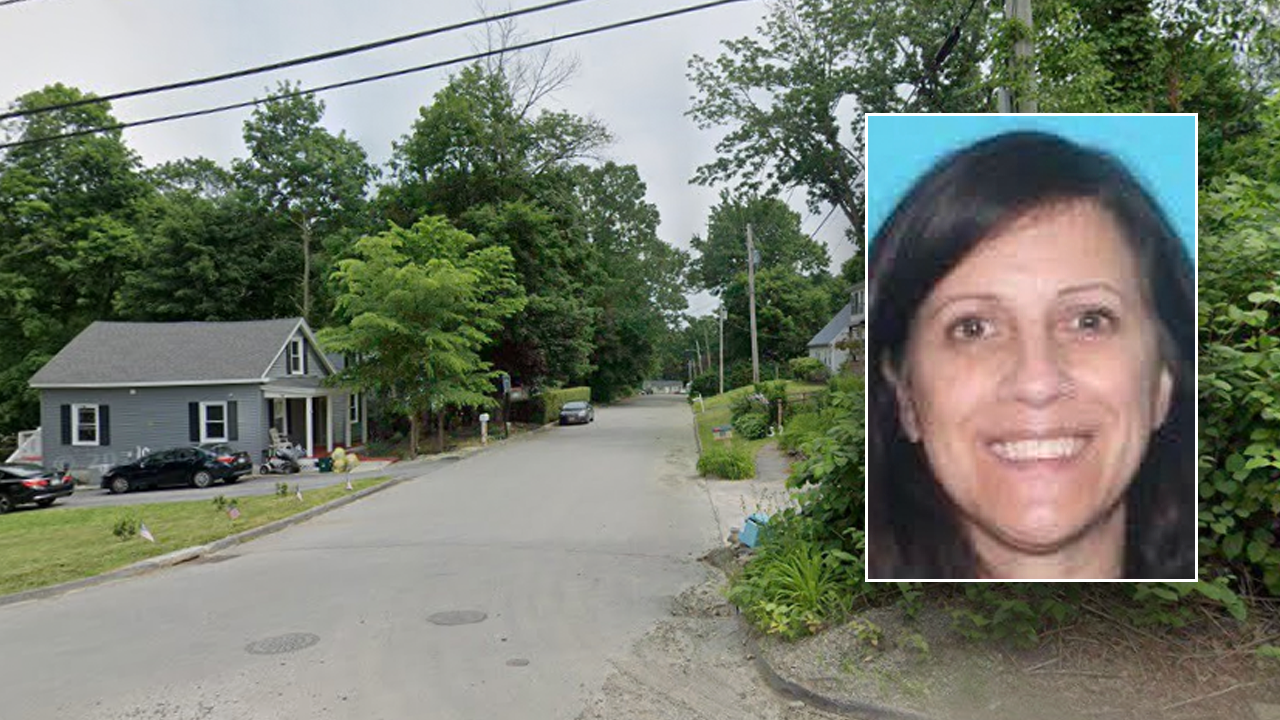
In a quiet corner of Worcester, Massachusetts, the long, anxious search for a missing woman ended in heartbreak Monday afternoon. Police said two employees at Fairlawn Rehabilitation Hospital made a grim discovery at about 12:40 p.m. when they found a deceased person in the woods behind the facility. Officers responded and soon announced that the body was believed to be that of Karen Solomon, the 58-year-old woman who had been missing for nearly a week. The identification, authorities stressed, was still preliminary, but the location and circumstances matched a case that had drawn the attention of the entire community. Adding another layer of solemn mystery to the moment, a handgun was also recovered near the body. At a news conference at Worcester Police Headquarters, officials communicated the gravity of the moment, speaking softly and carefully, conscious that this was not simply another news update but the probable close of a tragedy that had unfolded in strange and painful stages. The woman whose face had been plastered across police alerts, who had been pictured in a time of life emptied of explanation, had now been found. There would be no more sightings, no more clues along the familiar edges of Coes Pond, no more hope that she might walk toward help and tell her story. What lay in the woods was the loud silence an entire city had dreaded.
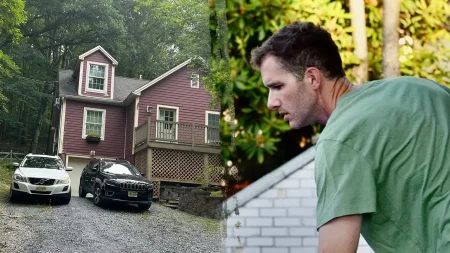
The story had begun only days before with another death, and the sense of unease had grown quickly. Karen Solomon vanished after the body of her husband, Kurt Solomon, was discovered in a home on Wildwood Avenue on the morning of August 18. Worcester police responded to that address around 5:28 a.m., beside the off-duty police officer was found dead. Officially, authorities withheld cause and manner of death, which left the whole neighborhood rattled and the investigation shadowed by unanswered questions. Very quickly, the police told the public that Karen Solomon was not merely a missing person but someone they wanted to speak with regarding the scene. She was also initially described as a suspect, or at least as a person intimately involved in what had happened inside that residence. For days, law enforcement combed the surrounding area, feeling out the edges of a case where every disclosure seemed to lead to another closed door. The two names — Karen and Kurt Solomon — became inseparable in headlines, in whispers, in the memories of people who remembered the couple from everyday turns of the community. The unanswered questions created an almost unbearable climate, not just because Karen was missing, but because everybody realized that whatever happened inside that house would change whatever they thought they knew about the couple.
Then, in an ongoing effort to find Karen, the police went public with a portrait of a woman in transition, captured on surveillance video and still photos. They described her as perhaps wearing pajama shorts and a tank top, walking along a path toward Westcott Street, It was the last image officially released, and it froze her in a moment of early morning bareness and bewilderment. Alongside that image of quiet movement, authorities issued an increasingly ominous warning about the public. They said she was believed to be armed and dangerous. They did not use those words lightly, and they knew they would matter, not just for public safety but also for the way Karen herself would be perceived. Her vulnerability, her disappeared into the landscape, and her jacket and the report of a weapon in her possession creating a strange duality. She was, at once, a person in crisis and a person with more dangerous potential limit. It had not been possible to find her safely. The result was a necessary, more urgent search in the woods, alongside the Coes Pond area, already identified as a place where she might be. That search had gone through the underbrush on Aug. 20, but a few days later, when two employees at the rehabilitation hospital came across the scene they never expected, it became clear that the truth had been waiting there all along, camouflaged, stubborn, silent.
As the community stared forward with new eyes, pieces out of the couple’s past began to surface in official records and memory. Kara and Kurt Solomon co-own the house at Wildwood, archives showed, and court records from an earlier legal context depicted their relationship in a way that now seemed heavier with meaning. In 1950, a receipt of bankruptcy signed by them, Kurt had identified Karen clearly as his wife. This is a legal detail, but in the quieter texture of it also suggests two people who had stayed joined through justice, administratively and difficult times. Yet, the case being handled with the special restraints that apply to domestic-violence related investigations, which meant the public never got the full story about what had happened behind those doors. He had been a reminder that, often, the hardest truth to reach is the one closest to intimacy. As for Kurt Solomon, he was remembered by his law enforcement family with respect and gratitude. The New England Police Benevolent Association said he had served the Worcester Police Department for thirty-one years, an almost entire professional life built not in frequency, in the ordinary duties and moments that accumulate into something heavy heroism. The association called him incredibly dependable officer, colleague and friend. He had answered a community for more than three decades, another note of service that now carried a shadow because his death and wife’s death were bound in a shared silence, but separated by ropes still unspoken.
Anyway, number of the testimonies, perhaps, can capture how deeply close to this, what has happened in the Solomon family. There is another kind of tragedy in so small a community when the people can’t let a prayer, a volunteer search, a spur-of-the-moment conversation on the sidewalk, when everyone knows that something terrible is happening and yet no one can say exactly how or why it happened. There are also double layers of loss among neighbors and police colleagues, because a police officer’s death is every officer’s death, and because a missing widow’s fate matters not only as evidence but as a human story. Karen Solomon’s eventual discovery in those woods, with a handgun beside her, does not answer all the questions that own the family probably you can never answer. It was a hard reminder that when there is domestic bitterness, a community sometimes sees only in fragments: façade of a house, an everyday walk, a tucked-away past, broken financial ties, all the small details that only make sense once the life has collapsed. People are now trying to understand how the drop of water, where a fallen officer was found, and the cold quiet of woods could be connected, but they must lean forward, slowly, through the official investigation, without jumping to sharp conclusions. The healing process soon begins, and when it begins, it can mean shifting deeply: toward remembrance, toward the unanswered questions empties that no physical evidence can deflect.
As darkness settles over the Coes Pond area, the city must now carry a difficulty resolution. The search that hope would have a better outcome is over, and caution signs alert to the mourning already inside the hospital. In memory, Karen and Kurt Solomon remains not just case names, but a woman walking toward Westcott Street in the early morning, and a veteran officer who had kept a place in the blue for decades. Their deaths will remain part of Worcester’s memory, a reminder that not all tragedy arrives from across the city, but from the rooms and paths closest to home. The police investigation continues, asking whether we will know the full story. Officials said the woman must be identified and the manner of death determined. His colleagues have promised not to forget Kurt’s contribution, and the community carries the Solomon family in its own common way: by remembering them as human beings, by holding a little longer what they have recovered, and by submitting to the silent and wisely uncertain landscape of the great tragedy. In all of the loss, there is a simple but not enough word: There was a woman, there was a man who served, there was a life that would not be summed up by a flashlight beam in the woods. All the rest—sorrow, suspicion, compassion, and memory—gathers around the broken shape and becomes just and searching.