


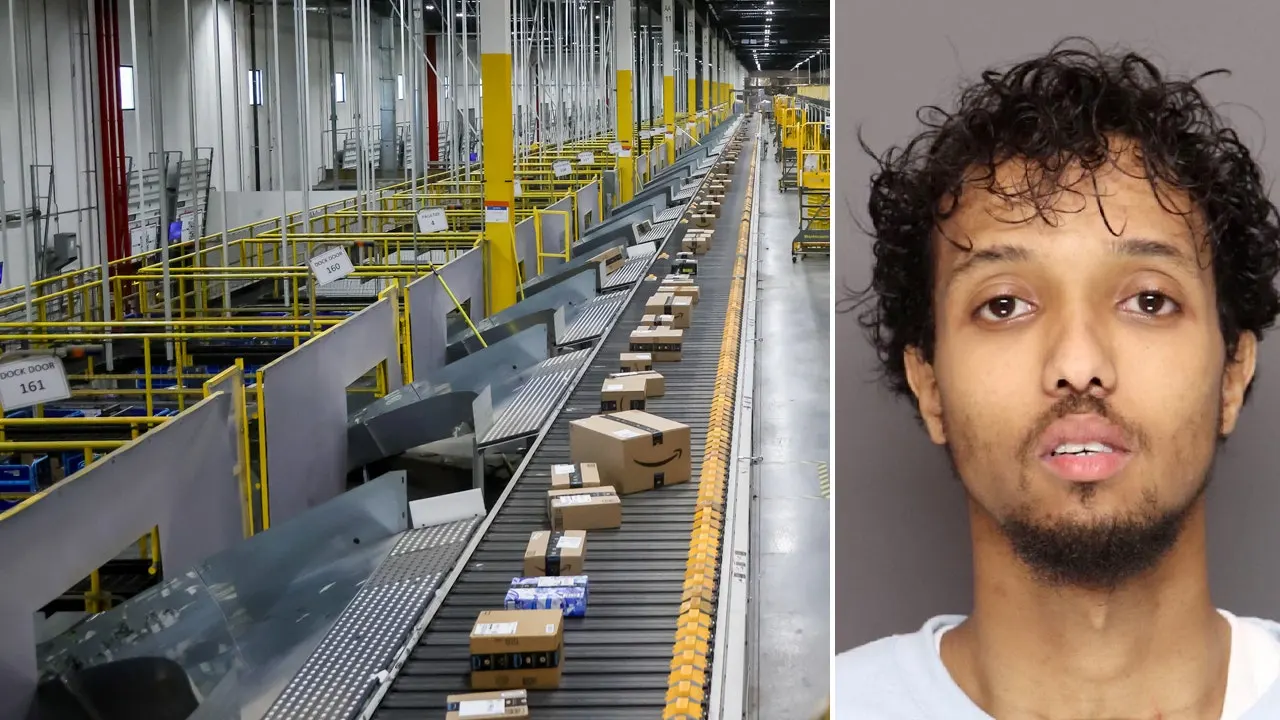
Under the harsh, fluorescent lights of our modern logistics network, overnight shifts at massive fulfillment centers represent grueling marathons of physical endurance, mental exhaustion, and quiet resilience. In Lakeville, Minnesota, the local Amazon fulfillment facility stands as an imposing monument to this constant, round-the-clock bustle—a place where workers regularly trade their sleeping hours for a livelihood, often bonding over shared struggles and the quiet, late-night camaraderie of the graveyard shift. It was this very need for mutual support and economic practicality that brought three young men together to carpool, sharing rides, lighthearted conversations, and the quiet spaces of their scheduled breaks in a daily routine that should have felt safe, predictable, and cooperative. Yet, on the fateful night of June 29, 2024, this fragile peace was shattered in an instant, transforming an ordinary workplace parking lot into the stage for an unimaginable, irreversible tragedy. Mohamed A. Hared, a twenty-six-year-old resident of Minnesota, stood before a judge recently to receive his punishment: a sentence of 128 months—more than ten years—in prison for the fatal shooting of his twenty-two-year-old coworker and carpool companion, Ahmed Ibrahim Cariif. Hared had previously pleaded guilty to second-degree unintentional murder while committing a felony, a charge that reflects the chaotic, unplanned, yet utterly devastating nature of the encounter. This legal resolution brings a somber, heavy end to a case that deeply shocked the local community, serving as a grim reminder of how quickly everyday frustrations can escalate into lethal violence. The sentence, handed down by the Dakota County Attorney’s Office, attempts to place a measure of legal accountability on an act that defies all basic human logic, leaving families permanently shattered, coworkers deeply traumatized, and a young life permanently snuffed out over an astonishingly minor dispute. By looking closely at this tragedy, we see the profound cost of workplace violence and the fragile thread upon which human life hangs during moments of unchecked anger.
The conflict that led to this devastating outcome began not with a deep-seated rivalry, a history of bad blood, or a malicious conspiracy, but with an absurdly trivial item: a small, inexpensive flashlight attachment for Hared’s handgun. The weapon itself had been left inside the vehicle the men used to carpool, a common but dangerous dynamic that introduced a lethal element into what should have been a mundane work shift. During an overnight break, Hared discovered the accessory was missing from his firearm and immediately allowed irrational suspicion to cloud his judgment, accusing both Cariif and their third carpool companion of stealing the item. Despite their earnest, repeated denials of any involvement, Hared’s frustration quickly morphed into deep-seated paranoia, transforming a minor domestic inconvenience into an obsessive stand-off beneath the parking lot lights. When they returned to the vehicle during a subsequent break hours later to search again, the atmosphere had grown suffocatingly tense, prompting the third coworker to suggest involving workplace security to arbitrate the dispute and search the car fairly and safely. Instead of taking this rational path of de-escalation, Hared doubled down on his accusations, allowing toxic pride and possessiveness to dictate his actions, actively blocking any sensible resolution. In a chilling moment recorded in the criminal complaint, Hared flatly rejected the idea of external help, locking the men in a state of emotional hostage with the dark, heavy promise: “No. You guys took my flashlight. I want my flashlight back. No one’s going home today.” This ominous statement turned a mundane workplace disagreement into a terrifying hostage-like scenario, signaling that Hared was willing to prioritize a cheap physical possession over the safety, dignity, and very lives of his peers. This moment illustrated a chilling disconnect from reality, where a minor tool was valued more than the humans standing directly in front of him, setting up a volatile situation that was bound to explode.
The physical confrontation that followed was a chaotic, terrifying dance of panic and desperation, captured in disjointed fragments by surveillance cameras and the traumatized recollections of the surviving witness. Rather than retreating or allowing cooler heads to prevail when the group temporarily separated, Hared actively pursued the conflict, drawing his handgun and instantly elevating the verbal threat into an immediate, lethal danger. In a desperate, split-second bid to survive, Cariif attempted to lunge forward and grab the firearm, an instinctive reaction born of the raw terror of looking down the barrel of a loaded weapon in a dark parking lot. A violent struggle ensued, and the first gunshot was fired, tearing through the quiet night air and striking a nearby parked vehicle—a terrifying, acoustic warning that should have broken the spell of anger and prompted an immediate retreat. Instead, as the echo of the gunshot faded, both Cariif and the witness cried out in sheer terror, pleading for their lives with the simple, heartbreaking words, “Don’t shoot!” But Hared, consumed by a reckless, violent impulse and blinded by his own anger, refused to listen to their desperate pleas, firing a second shot that struck Cariif squarely in the chest. Surveillance footage later reviewed by investigators showed with agonizing clarity that Hared had multiple opportunities to step back, walk away, and defuse the situation, yet he repeatedly chose to re-engage, sealing the fate of a young man who had only wanted to earn an honest living and return home safely to his loved ones. The absence of any attempt to de-escalate on Hared’s part depicts a tragic willingness to proceed with deadly force despite the clear and vocal resistance of those around him, turning what should have been a minor argument into a permanent tragedy. This lack of restraint, caught on tape, stripped away any defense of self-defense, highlighting a deliberate insistence on violence that investigators would later point to as the deciding factor in pursuing charges.
The physical cost of Hared’s choice was instantaneous and brutal, as the medical examiner’s autopsy later revealed that the single bullet had torn through Cariif’s heart, lung, and aorta, causing him to collapse and die on the cold pavement of the logistics center parking lot. At just twenty-two years old, Ahmed Ibrahim Cariif was a young man standing at the very beginning of his adulthood, a time of life filled with infinite potential, personal growth, and the pursuit of dreams. To have such a vibrant future cut short over a misplaced flashlight attachment is a tragedy of existential proportions, a stark reminder of the shocking fragility of human life in the face of sudden, unbridled rage. The pain of this loss ripples far outward from that Lakeville parking lot, deeply wounding a family who must now navigate a lifetime of milestone events, holidays, and quiet moments without their beloved son and brother. For the surviving coworker who witnessed the execution of his friend, the psychological toll is an invisible but heavy burden, a permanent scar of trauma that will forever shape his perception of safety, trust, and the workplace. By humanizing the victim, we see that Cariif was not merely a name in a criminal complaint or a statistic in a news broadcast, but a real human being with a story, a family who loved him, and a future that was stolen from him in a moment of senseless, easily avoidable violence. His death serves as a stark reminder that behind every headline lies a human heart that has stopped beating, leaving a permanent void in the lives of those who loved them. The absolute insignificance of the item that triggered this loss only sharpens the grief, forcing those left behind to ask impossible questions about why a human life was valued so poorly, and how a mundane workday could end in such a permanent nightmare.
The legal system’s attempt to address this tragedy culminated in a Dakota County courtroom, where the dry, clinical language of statutory law sought to quantify and penalize an act of pure madness. Mohamed A. Hared’s transition from a charge of second-degree intentional murder to a guilty plea of second-degree unintentional murder while committing a felony reflects the complex negotiations of criminal justice, trading the uncertainty of a trial for a guaranteed period of incarceration. Dakota County Attorney Kathy Keena did not mince words when she addressed the media, labeling the entire event as a senseless act of violence that has absolutely no place in civilized society, let alone the environments where people go to work to provide for their families. Hared’s sentence of 128 months, offset by 700 days of credit for time already served, means he will spend the next several years in the custody of the Minnesota Department of Corrections, a long period of confinement to contemplate the high price of his fleeting anger. In that prison cell, Hared must grapple with the dual burden of his own ruined youth and the knowledge that his hands took the life of a peer over a trivial piece of plastic. The courtroom proceedings, while necessary for public safety and legal closure, offer little comfort to those who loved Cariif, illustrating the profound limitation of the law: it can punish the guilty, but it can never breathe life back into the quiet victims of our societal anger. It is a somber truth that no amount of prison time can truly balance the scales of a stolen life, leaving families on both sides to mourn their different kinds of devastating losses. The legal proceedings serve as a cold mirror to our societal reality, proving that while justice can demand years of penance, it remains fundamentally powerless to undo the damage of a single, impulsive pull of a trigger.
Ultimately, this tragic incident serves as a damning indictment of a broader cultural sickness, where the immediate availability of firearms combines with poor conflict resolution skills to produce lethal results over the most trivial disputes. When we normalize carrying guns in everyday scenarios, such as carpooling to an overnight shift, we dramatically lower the threshold for lethal escalation, turning routine personal friction into matters of life and death. The Amazon parking lot in Lakeville remains a physical monument to a night when the social contract completely broke down, leaving a community to ponder how to foster greater empathy, de-escalation, and safety in our shared spaces. To truly honor the memory of Ahmed Ibrahim Cariif, we must look beyond the simple facts of his death and commit ourselves to building a world where disagreements do not end in bloodshed, and where every worker can expect to return home safely at the end of their shift. As Hared begins his long term of incarceration and Cariif’s family continues their long search for peace, we are left with a haunting reminder that our choices matter, that anger is a temporary madness, and that the value of human life must always transcend the cheap, material things we fight over in the dark. Only by cultivating a deep respect for human dignity and active conflict de-escalation can we hope to prevent another family from enduring the unimaginable grief of a loved one lost to an impulse. The tragedy calls on all of us to examine our relationship with anger, to recognize the ultimate finality of violent actions, and to ensure that safety in the workplace is not just an administrative ideal, but a lived, guaranteed safety that protects our most vulnerable when the working day is done.