






On a warm summer afternoon in late July of 2025, the peaceful routine of Danville, Virginia, was shattered by an act of unthinkable violence that changed the life of a dedicated public servant forever. Lee Vogler, a husband, father of two, and a prominent Danville City Council member, was working in his office when an enraged man named Shotsie Buck-Hayes stormed through the door. Fueled by a toxic, unsubstantiated obsession that his wife had been unfaithful, Buck-Hayes cornered the young politician, drenching him with highly flammable gasoline. In a state of sheer panic, Vogler fled the building, desperately trying to escape, but Buck-Hayes pursued him out into the open air and ignited the fuel. In an instant, Vogler was engulfed in flames, a horrifying spectacle that left witnesses in shock and permanently scarred the community of Danville. The terrifying ordeal finally reached a judicial conclusion on a Thursday when a circuit judge sentenced Buck-Hayes to an active term of forty years in prison, bringing a measure of justice to an event that nearly cost a devoted young leader his life.
The physical and psychological aftermath of the attack on Lee Vogler was almost beyond comprehension, requiring an agonizing medical fight for survival that tested the absolute limits of human endurance. Airlifted immediately to the highly specialized burn unit at the University of North Carolina-Chapel Hill, Vogler arrived with severe second- and third-degree burns covering sixty percent of his body. To save his life and repair the extensive tissue destruction, surgeons had to harvest healthy skin from another thirty-five percent of his frame, leaving him with a staggering ninety-five percent of his body exposed and open to life-threatening infections. His wife, Blair Vogler, stood vigil by his side, witnessing her husband navigate a gauntlet of compounding medical crises including burn shock, septic shock, smoke inhalation, and a severe case of pneumonia caused by direct thermal damage to his lungs. The harrowing journey of his recovery was not just a medical anomaly but a testament to a family’s love and resilience amidst a living nightmare.
At the dark center of this tragedy was the delusional motive harbored by Shotsie Buck-Hayes, whose life had begun to unravel weeks before the attack when his wife, Mary Alice, filed for divorce. Buck-Hayes became consumed by a desperate, unfounded belief that his wife was having an affair with Vogler, a narrative that investigators and prosecutors quickly clarified was totally unsupported by any credible evidence. During the grand jury phase of the trial, police investigators testified that Buck-Hayes had planned and executed the attack with clear premeditation, intending to kill the council member over these imaginary marital grievances. When given the opportunity to speak at his sentencing hearing, Buck-Hayes offered what prosecutors termed a hollow and conditional apology, stubbornly refusing to fully abandon his false accusations. This refusal to accept complete, untethered accountability highlighted the profound malice of the crime, illustrating how a toxic mixture of jealousy and delusion came close to tearing a harmless family apart.
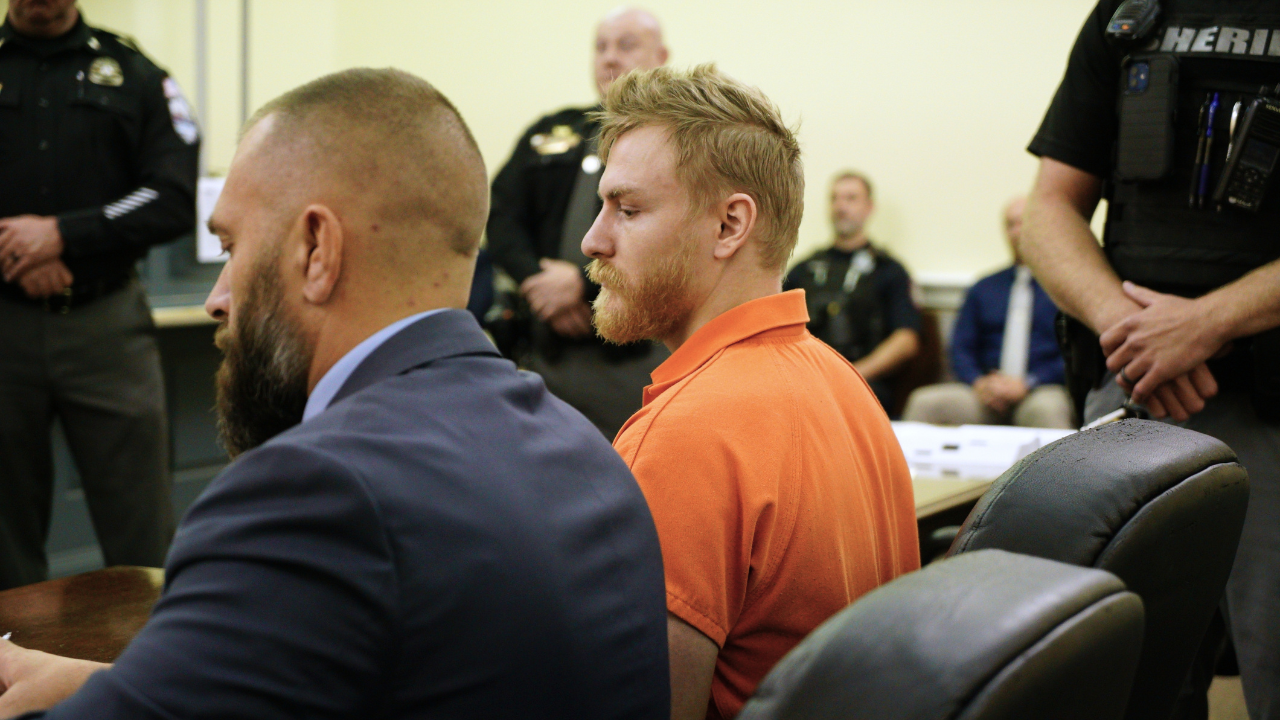
In the courtroom, Circuit Judge James Reynolds faced the sobering task of delivering a sentence that accurately reflected the gruesome nature of the crime while providing closure to the victim and the public. Buck-Hayes had previously pleaded guilty to attempted first-degree murder and aggravated malicious wounding, and the judge ultimately handed down two life sentences. However, through a complex calculation of suspended time, the court structured the final sentence to ensure that Buck-Hayes would serve an active forty years behind bars. Though his defense attorneys immediately announced their intentions to appeal the decades-long sentence, their legal strategy also revealed a geopolitical reality: Buck-Hayes is not a citizen of the United States. Following his lengthy incarceration, he will likely be deported back to his native home in the United Kingdom, rendering him a permanent exile from the community he so violently disrupted.
Despite the devastating prognosis of his medical team, who estimated that his severe injuries would require a minimum of six arduous months in the hospital, Lee Vogler defied all scientific expectations through a miraculous display of willpower. On October 21, 2025, just three months after he was set on fire and long before anyone believed possible, he was discharged from the burn unit back to his grateful family. Proving that his dedication to his community remained wholly unbroken by the attack, Vogler traveled straight from his discharge to the Danville City Council chamber that very evening. His colleagues and constituents welcomed him back with a deeply emotional, tear-filled reception, celebrating not just the survival of a colleague, but the triumph of the human spirit over calculated malice. His immediate return to public duty served as a powerful declaration that his identity would always be defined by service, not by the horrific victimization he had endured.
The path ahead for the Vogler family remains a long, exhausting journey of rehabilitation, characterized by continuous surgeries, intense physical therapy, and the slow reclamation of daily independence. As his wife Blair detailed in updates to their supportive community, Lee faces ongoing orthopedic challenges, including a condition called heterotopic ossification, where bone abnormally grows in soft tissues, as well as crucial nerve damage limiting the use of his left hand. Yet, the overwhelming support of Danville has sustained them, a community that remembers Vogler not just as a survivor but as a history-maker who was first elected to the city council in 2012 at the unprecedented age of twenty-four. As Vogler continues to undergo complex cosmetic and laser procedures to restore his mobility, his story continues to inspire countless people across the state. His journey stands as a profound reminder of how courage, community solidarity, and family love can rise from the ashes of the darkest violence to forge a path of hope and recovery.