

Clashes Erupt in Minneapolis as Anti-ICE Protests Turn Violent
In a weekend marked by tension and violence, Minneapolis became the epicenter of clashes between protestors and authorities as anti-ICE demonstrations spiraled into chaos. The unrest follows growing tensions over immigration enforcement in the city, particularly after the recent shooting death of 37-year-old Renee Nicole Good by an ICE agent during an operation. The incident has further inflamed an already polarized debate over immigration enforcement policies in the state. As the Minnesota National Guard was placed on standby, several disturbing episodes of violence were captured on video, highlighting the increasingly dangerous nature of political demonstrations in America’s divided landscape.
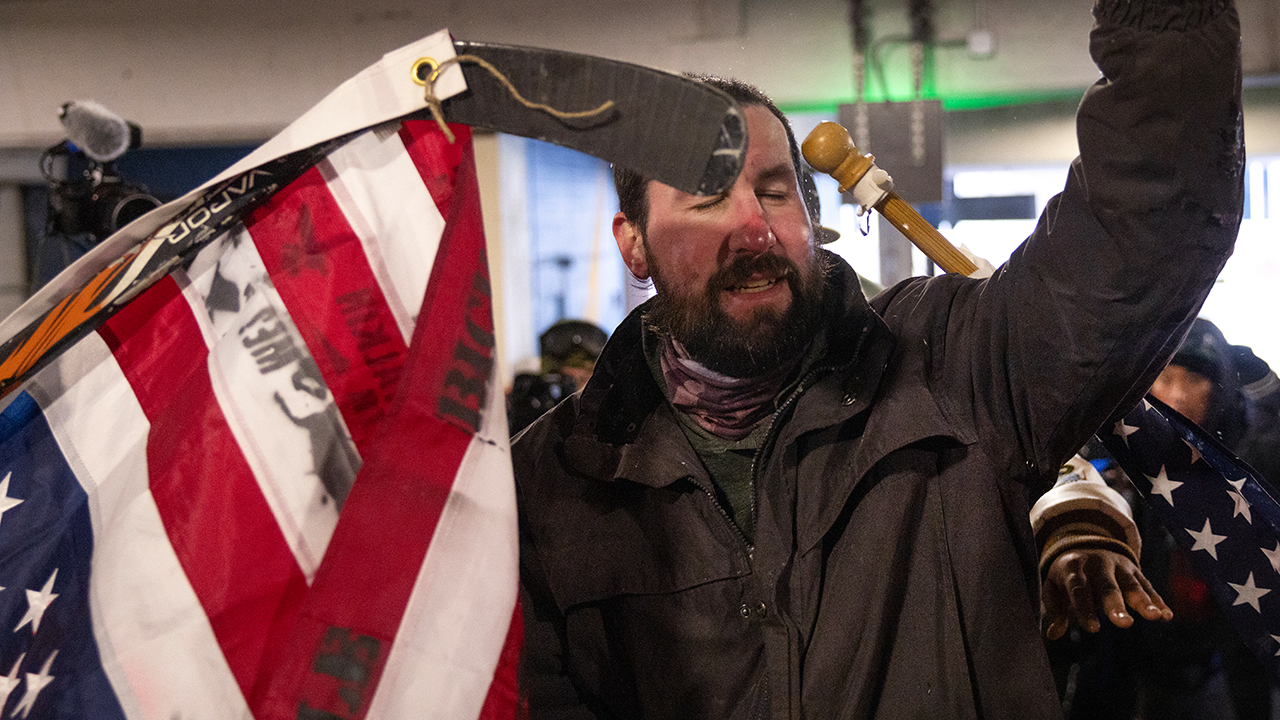
Among the most shocking incidents was the attack on an unidentified man who was chased into a parking garage by what appeared to be anti-ICE protestors. Video footage showed the man being struck in the head with a flagpole, leaving him with a bleeding wound that his pursuers allegedly pepper-sprayed and struck with their hands. Despite being visibly injured with blood soaking his jacket, the man remained remarkably composed, even declining offers of help from a concerned woman in the vicinity. “I’m trying to be done, but you guys keep harassing me,” he told the mob as they continued to follow him. One protestor was heard shouting through a megaphone, “This guy needs medical help—he needs mental help. The bleeding is natural for Nazis, but he needs mental help.” As the bloodied man finally reached his car and attempted to leave, protestors slammed on the doors and struck the vehicle with flagpoles, continuing their aggressive behavior until he managed to speed away from the scene.
In a separate incident, Jake Lang, a pardoned January 6 rioter, was seen being dragged away from a demonstration, bleeding from the back of his head as he stumbled through the surrounding crowd. According to reports, Lang had been participating in an event called the “Crusader March on ‘Little Somalia,'” organized by a group called Americans Against Islamification, with the alleged intention of burning a Quran at Minneapolis City Hall. Video footage captured Lang attempting to escape the violence by getting into the back seat of what appeared to be a good Samaritan’s car. However, protestors pulled the door back open and began kicking into the vehicle, even as the passengers pleaded, “We don’t know him, stop hitting our car.” Lang later took to social media claiming he had also been stabbed during the assault, though a protective vest he was wearing allegedly prevented serious injury. He dramatically described being “literally LYNCHED by an anti-white mob of liberals & illegal immigrants” and accused Minneapolis Mayor Jacob Frey of ordering police to “stand down” during the attack.
Meanwhile, the focal point of protests remained the Whipple Federal Building, where anti-ICE demonstrators continued to clash with law enforcement throughout the day. Footage showed protestors screaming and cursing at agents who were attempting to maintain a line of formation in the street to prevent demonstrators from accessing the facility. As darkness fell, Hennepin County Sheriff’s Office patrol cars were positioned in front of the building to block the road and establish a security perimeter. The Minnesota Department of Public Safety announced that the state’s National Guard had been mobilized and was staging to support local law enforcement and emergency management agencies, though guardsmen had not yet been deployed to city streets. The White House weighed in on the situation with a social media post claiming, “Minnesota sanctuary politicians have released nearly 470 criminal illegal aliens back into American communities since President Trump took office,” and praising ICE for “working every single day to remove the worst of the worst criminal illegal aliens from terrorizing their state.”
The violence in Minneapolis reflects broader national tensions surrounding immigration policy and enforcement. The catalyst for these recent protests was the fatal shooting of Renee Nicole Good by an ICE agent during an operation in Minneapolis. According to authorities, Good was shot while allegedly blocking the operation and driving toward the agent, though details of the incident continue to be disputed by different parties. This tragedy has become a flashpoint in the ongoing debate over the role of federal immigration enforcement in communities across the country, with advocates on both sides using it to bolster their arguments. Immigration hardliners point to the need for enhanced enforcement to maintain public safety, while critics of ICE argue that aggressive tactics alienate immigrant communities and lead to unnecessary confrontations and, as in Good’s case, loss of life.
The Minneapolis Police Department has acknowledged awareness of the social media accounts showing these violent incidents but indicated that official reports have not yet been filed in all cases. In a statement, the department encouraged “anyone who has experienced assaultive behavior to report the incident as soon as possible and provide as much detail as they can, including the date, time, and location of the incident, a description of any suspects, and the nature and extent of any injuries sustained.” The violence underscores the increasingly volatile nature of political demonstrations in America, where deeply held convictions about immigration, race, and national identity collide in public spaces. As Minneapolis attempts to recover from this weekend of unrest, questions persist about how communities can address contentious policy issues without descending into violence, and how law enforcement should respond to maintain public safety while respecting the right to peaceful protest. The involvement of outside agitators on both sides of the political spectrum further complicates efforts to find common ground and develop constructive dialogue on these divisive issues.