




Every wedding day is supposed to represent the beautiful dawn of a shared future, a celebration filled with laughter, love, and the promise of a lifetime spent together. For 26-year-old Estrella Carrera, however, her wedding night in May 2012 quickly descended into an unimaginable nightmare. Instead of departing for a honeymoon or settling into the quiet joy of newlywed life, Estrella’s story ended in unspeakable tragedy. Just hours after she whispered her vows and married Arnoldo Jimenez in Burbank, Illinois, her life was brutally cut short. Her body was discovered on May 13, 2012, huddled in the cold bathtub of her apartment, leaving her family and community shattered by a devastating loss that occurred less than forty-eight hours after she had walked down the aisle.
The primary suspect in this horrifying crime was her new husband, Arnoldo Jimenez, who vanished almost immediately after the killing. As investigators pieced together the harrowing timeline, the sheer brutality and swiftness of the act pointed directly to Jimenez, prompting authorities to charge him with first-degree murder. A state warrant was issued for his arrest on May 15, 2012, followed closely by a federal warrant two days later when it became clear that Jimenez had fled across state lines and international borders. By taking flight to avoid prosecution, Jimenez did not just run from the police; he abandoned the wreckage of a family he had promised to cherish, embarking on a cowardly evasion of justice that would span continents and drag on for more than a decade.
For twelve long, agonizing years, Estrella’s family was forced to live with the heavy burden of unresolved grief, knowing that her alleged killer was walking free somewhere in the world. As the years rolled into a decade, the trail grew cold, but law enforcement refused to let Estrella be forgotten. Jimenez’s face was plastered on billboards and digital screens across North America as he was added to the FBI’s Ten Most Wanted Fugitives list. He eventually rose to become the fourth-most wanted fugitive in the United States, a designation reserved for the most desperate and dangerous individuals on the run. Despite the passage of time—which often dulls the public’s memory—investigators continuously chipped away at the case, determined to prove that time does not erase the demands of justice.
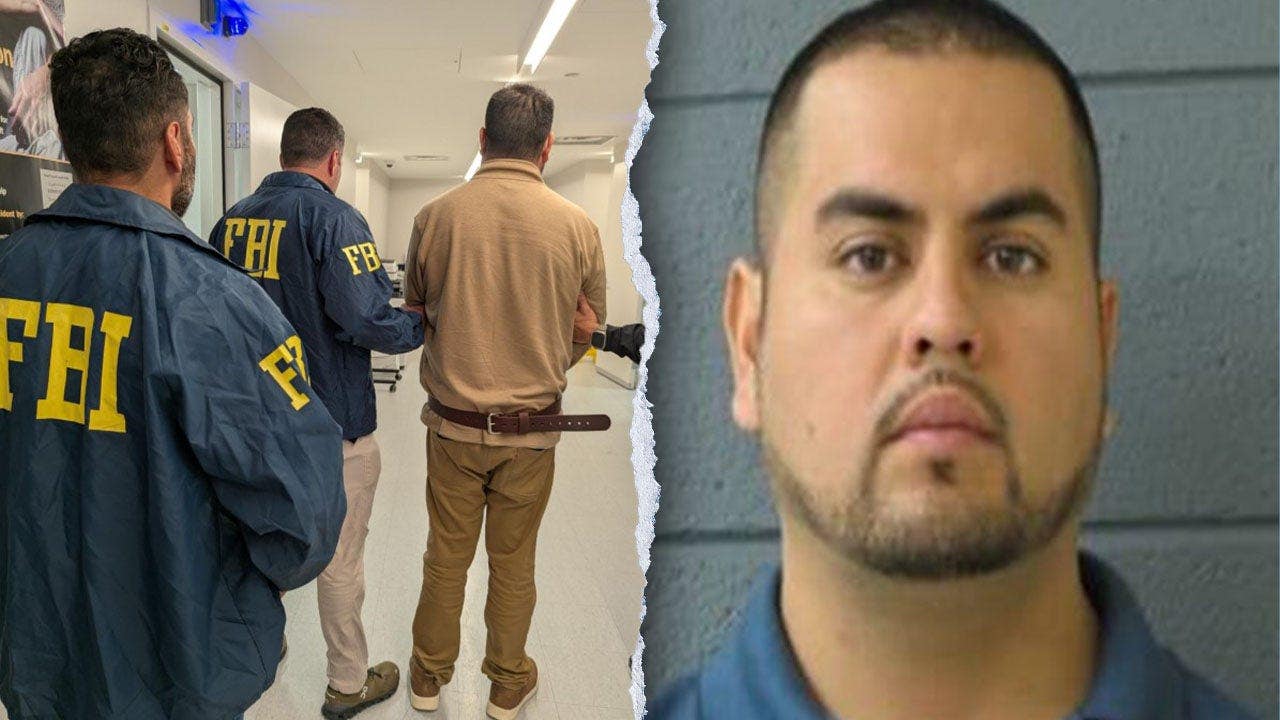
The ultimate breakthrough came through a masterclass in international cooperation on January 30, 2025, when authorities finally cornered Jimenez in Monterrey, Mexico. Working in dangerous and complex territory, Mexican law enforcement officers, in close coordination with U.S. federal agents, successfully took Jimenez into custody. The arrest was a monumental victory for international law enforcement, proving that national borders cannot serve as permanent sanctuaries for those accused of heinous acts. Yet, capturing a high-profile fugitive abroad is only the first step in a complicated legal marathon, as extradition proceedings often require extensive diplomatic patience, administrative hurdles, and careful coordination between sovereign judicial systems.
More than a year after his dramatic capture in Monterrey, the long-awaited moment finally arrived when Jimenez was successfully extradited and brought back to the United States on a recent Thursday. The FBI’s Chicago field office, which had carried the torch of this investigation for over twelve years, marked the extradition as an incredibly significant milestone. In a moving statement shared publicly, federal officials reaffirmed their unwavering commitment to victims of violent crime, declaring that no matter how many years slip away or how far a fugitive attempts to hide in the corners of the Earth, the FBI’s pursuit of accountability will remain relentless. The visual of Jimenez being led back onto American soil in handcuffs served as a powerful testament to that enduring promise.
While the return of Jimenez to Illinois marks the end of a long, transnational manhunt, it also signals the beginning of a sobering new chapter in the pursuit of closure for Estrella’s loved ones. As Jimenez prepares to face a judge for his first court appearance, many questions remain unanswered, including the baffling motive behind why a wedding night was transformed into a crime scene. No trial or prison sentence can ever restore the vibrant life of Estrella Carrera or erase the profound sorrow of her family, who have spent more than a decade mourning her absence. However, with Jimenez finally set to stand trial under the American legal system, the path is finally clear for the truth to be laid bare in a courtroom, offering a fragile yet vital hope that justice will at last be served.