





A quiet Monday morning in the coastal city of Biddeford, Maine, was shattered by a fatal federal shooting that has left a local community in mourning and officials demanding immediate, transparent answers. A 26-year-old Colombian man, who had come to Maine to build a life and work, was shot and killed by an Immigration and Customs Enforcement (ICE) agent during what was supposed to be a routine immigration operation. The tragedy has sparked intense scrutiny, particularly after it was revealed that the young man who lost his life was not actually the person federal agents were searching for when they arrived at the residence.
In the immediate aftermath of the shooting, confusion gripped both local residents and high-ranking officials. Maine Senator Angus King revealed that his initial briefing from Homeland Security Secretary Markwayne Mullin was riddled with inaccuracies. Originally, Mullin told King that the deceased individual was the intended target of an active arrest warrant and had ignored federal orders to leave the country. However, in a stark and sobering correction, the Homeland Security Secretary later placed a second call to Senator King to confess that subsequent information proved the victim was entirely unrelated to the immigration warrant being executed that morning.
According to official statements from ICE, the federal agents were conducting targeted surveillance on a residence linked to an undocumented immigrant who had a final order of removal. When the 26-year-old Colombian national departed the home in a vehicle, agents attempted to initiate a traffic stop. ICE officials claim the driver tried to flee the scene, prompting an officer to discharge their duty weapon out of fear for public safety. The young driver was struck by the gunfire and later succumbed to his injuries, prompting waves of grief and outrage from local advocacy groups, including the Maine Immigrants’ Rights Coalition and Presente! Maine, who emphasized that a human being’s life was tragically and needlessly cut short.
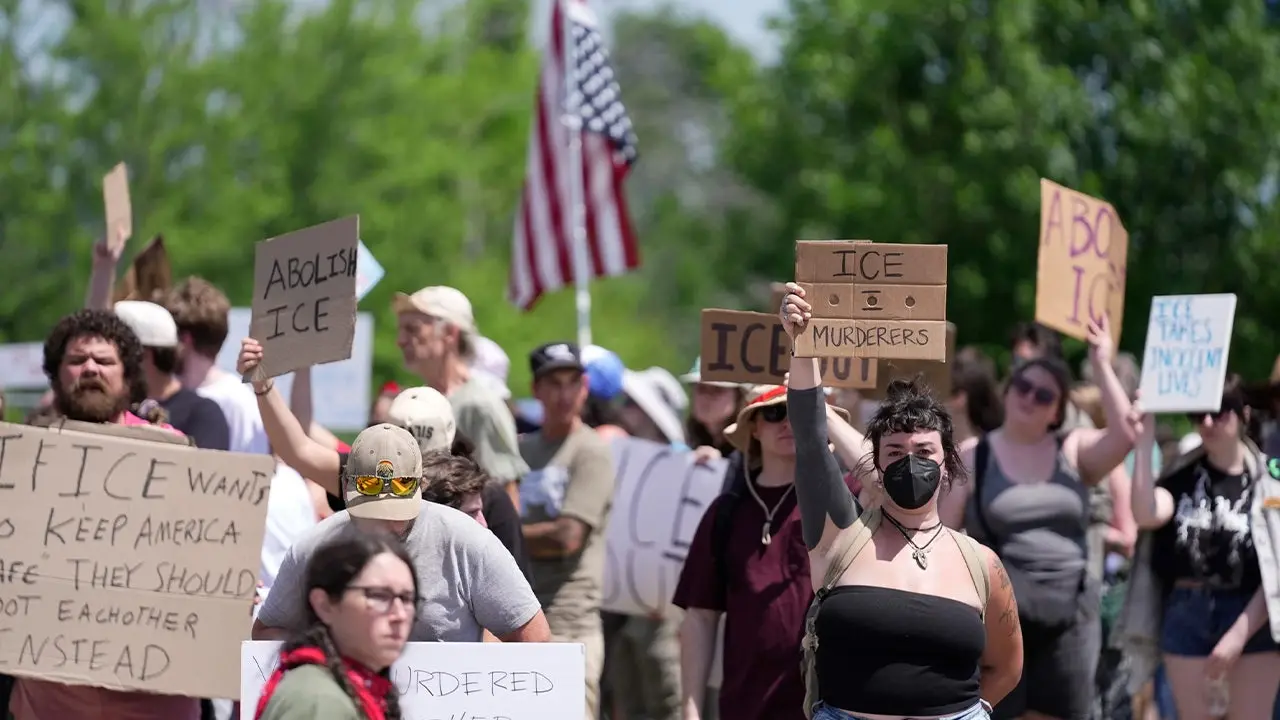
The lack of clarifying evidence has only intensified the community’s demands for accountability, especially since Senator King revealed that the ICE agents involved were not wearing body cameras during the operation. With no video footage to independently verify the sequence of events, investigators must rely heavily on forensics and officer testimonies to determine if the victim’s actions behind the wheel truly justified the use of deadly force. In response to the tragedy, passionate demonstrations erupted in the area, with protesters rallying outside Senator Susan Collins’ office to hang anti-ICE signs and demand justice for the victim, highlighting the growing pain and distrust felt by the local immigrant community.
Faced with mounting public pressure, Maine’s political leadership has united in calling for a rigorous and unbiased investigation. Senator King, drawing on his established relationship with Secretary Mullin, emphasized a “trust but verify” approach, insisting that the federal probe must be completely open and that local authorities must not be shut out from the process. Meanwhile, Senator Collins and Maine Governor Janet Mills confirmed that state police are cooperating fully with the FBI and the Department of Homeland Security’s Office of Inspector General, both of which have launched formal investigations to dissect the errors that led to this fatal encounter.
Ultimately, the tragedy in Biddeford serves as a painful reminder of the high stakes and human costs associated with federal immigration enforcement. While federal watchdogs and the FBI begin the slow process of piecing together the final moments of the young man’s life, a grieving family and an angry community are left waiting for answers. Advocacy groups continue to call for absolute systemic transparency, insisting that the public deserves a full and honest accounting of how a routine surveillance operation could go so terribly wrong, ending the life of an innocent young neighbor who simply wanted to call Maine his home.