



Venezuelan Opposition Leader Machado Presents Nobel Peace Prize Medal to President Trump at White House
Historic Gesture Symbolizes Venezuela’s Democratic Struggle as Relations Between Opposition and U.S. Administration Strengthen
In a powerful symbolic moment that underscores the deepening alliance between Venezuela’s opposition movement and the United States, Venezuelan opposition leader María Corina Machado presented her Nobel Peace Prize medal to President Trump during a high-profile meeting at the White House on Thursday. The unprecedented gesture took place amid ongoing diplomatic efforts to address Venezuela’s political crisis and reflects the increasing international recognition of Machado’s role as a prominent advocate for democratic restoration in the troubled South American nation.
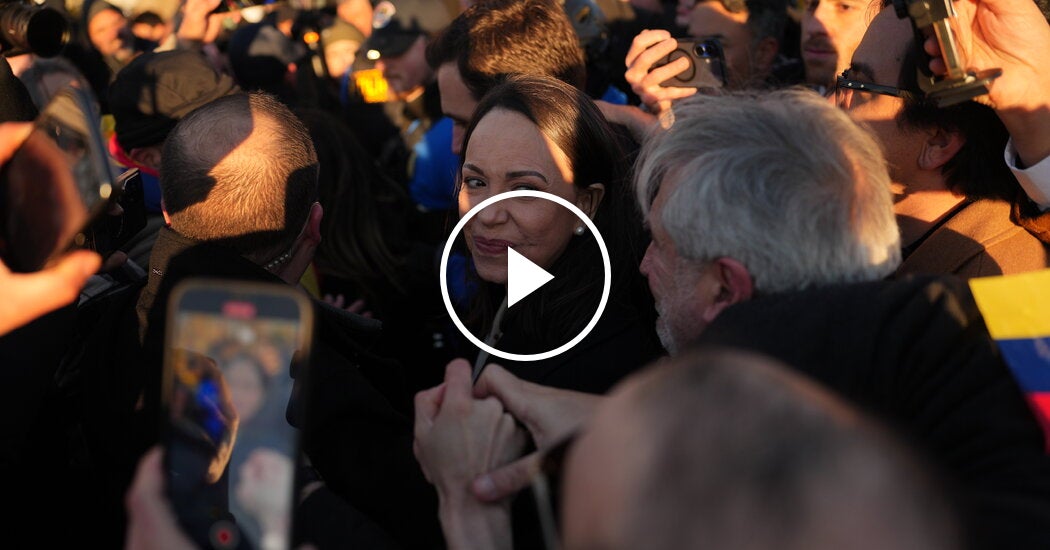
“I presented the president of the United States the medal of the Nobel Peace Prize,” Machado stated following the meeting, her voice carrying both solemnity and resolve as she addressed reporters gathered outside the Oval Office. Dressed in a dark coat and pearl earrings, Machado’s composed demeanor belied the significance of her action—relinquishing one of the world’s most prestigious honors as a testament to the Venezuelan people’s struggle for freedom and democratic governance. The medal, awarded to Machado for her tireless advocacy for human rights and peaceful democratic transition in Venezuela, now symbolically connects the Venezuelan opposition’s cause with American foreign policy in a tangible, physical manner that transcends typical diplomatic exchanges.
The Political Context Behind Machado’s Dramatic Decision
The backdrop to this extraordinary diplomatic moment lies in Venezuela’s complex political landscape, where Machado has emerged as the face of opposition to the current regime. As the leader who many international observers recognize as the rightful representative of Venezuela’s democratic aspirations, Machado has walked a difficult path—balancing international diplomacy with grassroots organizing within Venezuela itself. Her decision to present her Nobel medal to President Trump represents a calculated political strategy that elevates Venezuela’s democratic crisis onto the global stage while cementing American support for the opposition movement she leads.
The White House meeting, attended by senior diplomatic officials and security advisors, marks a significant escalation in U.S. involvement in Venezuela’s political future. Sources close to the administration indicate that the talks centered around strategies for increasing pressure on Venezuela’s current government, while simultaneously providing humanitarian assistance to the Venezuelan people suffering under economic collapse and political repression. “This isn’t merely symbolic—it’s a substantive realignment of priorities,” explained Dr. Elena Rodriguez, a Latin American political analyst at Georgetown University. “By accepting such a significant personal token from Machado, President Trump signals that Venezuela remains a foreign policy priority for his administration, and that the U.S. recognizes Machado’s leadership as legitimate.”
International Reactions and Diplomatic Implications
The international community’s response to Machado’s gesture has been swift and varied, highlighting the global dimensions of Venezuela’s ongoing crisis. European Union representatives issued cautious statements of support, while emphasizing the need for a Venezuelan-led democratic solution. “We acknowledge the significance of this moment,” said Josep Fontelles, the EU’s High Representative for Foreign Affairs, “but ultimately, Venezuela’s future must be determined through free and fair elections, not through external interventions.” Meanwhile, nations aligned with Venezuela’s current government condemned the meeting as inappropriate interference in sovereign affairs, with Bolivia’s foreign ministry describing it as “another example of American imperialism disguised as democratic support.”
Human rights organizations have generally welcomed the high-profile nature of the meeting, seeing it as an opportunity to refocus global attention on Venezuela’s humanitarian situation. “When over seven million Venezuelans have been forced to flee their country—creating one of the world’s largest displacement crises—any diplomatic action that brings renewed attention to their plight is valuable,” said Carmen Vásquez of Human Rights Watch. The Nobel Committee itself released a measured statement acknowledging Machado’s right to determine the fate of her medal, while reiterating that the award recognizes individual achievement in promoting peace and human rights regardless of subsequent political developments. Financial markets throughout Latin America showed slight volatility following the news, reflecting concerns about potential economic sanctions or other measures that might emerge from the strengthened U.S.-opposition relationship.
The Symbolic Power of the Nobel Peace Prize in International Diplomacy
The Nobel Peace Prize, first awarded in 1901, carries immense symbolic weight in international relations, and the voluntary relinquishment of such an honor is virtually unprecedented in diplomatic history. Machado’s decision to present her medal to President Trump transforms the physical object from a personal accolade into a powerful diplomatic instrument—a tangible representation of the Venezuelan opposition’s alignment with American foreign policy objectives. “The medal itself becomes a kind of diplomatic currency,” explained Dr. Richard Haas, president of the Council on Foreign Relations. “It creates a moral obligation, a tacit understanding that the United States now carries an additional responsibility to support Venezuela’s democratic transition.”
The presentation ceremony, captured by White House photographers but closed to most media outlets, reportedly included emotional moments as Machado explained the significance of her gesture. According to individuals present at the meeting, she described the medal as “belonging to the Venezuelan people” and characterized its presentation to President Trump as “entrusting the hopes of millions to America’s leadership.” While some critics have questioned whether such a dramatic gesture might overshadow the practical aspects of diplomatic engagement, supporters argue that symbolic actions often precede substantive policy changes in international relations. The historical significance was not lost on observers, who noted that previous instances of medal presentations between heads of state typically occurred between allies after military conflicts, making this civilian-to-president presentation particularly unique in diplomatic annals.
Looking Forward: What This Means for Venezuela’s Future
The immediate practical implications of this diplomatic exchange remain to be fully revealed, though policy experts anticipate several possible developments. First, the meeting and medal presentation may signal forthcoming announcements regarding increased humanitarian aid to Venezuela or to Venezuelan refugees throughout Latin America. Second, it could presage stricter economic measures against individuals associated with Venezuela’s current government. Third, and perhaps most significantly, it may indicate a more direct American role in international negotiations regarding Venezuela’s political future. “What we’re witnessing is the creation of a powerful narrative moment,” said María González, professor of international relations at the University of Miami. “Whether that narrative translates into concrete improvements for the Venezuelan people depends on the follow-through from both Machado’s opposition coalition and the U.S. administration.”
For Venezuelans watching from inside their troubled nation or from exile communities throughout the Americas, Machado’s gesture represents both hope and uncertainty. While many see strengthened international support as essential to democratic restoration, others worry about the potential for escalating tensions within Venezuela itself. As evening fell in Caracas on Thursday, small gatherings formed in neighborhoods traditionally supportive of the opposition, with residents displaying photos of Machado alongside American flags—visual evidence of how quickly news of the medal presentation had traveled through social media channels despite internet restrictions. The coming weeks will reveal whether this symbolic moment marks a genuine turning point in Venezuela’s long struggle for democratic governance, or whether it will join a long list of dramatic diplomatic gestures that failed to translate into meaningful change. What remains certain is that through this unprecedented act of presenting her Nobel Peace Prize medal to President Trump, María Corina Machado has permanently altered the symbolic landscape of Venezuelan-American relations and written a remarkable new chapter in the history of international diplomacy.