


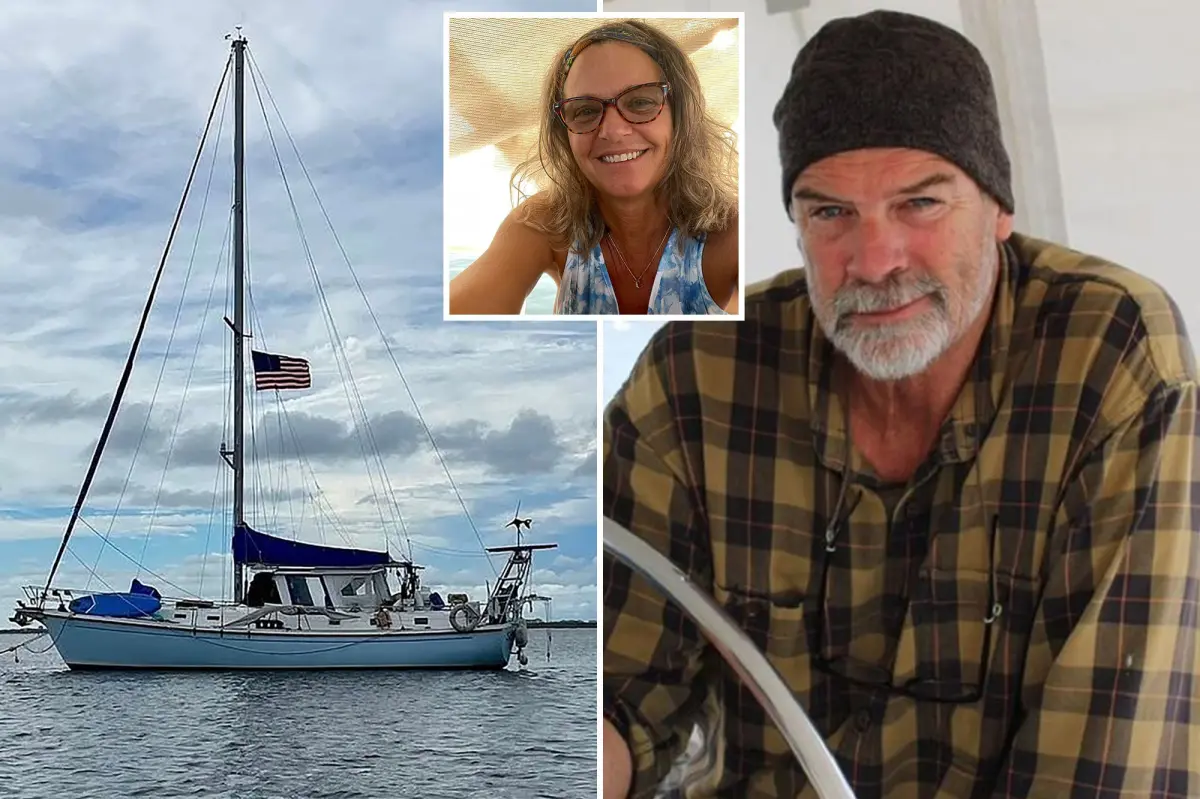
Paragraph 1: In the sun-drenched waters of the Bahamas, where dreams of seafaring adventure often clash with harsh realities, a family’s nightmare unfolds around the disappearance of Lynette Hooker, a 55-year-old mother from Michigan. Her husband, Brian Hooker, 59, was recently released from police custody in Grand Bahama after being arrested last Wednesday, just days after Lynette vanished from their dinghy during a trip back to their yacht, the Soulmate. The situation escalated to headlines when authorities in The Bahamas revealed horrifying photos of alleged abuse that Lynette had documented against her body—bruises and marks that whispered tales of a troubled marriage. Brian, a man who had spent nearly 25 years by her side, walked out of the central police station on Monday evening as the deadline loomed for officials to decide the next steps in this confounding case. Accompanied by his attorney, Terrel Butler, he kept his head down, evading reporters’ questions; Butler explained that his client was overwhelmed, needing time to “destress from this horrible experience.” For Brian, this ordeal has stripped away his composure, leaving him emotional and fragile, a far cry from the competent sailor he portrayed during police questioning. As he faced the world outside those station walls, the weight of uncertainty hung over him like the humid island air.
Paragraph 2: The story began innocently enough the previous Sunday, when Brian and Lynette set out from Hope Town to Elbow Cay in their small 8-foot dinghy, en route to their beloved yacht. Lynette’s accident, as Brian recounted to police, was swift and tragic—she tumbled overboard, the boat’s keys clutched in her hand, causing the engine to sputter and die against the rising waves. Swept away by powerful currents, she vanished from sight in the rough surf, leaving Brian to paddle frantically back to shore alone. He reached Marsh Harbour Boat Yard around 4 a.m., drenched and distraught, his cries for help echoing through the quiet docks as yacht owners awoke to the commotion. Initial investigations painted a picture of a boating mishap, but beneath the surface, cracks in their seemingly idyllic life were beginning to show. Lynette, a seasoned traveler and mother who had embraced this nomadic existence with Brian, now became a faceless statistic in a desperate search. Her disappearance wasn’t just a maritime tragedy; it unearthed whispers of deeper pains, ones that her own photos would soon confirm.
Paragraph 3: As details trickled out, Lynette’s mother, Darlene Hamlett, emerged as a heartbroken voice from Michigan, speaking candidly on NewsNation’s “Drop Dead Serious” with Ashleigh Banfield. With tears in her eyes, Darlene confessed she had long dreaded this call, having prepared herself for the worst given the volatile nature of her daughter’s marriage. “My daughter and her husband lived a life of extremes—highs that sparkled like the ocean’s surface and lows that crashed like unruly waves,” she said, her voice trembling. For nearly 25 years, Lynette and Brian shared a love that oscillated between passion and peril; when things were good, they were intoxicatingly fun, but the bad times left scars. Darlene remembered her daughter as a resilient woman, one who loved deeply but endured hardship. The mother tried repeatedly to intervene, consulting battered women’s shelters for guidance on separation, always hoping to shield her child from the storm. Yet Lynette often returned to Brian, drawn by a complex bond that defied logic and safety. Now, with her daughter’s fate unknown, Darlene grieves not just the loss of her child but the years of silent suffering she witnessed without being able to fully protect her.
Paragraph 4: The abuse allegations, as revealed by those haunting photos, added a layer of darkness to what seemed like a paradise retreat. Lynette, ever cautious, had snapped images of her injuries—bruised backs, visible marks from physical confrontations—reminding herself not to go back, yet she did, time and again. Darlene disclosed that Brian’s temper flared especially when alcohol entered the equation, transforming him into someone “mean and hateful,” capable of lashing out. One instance stood out: visible bruising on Lynette’s back, a stark testament to the violence that marred their shared adventures. Despite these warnings, Lynette found herself caught in a cycle, loving a man who could hurt her profoundly. She had even planned an escape just a month prior, booking a flight home to her mother’s arms after realizing the abuse was escalating. “They loved each other, but they were not good for each other,” Darlene poignantly stated, encapsulating the tragic irony of a relationship built on both affection and aggression. These revelations humanize Lynette beyond a missing person report—she was a woman fighting unseen battles, documenting her pain as a lifeline, hoping one day to break free.
Paragraph 5: Brian’s perspective, shared in fragments during his police interview, portrayed a man shattered by the incident. He recalled the terror of losing sight of Lynette in the surging tides, paddling desperately to safety while his heart pounded with fear for her life. Treated as the prime suspect, he broke down multiple times, his emotions raw and unfiltered, leaving him in an “extremely fragile state,” as noted by investigators. His attorney, Terrel Butler, stood by him, emphasizing that this ordeal has taken a profound toll on his client’s mental health. As Brian emerged from custody on that Monday evening, he looked like a shadow of the adventurous boater he once was—eyes downcast, shoulders slumped, the weight of suspicion pressing down. Reporters clamored for answers, but he remained silent, retreating into his grief. The Royal Bahamas Police Force and Butler declined immediate comment, allowing the case to simmer in ambiguity. For Brian, this isn’t just about evidence; it’s about reclaiming his sanity amid the swirling rumors and the aching absence of his wife.
Paragraph 6: This case, unfolding against the azure backdrop of Elbow Cay and Marsh Harbour, reminds us of how quickly lives can unravel in the blink of an eye. Lynette Hooker’s disappearance from that modest dinghy symbolizes more than a boating accident—it’s a poignant reminder of domestic strife that festers beneath outward appearances of harmony. As search efforts continue and investigations deepen, families on both sides grapple with the unknowns. Darlene Hamlett, in her quiet home far from the islands, holds onto hope while mourning the daughter she couldn’t fully save. Brian, now free but far from liberated, seeks solace in processing the “horrible experience” that has unraveled his world. Authorities pore over evidence, from photos to testimonies, weighing whether currents or cruelty claimed Lynette. In the end, this human story transcends headlines; it’s about love’s capacity for both beauty and brutality, and the haunting legacies left when someone vanishes—leaving behind not just questions, but the echoes of a life lived in shadows. The Bahamas’ waters, once a sanctuary, now mirror the turbulence of a marriage gone awry, a testament to the fragility of human connections on and off the sea.