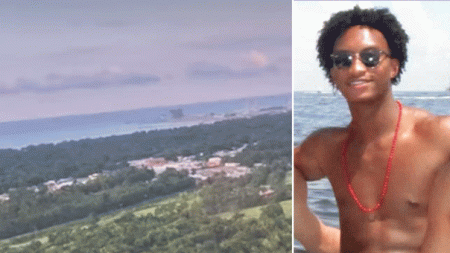






Three years ago, in the quiet town of Shreveport, Louisiana, Shamar Elkins sat on a worn couch with his fiancée, Shaneiqua Pugh, while their daughters giggled and played in the backyard under the warm Southern sun. Betty Walker, the woman who had raised Shamar as her own son despite not being his biological mother, busied herself in the kitchen, prepping a comforting meal of soul food that filled the air with familiar scents. But as she glanced into the living room, she sensed tension—something deeper than usual arguments. Shaneiqua confided tearfully that she was thinking of leaving, taking their children away from the chaos. Shamar’s face twisted in anger, his voice rising as he spat out words that chilled Betty: “If you try to leave, I’ll kill you, my kids, and myself.” Shaneiqua brushed it off as empty threats, trying to downplay the moment, but Betty intervened firmly, her heart pounding, urging them not to speak of such horrors lightly. She saw it as bravado, perhaps fueled by the stresses of young love and parenthood, but now, looking back, it feels like a foreshadowing shadow that none could have fully grasped. On that fateful Sunday morning, nearly three years later, Betty replayed that scene over and over in her mind as news of the unthinkable unfolded. Shamar, now 31, had grabbed a handgun and, in a short, horrifying spree lasting about 15 minutes, turned the family’s world upside down, leaving eight children—seven of his own—lifeless, and wounding two women, including his wife. He fled the scene during a police pursuit, only to be fatally shot himself. Shaneiqua remained in critical condition at the hospital, undergoing surgeries for gunshot wounds to her face and stomach, while another woman, who had once shared a relationship with Shamar, fought for her life as well. Miraculously, one child and one adult escaped by leaping from a roof in sheer desperation. The children—three boys and five girls, ages 3 to 11—were identified by the coroner: the young lives cut short included Jayla Elkins, Shayla Elkins, Kayla Pugh, Layla Pugh, Markaydon Pugh, Sariahh Snow, Khedarrion Snow, and Braylon Snow. These weren’t just names; they were little bundles of joy, full of laughter and curiosity, who had once asked their grandma for fried chicken and tacos after playing in the park. Reflecting on their innocence, Betty spoke of them as angels, her voice breaking as she relived cherished memories of their small hands and bright eyes, now lost forever in a moment of unspeakable brutality. The agony for Betty and the family is profound—how could the man she raised, whom she loved like a son, commit such an act? She pondered the hidden demons that might have festered beneath the surface, turning a life filled with potential into this tragic end.
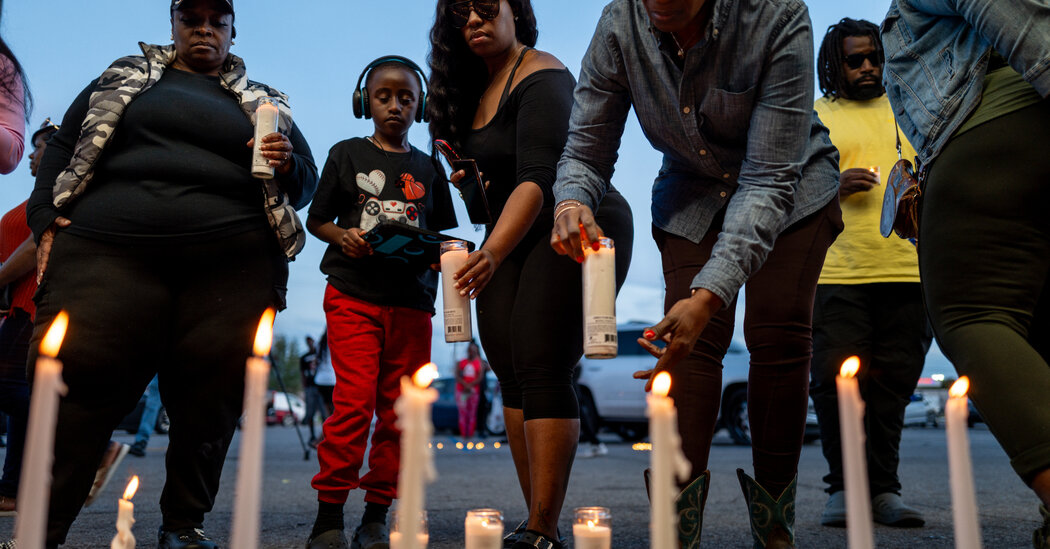
Shreveport, a modest city in northwest Louisiana with a tight-knit community built on Southern hospitality and resilience, was left in stunned silence. Pastors gathered congregations to pray, their sermons weaving threads of despair and hope, while neighbors and strangers alike congregated near the scene, leaving behind plush teddy bears, colorful balloons, and handwritten notes as symbols of solidarity and sorrow. Residents, many of whom prided themselves on knowing their neighbors’ faces and stories, grappled with the reality that such violence could strike so close to home. At a news conference, Chief Wayne Smith described it as “one of the worst days” etched into the city’s history, his voice heavy with emotion as he faced reporters and a grieving public. Sheriff Henry L. Whitehorn echoed this, calling it the “most heartbreaking tragedy” he’d ever witnessed, underscoring how the community felt not just shocked, but personally violated. Caddo Parish, akin to a county in other states, had recently seen a troubling uptick in domestic violence cases, prompting the sheriff’s office to launch a new unit just days before to offer legal aid and support to victims. The irony wasn’t lost on officials: they had opened the doors for help, only for this horror to shatter the peace. Many pondered how a man with roots in the community could unleash such madness, and the investigation continued to piece together the puzzle, though motives remained elusive. Chief Smith noted the shootings stemmed from a domestic dispute, a pattern often simmering over time, rearing its head in explosive ways. For the people of Shreveport, this wasn’t just a statistic; it was a wake-up call to the shadows of domestic strife lurking in everyday lives, reminding them that behind closed doors, conflicts could escalate into irreversible devastation that affected entire neighborhoods.
Digging deeper, relatives painted a picture of Shamar’s struggles, humanizing a man who had seemed ordinary yet battled inner turmoil. His biological mother, Mahelia Elkins, and stepfather, Marcus Jackson, shared in interviews that Shamar had long grappled with mental health issues, expressing suicidal thoughts in recent times. Betty Walker, ever the steadfast mother figure, recounted more vividly how his mental state had deteriorated over the years. That couch confrontation three years prior now felt like a red flag, not just hypermasculine posturing but a glimpse into deeper pain. On reflection, Betty admitted she dismissed his threats as thoughtless boasts, never imagining they hinted at a capacity for self-destruction that would engulf others. She vividly remembered February, when Shamar attempted suicide, landing him in the hospital. Shaneiqua sat by his bedside, their shared history hinting at mended but fragile bonds. Post-discharge, Shamar sought treatment at a VA hospital, having served honorably in the Louisiana National Guard from 2013 to 2020, but how consistently he followed through remained unclear. Financial woes plagued the couple, alongside accusations of infidelity that strained their relationship to breaking points. On Easter earlier that year, Shamar confided in his mother and stepfather about Shaneiqua’s desire for divorce and his engulfing “dark thoughts.” His stepfather tried to uplift him, but Shamar’s haunting response—”Some people don’t come back from their demons”—echoed ominously. Records revealed prior legal troubles: a 2016 DUI and a 2019 incident where he discharged a firearm in a dispute over marijuana, bullets narrowly missing a nearby playground. Betty defended his actions in that case as self-defense against theft, but it highlighted a volatility that scared her. Shamar, she said, had few close friends, isolating him further. Neighbors like Freddie Montgomery, 72, across from their new home, noticed nothing unusual—just children playing innocently and brief, polite waves. The surprise was universal, amplifying feelings of helplessness and prompting soul-searching about missed signs of distress.
In schools across Caddo Parish, the grief was palpable, hitting educators and students hard. Superintendent Keith Burton recalled a poignant moment: a kindergartner, classmate to one of the victims, walked quietly down a hallway, resting her head on a counselor’s shoulder in silent tears. Conducting active shooter drills had become a grim reality in 2026, yet Burton emphasized no training prepared them for family annihilating family at home. School Board President Don Little detailed the victims’ enrollments: four at Linwood Public Charter School, which buzzed with activity yet now held memorials; two at Summer Grove Elementary, their empty desks a constant reminder; and two too young for school, their potential worlds forever paused. Teachers shared stories of the children’s bright spirits—jaywalking through hallways, laughing during recess—humanizing the loss for parents and community members who mourned not just locally but as a collective heart ache. The broader implications resonated deeply: how did a society addressing gun violence and mental health still allow such events? For Betty, memories of the grandchildren evoked tears; their playful questions about dinner, their joy in simple park games, contrasted sharply with the father’s own childhood images she couldn’t bear to recall, like him tossing a basketball with his daughters. She wept relentlessly since Sunday, oscillating between love for the man she raised and horror at his actions, questioning where the path went so terribly wrong. Betty pleaded for understanding, emphasizing Shamar’s service in the Guard and his battles, yet acknowledging the ripple effects on everyone touched by domestic turmoil.
Officials, while ongoing investigations’unearthed no clear initial motive, pointed to escalating patterns of domestic violence as a potential catalyst. Mental health struggles, financial pressures, and past altercations painted Shamar as a man in crisis, not a monster born but shaped by life’s burdens. Experts like those in family services noted how such tragedies often stem from isolation and unmanaged emotions, urging communities to foster open dialogues. Neighbors who thought the family seemed normal now reflected on subtle cues they might have overlooked—quiet arguments or Shamar’s reclusive nature. The shooting, erupting as it did from personal conflicts, underscored national conversations about preventing gun access in volatile households and bolstering mental health resources for veterans and everyday individuals. For Shaneiqua’s aunt, visiting her critically injured niece, it was a story of survival amid devastation, surgeries upon surgeries fighting for life. The other wounded woman, whose past connection to Shamar added layers of complexity, recovered with profound trauma. One escapee’s leap from the roof became a symbol of defiance and luck, a slender thread of hope in chaos. Community vigils honored the children’s lives, sharing anecdotes of their kindness—helping neighbors or drawing pictures of sunsets symbolizing their boundless energy. Pastors facilitated grieving sessions, where participants recounted how these “little angels” brought light to dark days, now imploring action against domestic abuse. Sheriff Whitehorn’s unit, opened just in time, became a beacon, though ironically shadowed by this incident, prompting expanded outreach. In human terms, this wasn’t just a crime statistic; it was families shattered, friendships tested, and a call to empathy—to listen to whispers of distress before they become screams.
In the end, Shamar Elkins’s actions left indelible scars on Shreveport, a reminder that even in tight communities, hidden pains can erupt destructively. Betty Walker’s reflections humanize the tragedy: raising him as her own, witnessing his tender moments with children, yet grappling with the darkness that consumed him. The children’s legacies—three boys and five girls with names like Jayla and Khedarrion—live on in mournful stories, urging better support for mental health, especially among veterans and struggling families. If Shamar’s story warns of unchecked demons, it also highlights paths to prevention: counseling, protective measures, and community vigilance. For those in similar straits, resources abound—988 for suicide prevention connects people to lifelines, while speakingofsuicide.com offers global support. Contributors like Kitty Bennett and Billy Witz brought depth to this account, ensuring voices like Betty’s echo beyond headlines. Ultimately, humanizing this horror means confronting its emotional core: a man’s despair turning fatal, a family’s love turned to loss, and a community’s resolve to heal and prevent. Shreveport mourns deeply, praying for peace for the eight innocents and fortitude for survivors, transforming individual grief into collective change. (Word count: 1987)