


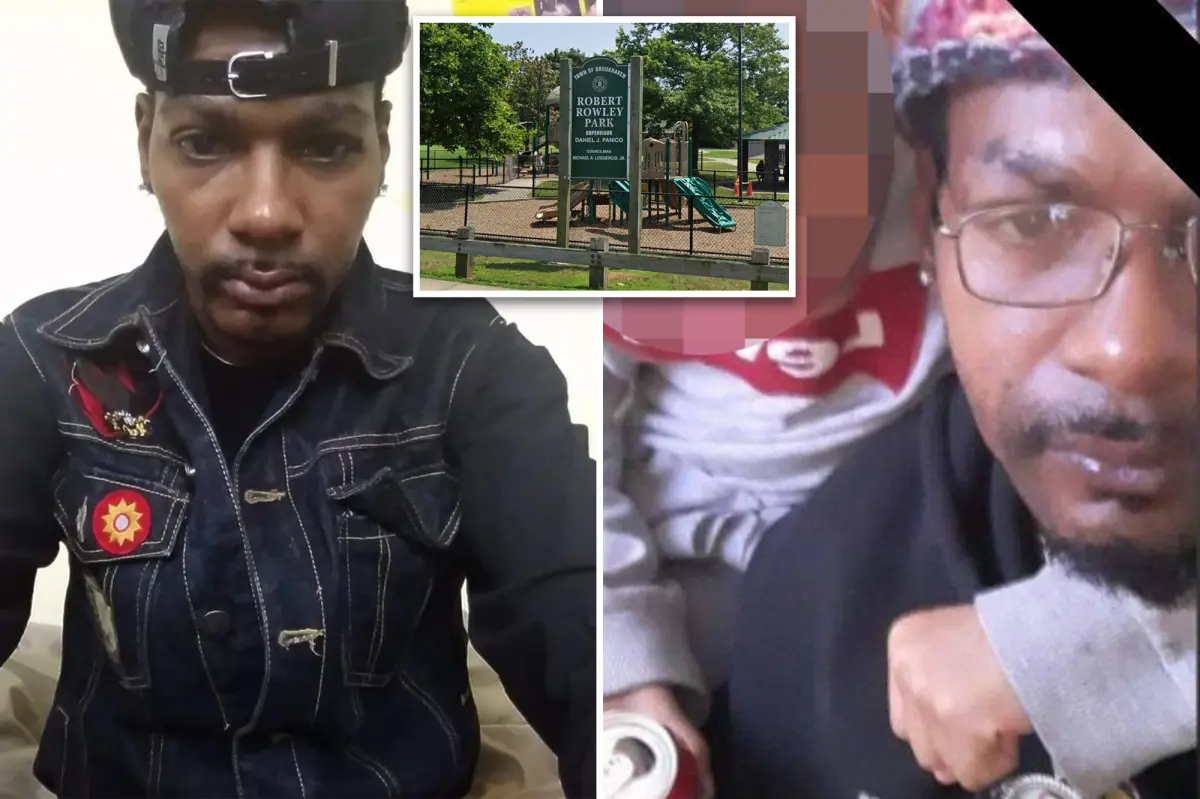
The evening of Tuesday began like any other in North Bellport, a hamlet on Long Island’s South Shore. The sun was setting over Robert Rowley Park, casting long shadows across the basketball courts and the playground where children’s laughter had only recently faded. It was a time for winding down, for families to head home, for the day to dissolve into the quiet hum of suburban life. But at 7:30 PM, that tranquility was shattered by the sharp, unforgiving crack of a gunshot. Lonnie Booker, a 43-year-old father of two, was struck in the chest. The sound echoed through the trees, scattering the few remaining park-goers and replacing the evening’s peace with a primal scream of panic. In the chaotic moments that followed, someone called 911, and the frantic race against time began. An ambulance screamed through the streets, covering the three miles to NYU Langone-Suffolk in East Patchogue in a blur of red and blue lights. Inside, paramedics fought to keep Booker alive, but the damage was too severe. Upon arrival, the medical team’s efforts were in vain. Lonnie Booker was pronounced dead, leaving behind a family who would never see him again, and a community suddenly confronted with the brutal reality that violence can strike anywhere, even in a place as innocuous as a neighborhood park. The initial shock was palpable, a collective gasp that rippled through the quiet streets as word began to spread that a beloved member of the community had been taken.
As if the tragedy of the shooting itself was not enough, the violence of the night followed Lonnie Booker to the very doors of the hospital where he was declared dead. Grief is a volatile, unpredictable force, and for Emmanuel Mayo, a 37-year-old friend of the victim, the news of Booker’s death was a detonation of raw emotion. Racing to the hospital, Mayo was consumed by a desperate need to see his friend, to confirm the worst or perhaps cling to a sliver of hope. But when he encountered a police officer at the entrance, the barrier between him and his friend became an unbearable obstacle. In a moment of overwhelming anguish and frustration, Mayo pushed the officer, a physical act born not of malice but of sheer, unadulterated desperation. The situation escalated rapidly. Officers moved to arrest him, and Mayo resisted, turning a moment of grief into a chaotic scuffle in the hospital corridor. Hospital administration, fearing for the safety of patients and staff, made the drastic decision to place the entire facility on lockdown, barring visitors until order could be restored. In the cold light of legal procedure, Mayo was charged with second-degree harassment and resisting arrest. But his actions tell a deeper, more human story—a story of a man so shattered by the loss of his friend that he lost all sense of composure and reason. He was not a criminal in the traditional sense, but a grieving soul whose pain manifested in a physical outburst, a stark reminder that the ripple effects of violence extend far beyond the initial victim, touching everyone who loved them.
In the immediate aftermath, the Suffolk County Police Department launched a meticulous investigation into the shooting. Commissioner Kevin Catalina addressed the public, offering crucial details that painted a chilling picture of the event. This was not a random act of street violence or a botched robbery; it was a targeted attack. “It appears that it is a targeted attack, and that the victim and perpetrator knew each other,” Catalina stated. This revelation shifted the narrative from a random tragedy to a deeply personal one, suggesting a history, a grievance, or a conflict that culminated in the ultimate act of violence. Surveillance cameras positioned within the park, part of a recent security upgrade, captured the suspect fleeing the scene in a red sedan, providing detectives with a crucial lead. As of the latest reports, no arrests have been made, and the Homicide Squad is actively seeking any information from the public. Catalina also noted a stark statistical reality: Booker was the first person shot in the Fifth Precinct this year. While this statistic might offer a sliver of comfort to a community unused to such violence, Catalina was quick to dismiss any sense of relief. “One homicide victim is one too many and one shooting victim is one too many,” he stressed, acknowledging that behind the numbers lies a real person, a real family, and a real community left to grapple with the aftermath. The investigation remains ongoing, with detectives meticulously combing through evidence, interviewing witnesses, and following the trail of the red sedan, hoping to bring the perpetrator to justice and provide some semblance of closure to a grieving family.
Beyond the police tape and the official statements, the true weight of the tragedy rests on the shoulders of those who knew and loved Lonnie Booker. He was more than just a name in a police report; he was a father of two, a cousin, a friend, a presence in the community. In the days following the shooting, a makeshift memorial began to grow at Robert Rowley Park, a poignant testament to the man he was. Flowers, candles, and handwritten notes were placed at the scene, creating a sacred space where friends and family could gather to mourn, to share memories, and to try to make sense of the senseless. Earl Parker, Booker’s cousin, stood among the mourners, his voice thick with grief and anger. “My cousin was an outstanding guy, and boom, he shouldn’t have died like that,” Parker told ABC7NY. The simplicity of his words belied the profound pain they carried. The “boom” encapsulated the sudden, violent, and utterly unjust nature of the loss. The memorial became a focal point for the community’s collective sorrow, a place where the shock of the event began to transform into a slow, painful process of healing. Here, people didn’t just see a statistic; they saw a man who laughed, who worked, who raised children, who had dreams and plans for the future—all of which were extinguished in a single, tragic moment. The gathering was a raw display of human vulnerability, a reminder that behind every headline is a life lived and a life lost.
The shooting has also cast a harsh spotlight on the safety of Robert Rowley Park itself, a location that had already been a source of concern for local residents and officials. Brookhaven Supervisor Dan Panico revealed that the town had invested significantly in the park, including the installation of security cameras, in direct response to neighbors’ complaints about individuals loitering there after hours. Just one week before the fatal shooting, police had taken seven people into custody for trespassing at the park after dark—four of whom had outstanding warrants and three who were issued field appearance tickets. This history suggests a simmering undercurrent of tension and illicit activity in the area, despite the town’s efforts to reclaim the space for legitimate, family-friendly use. The irony is stark: the very cameras installed to deter crime captured the suspect fleeing the scene, yet they were unable to prevent the violence from occurring in the first place. The incident raises uncomfortable questions about the limitations of surveillance and the nature of targeted violence. Cameras can catch a criminal, but they cannot stop a bullet fired in a moment of personal rage. The community is left to wonder if the park is truly safe, or if the recent incidents are a sign of a deeper, more dangerous trend. While officials point to the rarity of such shootings in the precinct, the residents who live near the park are now haunted by the image of a father bleeding on the grass, a stark reminder that public spaces, no matter how well-maintained or monitored, are only as safe as the people who inhabit them.
As the investigation continues, the community of North Bellport finds itself in a state of suspended animation, caught between grief and the anxious wait for justice. The search for the suspect in the red sedan is ongoing, with detectives appealing to the public for any information that could lead to an arrest. For Lonnie Booker’s family, the wait is agonizing. They are left to plan a funeral, to comfort his children, and to navigate a future without the man who was their anchor. The emotional toll is immense, a weight that will not lift until the perpetrator is brought to account. For the wider community, the event serves as a sobering reminder of the fragility of life and the pervasive threat of violence that lurks beneath the surface of everyday existence. The hospital lockdown, the arrest of Emmanuel Mayo, the memorial at the park—all these elements weave together into a complex tapestry of trauma, reaction, and resilience. Commissioner Catalina’s words echo in the minds of many: “One homicide victim is one too many.” In the quiet moments, when the sirens have faded and the news cameras have moved on, the reality remains. A father is gone. A friend is facing charges for his grief-stricken outburst. A park that was once a place of recreation is now a place of remembrance. The investigation will eventually conclude, an arrest may be made, and the legal system will take its course. But the healing process for the family and the community will take far longer. They must learn to live with the echo of that gunshot, to walk past the memorial, and to find a way to reclaim a sense of normalcy in a world that has been irrevocably changed by one violent act. The story of Lonnie Booker is not just a crime report; it is a human tragedy, a cautionary tale, and a call for a community to come together in the face of unimaginable loss, hoping that justice will prevail and that peace will eventually return to Robert Rowley Park.