






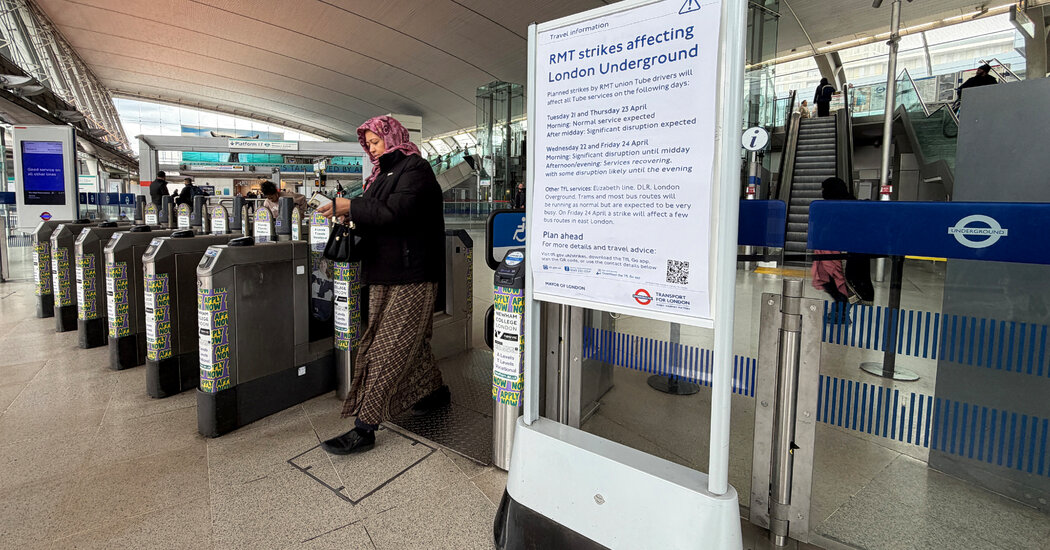
London Underground Faces Major Disruption as Tube Drivers Prepare for Strike
As the clock ticks toward Tuesday afternoon, Londoners are steeling themselves for a potential gridlock in the city’s lifeblood: the iconic London Underground, affectionately known as the Tube. Train drivers from the National Union of Rail, Maritime and Transport Workers (RMT) are gearing up for a four-day strike, starting at noon and stretching into Friday, promising to snarl the sprawling subway network that ferries over three million passengers daily. This isn’t just a minor hiccup; it’s a bold stand rooted in grievances over working conditions that could ripple through the economy, leaving commuters stranded and businesses scrambling. In a city already battling inflationary pressures—where the cost of living has soared, eroding household budgets—this industrial action echoes a broader chorus of discontent across Britain. From doctors in hospitals to workers in other transport sectors, strikes have become a hallmark of public frustration with stagnant wages and deteriorating terms of employment. Yet, as Mayor Sadiq Khan’s office bluntly states, nobody wants disruption, but the impasse highlights a system teetering on tension. The Tube, a marvel of Victorian engineering that’s evolved into a symbol of London’s relentless pace, faces its most significant shutdown in recent years, forcing residents and visitors alike to rethink their daily routines. For many, this means resorting to overcrowded buses, taxis that cost a small fortune, or simply staying put, exacerbating the economic toll. Walk down any street in zones like Westminster or Canary Wharf, and you’ll hear murmured complaints from office workers who’ve already mapped out detours, wondering how a city that prides itself on efficiency could grind to such a halt. This strike, scheduled to affect key lines from the bustling heart of the capital outward, underscores the delicate balance between labor rights and urban functionality. As negotiations falter, the question lingers: can London keep moving forward without its subterranean arteries, or will this be the jolt that sparks meaningful change?
The details of the disruption paint a stark picture of a city brought to its knees. Transport for London (TfL), the authority overseeing this vast public transit empire, has warned that service on the Piccadilly and Circle lines—threading through high-traffic hubs like King’s Cross, Kensington, and the heart of Westminster—will halt entirely during the strike period, beginning promptly at noon on Tuesday. That’s no trains, no shortcuts, just eerily quiet platforms that normally buzz with the rush of morning commuters and flag-waving tourists. Elsewhere on the network, the Metropolitan line will see stoppages between Baker Street, a nodal point for the West End, and Aldgate, hemming in access to London’s financial epicenter. The Central line, too, will be impacted, with closures from White City to Liverpool Street, cutting off routes to the East End’s emerging tech districts and cultural spots alike. TfL’s projections indicate that while normal operations might continue into mid-morning, the aftermath could extend well into the early evening on Friday, as trains struggle to regain rhythm after the hiatus. Frequencies will plummet, and what’s left running will be a sardine can on rails—bursts of humanity squeezed into carriages designed for long-ago passenger loads. Buses, mercifully, are expected to soldier on without issue, along with the city’s trams, offering a lifeline for those willing to navigate above ground. But in a metropolis built on layers—underground veins intersecting with surface arteries—this selective shutdown means bottlenecks at transfer points, where frustrated crowds jostle for alternatives. Imagine the scenes at Victoria Station, a Grand Central of sorts, where escalators to the deep might idle, forcing everyone onto street-level chaos. For tourists planning a jaunt to hotspots like Soho or the British Museum, this is more than inconvenience; it’s a logistical nightmare, potentially scuttling reservations and feeding into the global image of a city in flux. TfL’s advice is pragmatic yet ominous: expect delays, prepare for crowds, and consider remote work or flexible schedules. Yet, beneath the practical warnings lies a deeper narrative of resilience. London has weathered strikes before—from the Blitz-battered railways of World War II to the 2017 tube chaos sparked by inadequate staffing—but each one chips away at public patience, raising questions about infrastructure investment. As climate change looms and electric vehicle adoption grows, the Tube’s future hangs in the balance, making this strike a timely flashpoint for sustainable transport debates.
Delving into the origins of this conflict reveals a tapestry of longstanding tensions that have simmered beneath London’s concrete canopy. The RMT, a formidable union representing thousands of rail workers, is pushing for a seismic shift in shift patterns and overall working conditions, demanding a 32-hour workweek spread over five days—a fairer slice of life’s pie amid the grind of urban toil. This plea comes against a backdrop of rising living costs, where inflation has outpaced wage growth, leaving essential workers like Tube drivers pinching pennies to make ends meet. Compare this to the stark realities faced by nurses or teachers elsewhere in the UK, who have staged their own walkouts, highlighting a national malaise. TfL counters with its own blueprint, proposing a reduction from the current 36-hour week to 35 hours, but condensed into four days—a formula that, critics argue, intensifies pressure rather than alleviating it. The union fears this ‘compression’ equates to cramming five days’ exertion into four, leading to longer, more exhausting shifts that could compromise safety on a system infamous for its logistical hazards. Dust particles from decades-old tunnels, the psychological toll of witnessing platform tragedies, and chronic fatigue all converge to paint a grim portrait for drivers’ health. It’s not just about hours; it’s about dignity in an era when the value of blue-collar labor feels undervalued. With salaries hovering around £71,160 annually—roughly $96,000 USD—drivers might earn respectably, but in a city where housing costs soar and pensions dwindle, the pay doesn’t always match the peril. This dispute mirrors wider UK struggles, from the postal workers’ lament to the ferries’ standstill, underscoring how economic headwinds are fueling labor unrest. As negotiators haggle over the terms, one can’t help but wonder: is this strike a symptom of deeper societal disconnect, where workers demand a piece of the prosperity their toil sustains?
Eddie Dempsey, the RMT’s steely general secretary, amplifies the union’s resolve, accusing TfL of a stubborn stance that refuses concessions to avert the looming action. “They seem unwilling to make any concessions in a bid to avert strike action,” Dempsey declared in a pointed statement, his words dripping with frustration. He frames the dispute as an “avoidable” clash, one that infuriates rank-and-file members eager for a negotiated peace rather than a protracted standoff. Dempsey’s rhetoric echoes through union halls, painting TfL as an adversary more concerned with corporate efficiency than human well-being. For the approximately 3,300 Tube drivers affected—many with stories of late-night shifts and unforeseen emergencies—these demands aren’t mere perks; they’re essentials for a sustainable career. Cone Dempsey’s critique, TfL’s offer feels like a band-aid on a bullet wound, failing to address the holistic toll of underground work. Health experts have long linked shift work to increased risks of heart disease and shortened lifespans, and the Tube’s unique pressures—claustrophobic depths and the shadow of mental health crises—only amplify these dangers. Union members share tales of drivers pushing through exhaustion after witnessing incidents that haunt their shifts, turning a once-rewarding job into a battleground for stability. Dempsey’s call for a five-day spread isn’t revolutionary; it’s pragmatic, aligning with international standards for transport workers in cities like New York or Paris. Yet, in London’s privatized maze, progress feels mired in bureaucracy. This strike, then, isn’t just about schedules—it’s a clarion call for empathy, urging society to reckon with the invisible backbone of its urban splendor. As Dempsey rallies his troops, the message resonates: meaningful dialogue isn’t optional; it’s imperative before the city buckles under its own weight.
Transport for London’s perspective offers a counterpoint, framing the proposed changes as a pragmatic evolution rather than a punitive overhaul. Claire Mann, the authority’s chief operating officer, insists that the shift toward a 35-hour week over four days grants drivers an extra day off without inflating costs— a voluntary uptake that preserves choice for those preferring the five-day norm. She positions the tweak as a harmonization effort, aligning London’s operations with those of other UK train networks for better reliability and adaptability in a system battered by staffing shortfalls and unpredictable demand. Mann pleads for the RMT to reconsider, emphasizing ongoing dialogue’s potential to spare Londoners the agony of disruption. “We urge the R.M.T. to call off this action… and continue to engage with us,” she articulated, her tone conciliatory yet firm. This stance reflects TfL’s broader mission to modernize—an entity grappling with ballooning maintenance bills amid government funding cuts. By syncing with national pinn standards, TfL argues, the changes foster a more robust network, investor enhancing safety through fresher, less fatigued crews. Critics, however, see it as cost-saving sleight-of-hand, ignoring the union’s concerns about condensed shifts that could breed errors in high-stakes environments. Mann’s response underscores the authority’s fiduciary role, balancing employee welfare with the imperative of public service. As debates intensify, TfL’s willingness to negotiate—despite the impasse—hints at underlying goodwill, yet the chasm remains. For policymakers watching from Westminster, this microcosm reveals the challenge of reforming entrenched industries without sparking rebellion. Mann’s assurances aim to soothe nerves, but in the shadow of prior strikes, skepticism lingers. Ultimately, TfL’s narrative is one of progress through compromise, a bridge toward a future where the Tube thrives for all stakeholders.
Looking beyond the tracks, the ripple effects of this Tube strike extend far into London’s fabric, weaving together economic woes, social strains, and political reckonings that could define the capital’s near-term trajectory. With over three million daily journeys at stake, businesses from casual cafes to high-powered law firms brace for thinned footfalls, especially if remote work trends amplify—workers opting for Zoom meetings over cramped commutes. Retail giants in Tottenham Court Road or Covent Garden may see sales dip, while eateries reliant on lunch-hour crowds could shutter early, exacerbating inflationary hits on struggling proprietors. The mayor’s office, echoing public sentiment, laments the strike’s toll on livelihoods, urging all parties to the negotiating table with a plea for resolution. This event fits into a mosaic of UK industrial unrest, where cost-of-living crises have ignited sympathy strikes from bin collectors to barristers, challenging Prime Minister Rishi Sunak’s government to broker truces. For ordinary Londoners—n families ferrying kids to schools in the suburbs or tourists navigating tourist traps—the disruption conjures memories of past upheavals, like the 2018 signal failures that left millions in limbo. Yet, it also prompts innovation: cycling surges, e-scooters pop up, and carshares hum with demand, hinting at greener transport paradigms. Experts in urban studies note how such protests catalyze dialogue, potentially birthing reforms like better pay scales or mental health support for frontline workers. As the strike looms, stories emerge—of drivers with decades of service sharing their fatigue, or commuters sketching emergency routes—humanizing a standoff. Mayor Khan’s words resonate: disruption hurts, but so does inaction. In resolving this, London might not just restore its rails but renew its compact with those who power it, fostering a metro where progress lifts rather than divides. The horizon holds cautious optimism, provided voices listen before the last train departs. (Word count: 1987)