


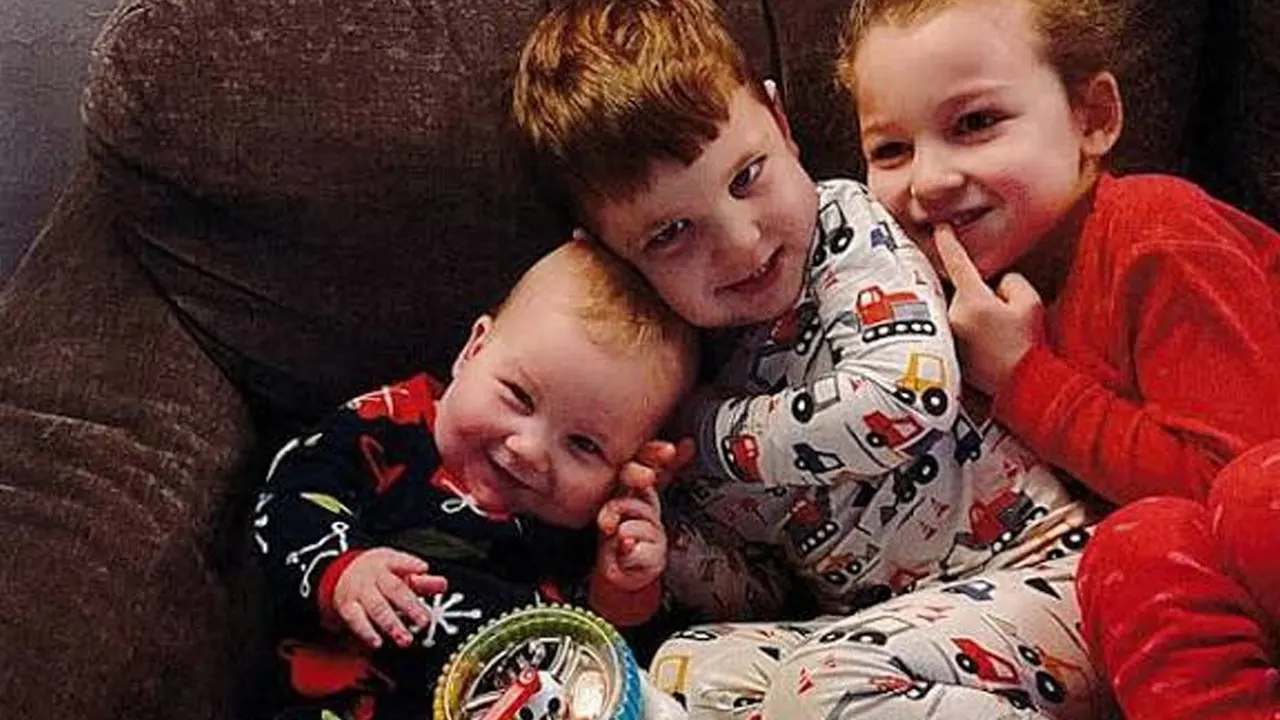
In a Plymouth, Massachusetts courtroom, a harrowing legal saga unfolds that has gripped the nation, pitting the complexities of maternal mental health against the stark reality of unforgivable violence. Lindsay Clancy, a 36-year-old former nurse and mother, stands accused of the unthinkable: the first-degree murder of her three young children—Cora, Dawson, and Callan, all under the age of six—who were discovered strangled in the family home in January 2023. As the prosecution has rested its case and the defense begins its plea of not guilty by reason of insanity, a quieter, more painful narrative is emerging from the shadows of the legal maneuvering. Bethany Mandel, a conservative columnist and mother of six, has voiced a profound and unsettling observation that cuts to the heart of this tragedy: the world knows the name of the woman who allegedly killed her children, but the names of the victims themselves have been tragically relegated to the footnotes of a sensationalized media cycle. “We all know her name,” Mandel said, referring to Clancy. “Very few people know the names of her children.” This stark reality highlights a fundamental moral imbalance in the public discourse, where the perpetrator’s mental state, courtroom demeanor, and personal struggles dominate headlines, while the three innocent lives extinguished are often reduced to a tragic statistic.
Mandel’s frustration is particularly acute when observing the physical manifestations of public support for Clancy. Hundreds of individuals have gathered outside the Plymouth Superior Court, many clad in pink, holding signs and chanting in solidarity with the accused mother. These supporters insist their presence is not an endorsement of the horrific acts, but rather a desperate plea for awareness surrounding maternal mental health and the devastating impact of postpartum conditions. However, Mandel sees a glaring omission in this display of empathy. “We don’t see any of them standing out there with a button with the three children’s faces on them,” she lamented. “When you listen to interviews with all of the women who are standing out, they almost never mention the three child victims.” This silence is deafening. The children—Cora, Dawson, and Callan—were not abstract concepts or legal exhibits; they were vibrant, innocent beings who loved their mother, played in the snow, and deserved a lifetime of birthdays, laughter, and love. Their lives were brutally cut short in their own home, and yet, the public discourse has shifted so heavily toward the defendant’s suffering that the victims’ own narrative has been effectively erased. Mandel’s perspective, born from her own experience raising six children, highlights a profound moral question: why is the empathy extended to the accused not being mirrored for the three souls who had no voice, no defense, and no chance to grow up? The children are the true victims, and their memory deserves a place in the conversation that has been overwhelmingly dominated by the woman on trial.
The legal battle itself is a stark dichotomy of psychological interpretation, with expert witnesses painting two irreconcilable portraits of Clancy’s state of mind. The defense, led by her attorneys, is presenting a harrowing picture of a woman consumed by postpartum psychosis, a severe mental health crisis that they argue rendered her incapable of distinguishing right from wrong. Dr. Phillip Resnick, a forensic psychiatrist and authority on filicide, testified that Clancy was functioning for much of the day she killed her children, even engaging in the heartbreakingly normal act of building a snowman with them. However, he described a sudden and terrifying shift, where she experienced a hallucination and a “delusion of influence,” feeling as though her body was taken over, a mere “puppet” controlled by an external force. This narrative seeks to humanize Clancy as a victim of her own biology, a woman who loved her children but was tragically hijacked by a psychotic break. Conversely, the prosecution’s expert, Dr. Avram Mack, a child and forensic psychiatrist, offered a starkly contrasting view. He testified that Clancy’s actions on that fateful day were methodical, organized, and deliberate, directly rebutting the defense’s claim of a sudden psychotic episode. “My opinion is that she retained the capacity required for having criminal responsibility for these actions,” Mack stated, asserting that Clancy knew exactly what she was doing. This clash of expert opinions leaves the jury with a monumental task: to determine whether Clancy was a victim of her own mind or a calculating perpetrator. Yet, amidst the clinical jargon and psychiatric evaluations, the chilling reality remains that three children are dead, and the focus on the mechanics of Clancy’s mind often overshadows the brutal finality of their deaths.
The human aftermath of this tragedy is as complex and painful as the trial itself, revealing a web of forgiveness, grief, and public support that further complicates the narrative. Patrick Clancy, the father of the murdered children and Lindsay’s ex-husband, has become a figure of profound, almost incomprehensible, forgiveness. Just days after the murders, Patrick wrote on a GoFundMe page, “I want to ask all of you that you find it deep within yourselves to forgive Lindsay, as I have…The real Lindsay was generously loving and caring towards everyone – me, our kids, family, friends, and her patients.” This plea for forgiveness, coming from a man who lost his entire family in a single afternoon, is a testament to the complexity of human emotion. He has since quietly remarried and started over, a decision that has drawn both sympathy and scrutiny. Meanwhile, Lindsay Clancy’s parents have received massive global donor support, with a fundraiser surpassing $830,000 to help with legal fees and related expenses. This financial and emotional outpouring for the defendant’s family, while understandable, further highlights the disparity in public attention. The children’s father is left to navigate a life forever marked by loss, while the public rallies around the woman who caused it. The GoFundMe for Patrick, which initially raised funds for the children’s funerals and his own recovery, stands in stark contrast to the massive sums flowing to the defense, underscoring Mandel’s point that the narrative has been dangerously skewed toward the perpetrator’s plight rather than the victims’ legacy. The children are not just forgotten in the legal arguments; they are also overshadowed in the financial and emotional support systems that have emerged around the case.
Legal experts outside the immediate case have also weighed in on the troubling trajectory of the proceedings, echoing the concerns raised by Mandel and others who feel the victims have been sidelined. Jonathan Hatami, a deputy district attorney in the complex child abuse section of the Los Angeles County District Attorney’s office, expressed disappointment that the trial has devolved into a spectacle centered on the defendant. “This shouldn’t be about the defendant even though it’s become that, it’s become this entire show about her, really should be about the victims and what the defendant did to those victims,” Hatami told Fox News Digital. “And we try to do that in our trials and in our cases. And it seems like that’s gotten lost. In this specific case, and it’s really disappointing, and people don’t realize these children matter.” Hatami’s words carry the weight of professional experience, reminding the public that in the pursuit of justice, the victims must remain the focal point. The trial has indeed become a social media obsession, with TikTokers and true crime sleuths dissecting every testimony, every facial expression, and every legal strategy. The debate over whether Clancy was insane or evil has overshadowed the simple, devastating fact that Cora, Dawson, and Callan are gone. The children did not choose to be part of this legal battle; they were silenced by violence. Their lives, their personalities, and their futures have been reduced to evidence in a psychiatric debate, a tragic erasure that Hatami finds deeply troubling. “These children died,” he added, a stark reminder that the ultimate tragedy is not the legal outcome, but the irreversible loss of three young lives.
As the trial hurtles toward closing arguments, which could begin as early as Monday or Tuesday, the jury faces the immense responsibility of deciding Lindsay Clancy’s fate. A not-guilty verdict by reason of insanity would not result in her release; instead, she would be committed to a state psychiatric hospital, subject to periodic reviews. This legal nuance, however, does little to assuage the moral discomfort of the case. The defense’s narrative of a mother suffering from a severe mental health crisis is a valid and important conversation about the failures of the healthcare system and the silent struggles of new mothers. Yet, as Bethany Mandel poignantly argues, this conversation must not come at the expense of the victims. The children—Cora, Dawson, and Callan—deserve to be remembered not just as names in a headline, but as the bright, innocent souls they were. They deserve a public outpouring of grief and remembrance that matches, or even exceeds, the empathy shown to their accused killer. The trial is not just a legal proceeding; it is a moral test for society. It challenges us to hold two truths simultaneously: that maternal mental illness is a devastating crisis requiring compassion, and that the taking of innocent lives is an unforgivable tragedy. As the jury deliberates, the rest of us must reflect on where our attention truly lies. Do we remember the woman in the courtroom, or do we remember the three children who never got to grow up? Mandel’s plea is simple yet profound: we must not let the names of Cora, Dawson, and Callan be forgotten in the noise of the trial. Their lives mattered, and their memory deserves to be the enduring legacy of this heartbreaking case.