







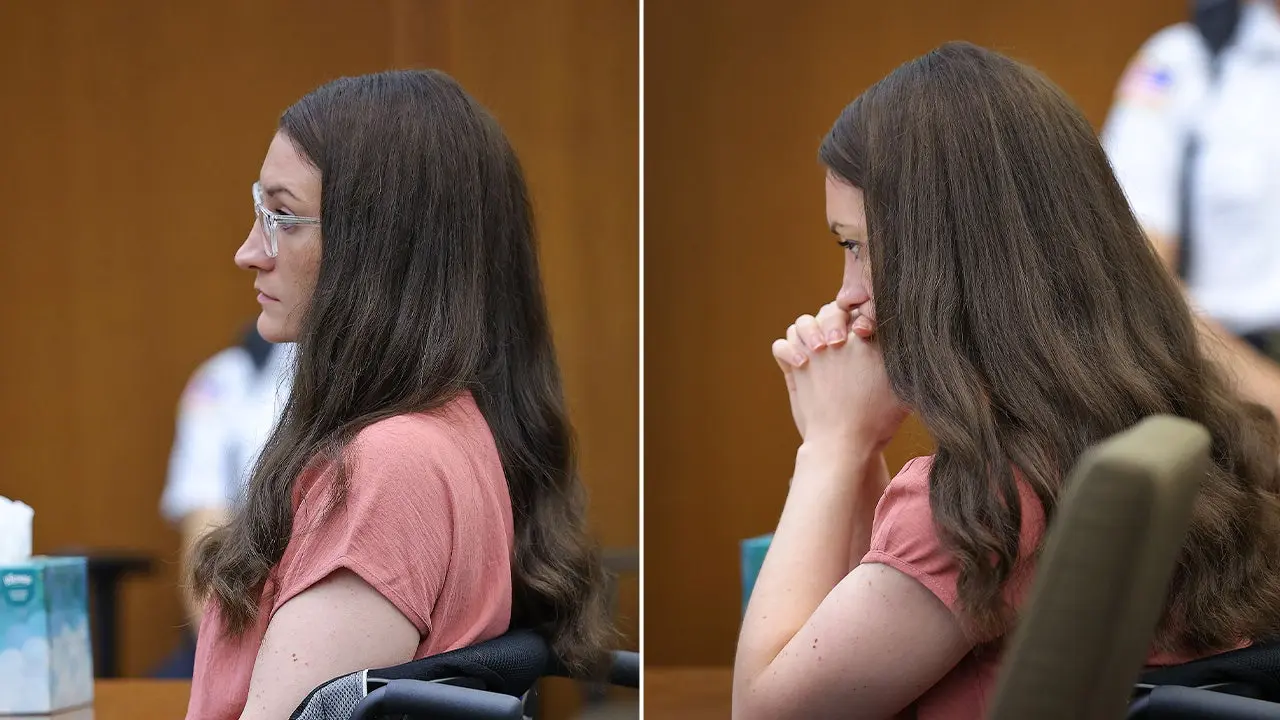
On a quiet winter day in the coastal suburban enclave of Duxbury, Massachusetts, an unimaginable tragedy unfolded within the walls of the Clancy family home—a tragedy that would soon arrest the nation’s attention, shatter a tight-knit community, and spark a raw, deeply painful conversation about the fragile boundaries of maternal mental health. Lindsay Clancy, a highly respected and compassionate labor and delivery nurse at Massachusetts General Hospital, stood accused of the ultimate, unthinkable transgression: the strangulation deaths of her three beloved young children—five-year-old Cora, three-year-old Dawson, and eight-month-old Callan—followed by a desperate leap from a second-story window in an apparent attempt to end her own life, leaving her permanently paralyzed. As the local community and the country at large reeled from the sheer shock of the event, the American legal system was tasked with answering a deeply unsettling and profoundly complex question that lies at the volatile intersection of criminal justice and psychiatric medicine: was this horrific act the cold, calculated deed of a deliberate killer, or was it the devastating, uncontrollable rupture of a mind completely shattered by the terrifying grip of postpartum psychosis? The resulting trial has transformed into a high-stakes, emotionally exhausting battleground over the very nature of human sanity, forcing a grieving public to confront the silent, suffocating struggles of mothers who, to the outside world, appear to have everything under control, yet are secretly drowning in the depths of severe postpartum psychiatric illnesses. This heartbreaking case has transcended the walls of the courtroom, serving as a solemn mirror to society’s understanding of maternal depression, the efficacy of postpartum healthcare, and the terrifying speed with which a devoted caregiver’s mind can collapse into darkness.
At the heart of this legal battle is the defense’s determination to dismantle the prosecution’s portrait of Lindsay Clancy as an organized, calculating actor who systematically planned the deaths of her children while operating with a clear, rational mind. During a highly charged courtroom session, defense attorney Kevin Reddington took a significant step toward reshaping the jury’s understanding of mental illness by engaging in a pivotal cross-examination with Dr. Sejal Shah, an associate chief of psychiatry and medicine at Brigham and Women’s Hospital. Reddington’s questioning targeted a common, yet profoundly flawed, societal assumption: that a person experiencing a severe psychotic break must outwardly display obvious, chaotic signs of madness, such as stumbling, drooling, or being entirely unable to communicate coherently. By securing an explicit agreement from Dr. Shah that individuals in the throes of active psychosis can still communicate clearly, formulate complex plans, and execute those plans, the defense struck a powerful blow against the prosecution’s core argument. The state has repeatedly pointed to Lindsay’s seemingly rational behaviors in the hours leading up to the tragedy—such as asking her husband, Patrick, to run errands to CVS and pick up takeout food—as definitive proof of her lucidity. Reddington’s strategic questioning, however, illuminated a chilling psychiatric reality: a mother can appear perfectly functional, polite, and organized on the surface while simultaneously experiencing a profound, delusional detachment from reality on the inside, demonstrating that the human brain can maintain a veneer of domestic order even as it navigates a severe mental catastrophe. This disconnect is crucial to understanding the defense’s case, as it highlights how the terrifying nature of psychosis allows an individual to carry out everyday, mundane tasks with precision while completely divorced from the moral weight of their actions, challenging the jury to look beyond the surface-level logistics of that fateful afternoon.
The human element of Lindsay’s psychiatric struggle was further illuminated through Dr. Shah’s testimony regarding her clinical evaluations of the accused mother, which began just five days after the heartbreaking events took place. Initially, Dr. Shah observed a woman who was deeply confused, struggling through cognitive assessments, and suffering from acute delirium and visual hallucinations—symptoms that the psychiatrist noted could have been exacerbated by the trauma of her severe physical injuries, spinal surgery, anesthesia, and fluctuating vital signs. However, as the physical trauma began to stabilize, Lindsay emerged as a calm, cooperative, and highly organized patient who, notably, did not report hearing voices or experiencing ongoing homicidal or suicidal ideations during her hospital recovery. Rather than allowing the prosecution to interpret this calm demeanor as evidence of a calculated cover-up, Reddington successfully prompted Dr. Shah to characterize Lindsay as an “honest patient” who made absolutely no attempt to exaggerate her symptoms or fabricate dramatic delusions for legal advantage. This critical concession from a state-affiliated medical expert was a monumental victory for the defense, as it painted a portrait of a woman who was genuinely reporting her subjective reality rather than a manipulative defendant attempting to build a convenient insanity defense, thereby humanizing Lindsay as a tragic victim of her own biological vulnerability rather than a deceptive criminal trying to escape justice. By confirming that Lindsay did not attempt to exaggerate her symptoms, Dr. Shah effectively neutralized the suspicion that Lindsay was retrospectively constructing a mental health defense, allowing the jury to see her as a real, suffering patient whose psychiatric history was marked by genuine pain rather than legal calculation.
In response to this defense narrative, the prosecution has mounted an aggressive counter-strategy designed to restore the image of Lindsay Clancy as a woman who possessed a high degree of cognitive awareness and agency during and after the commission of her crimes. Prosecutors focused heavily on her complex psychiatric medication history, questioning Dr. Shah about the reality of Lindsay’s treatment regimen and highlighting that she was not taking all of the prescribed medications simultaneously, with some bottles remaining completely untouched or barely used. This line of questioning was intended to cast doubt on the severity of her self-reported suffering and suggest that she may not have been as desperately seeking or compliant with help as her legal team claims. Furthermore, the state emphasized a chilling detail from her hospitalization: shortly after surviving her near-fatal fall, Lindsay actively requested a “do-not-resuscitate” (DNR) status. Although the medical staff initially refused to honor this request due to her ongoing psychiatric evaluation following a severe suicide attempt, prosecutors argue that her ability to understand the concept of a DNR, weigh its implications, and make a formal request demonstrates a level of high-functioning, rational cognitive processing that is entirely inconsistent with a mind lost to psychosis. By bringing these details to light, the prosecution seeks to show a woman who, far from being a helpless bystander to her own mental collapse, was making deliberate, conscious choices about her life, her health, and her legal rights, painting her actions not as the result of an uncontrollable psychological spiral, but as the decisions of a highly alert individual trying to manage the narrative of her own survival. This perspective portrays Lindsay as an active participant in her medical and legal destiny, suggesting that her silence and organization were indicative of a calculated effort to control her circumstances.
According to prominent criminal defense attorney and former prosecutor Seth J. Zuckerman, the ultimate outcome of this agonizing trial will not depend on Lindsay’s mental state days before or weeks after the tragedy, but rather on her precise cognitive reality at the exact moment the children were killed. Under Massachusetts state law, the burden of proof rests heavily on the prosecution to establish beyond a reasonable doubt that the defendant was criminally responsible at the time of the offense—a legal standard that Zuckerman notes is uniquely favorable to the defense compared to many other jurisdictions. This means the state must convincingly prove that Lindsay possessed the substantial capacity to appreciate the wrongfulness of her conduct and conform her actions to the requirements of the law during those fateful minutes in her suburban home. By establishing through psychiatric testimony that a person can seem entirely lucid, hold conversations, and send text messages while simultaneously being governed by a profound psychotic delusion, the defense has successfully injected a powerful element of reasonable doubt into the prosecution’s timeline. The jury must now grapple with the complex reality that a mother’s external appearance of domestic normalcy and maternal order may have been nothing more than a tragic mask hiding a severe, catastrophic psychiatric collapse that completely obliterated her free will. Zuckerman’s analysis underscores the immense difficulty of the prosecution’s task; they cannot merely rely on Lindsay’s behavior before her husband left the house or her statements to doctors afterward. They must peer into the dark, silent moments of the tragedy itself and prove, without a shadow of a doubt, that she possessed the moral clarity to understand that she was taking the lives of her own children, a burden of proof that remains exceptionally difficult to meet when confronted with the baffling and unpredictable nature of postpartum mental illness.
Beyond the clinical jargon, the legal maneuverings, and the sterile environment of the courtroom lies an immense, shattering human tragedy that has forever altered the lives of everyone involved. Patrick Clancy, the grieving father who returned home to find his three precious children dying and his wife paralyzed on the ground, has spoken with profound grace about the “big spiral” his wife experienced, pleading for forgiveness and understanding for a woman he knew to be a loving, devoted mother. Lindsay’s former life as a labor and delivery nurse—a profession dedicated entirely to ushering new life safely into the world—stands in agonizing, paradoxical contrast to the grim reality of her current existence, paralyzed and facing life in prison for the deaths of her own babies. This heart-wrenching case serves as a stark, urgent reminder of the devastating potential of severe postpartum psychiatric disorders, which can transform a nurturing caregiver into a tragic figure of unfathomable loss. As the trial progresses toward a verdict, it leaves behind a sober legacy: a reminder that the mind is a delicate, fragile instrument, and that behind the closed doors of seemingly perfect suburban lives, a desperate, silent struggle for mental survival can sometimes culminate in a loss too heavy for any family to bear. Regardless of how the jury ultimately decides her legal fate, there are no winners in this courtroom; there is only a landscape of profound, lingering grief for three innocent young lives cut short, a broken family, and a mother trapped forever in the physical and mental prison of a tragedy that has deeply shaken the collective conscience of the nation. This tragedy implores society to look closer at the silent battles fought by new mothers, urging a shift from judgment to active, compassionate support. In the end, the trial of Lindsay Clancy is not just a legal proceeding to determine guilt or innocence, but a painful, deeply human testament to the devastating power of mental illness, leaving an indelible scar on the hearts of a community and serving as an urgent call to prevent such catastrophic suffering from ever repeating itself.