

Lebanon Hunts for Survivors Amid Rubble: Israel’s Strikes Strain Iran Cease-Fire
The Aftermath of Devastating Strikes
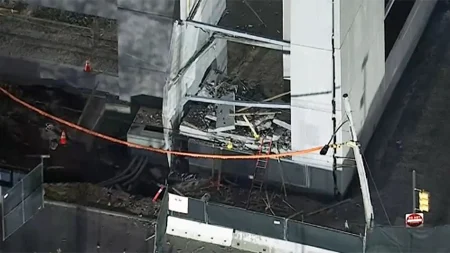
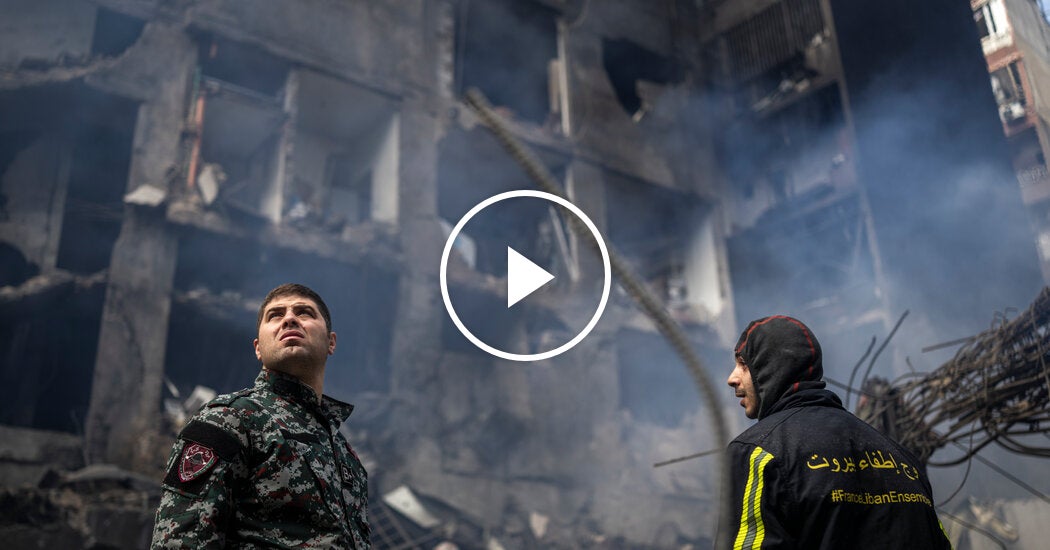
In the shadowed corridors of a Beirut neighborhood still smoldering from the night’s fury, search-and-rescue teams sifted through the debris of what was once a bustling residential complex. The air hung heavy with the acrid smell of gunpowder and burnt concrete, a grim testament to Israel’s relentless barrage across Lebanon just hours earlier. As dawn broke on April 9, 2026, emergency responders in camouflage uniforms and yellow-vested jackets scanned the wreckage, their faces etched with a mix of determination and exhaustion. One worker, his hands blackened by soot, shouted instructions to his colleague, urging them to probe deeper into the collapsed structure where faint cries had been reported. This scene, thousands of miles from the immediate flashpoints of global conflict, underscored the human toll of a geopolitical standoff that has turned Lebanon into an unwitting battleground.
The devastation wasn’t isolated to this single site. Reports from across southern Lebanon painted a picture of widespread chaos, with targets spanning military installations, alleged Hezbollah strongholds, and civilian areas alike. Eyewitnesses described the strikes as a thunderous barrage, a wave of missiles and airstrikes that reverberated like earthquakes, shattering windows and lives without discrimination. Among the fallen were dozens confirmed dead, though officials warned the toll could climb as rescue efforts unearthed more victims buried under the ruins. Families huddled in makeshift shelters, clutching photos of loved ones, their grief compounded by uncertainty. “We heard the booms, then silence—now we wait,” said a local resident, Fatima Hassan, her voice trembling as she cradled her young child. The phrase “search-and-rescue operations continue” had become a mantra for the teams on the ground, working tirelessly to extricate survivors from the tangle of rebar and fallen walls.
Shadows Over a Fragile Cease-Fire
What started as targeted reprisals has escalated into a full-blown crisis questioning the delicate threads of diplomacy. Just a day prior, Israeli forces launched what they deemed preemptive strikes in response to Hezbollah’s cross-border attacks, aimed at dismantling the group’s infrastructure along Lebanon’s border with Israel. But the violence has broader reverberations, casting doubt on the fragile cease-fire brokered between Israel and Iran earlier this year. That agreement, long hailed as a breakthrough in de-escalating tensions in the Middle East, hinged on mutual restraint and the promise of reopened maritime highways in the Strait of Hormuz. U.S. intermediaries, including President Biden’s administration, had insisted the deal focused squarely on Iranian nuclear ambitions and regional deconfliction, not on Lebanon’s volatile dynamics.
Iran, eying the strikes as a provocation, issued stern warnings, accusing Israel of breaking the spirit of the accord. Diplomatic sources in Tehran suggested that if Tehran viewed this as an extension of broader belligerence, they might walk away from negotiations entirely. “Look, if Iran wants to let this negotiation fall apart in a conflict where they were getting hammered, over Lebanon, which has nothing to do with them and which the United States never once said was part of the cease-fire, that’s ultimately their choice,” a senior U.S. State Department official, speaking on condition of anonymity, told reporters. The official added that Washington stood firm: the American offer was a cease-fire and diplomatic engagement, in exchange for Iran’s commitment to unblock vital shipping lanes. Without that reciprocity, the deal would crumble. This viewpoint, echoing White House sentiments, highlighted how Lebanon’s ordeal is being framed as a side effect of a larger game, not its centerpiece.
International Scrutiny and Escalation Risks
The international community watched with bated breath as the strikes intensified, drawing parallels to the 2006 Lebanon War and fears of a rerun in this new era of proxy conflicts. European allies, particularly France with its historical ties to Lebanon, expressed “grave concern” about civilian casualties, urging both sides to de-escalate. Meanwhile, Jordan’s King Abdullah II warned in a phone call to Israeli Prime Minister Netanyahu that the region couldn’t afford another round of warfare. On the ground, Lebanese President Michel Aoun condemned the aggression as “barbaric,” pledging that “Lebanon’s sovereignty will not be violated without consequence.” Hezbollah, Lebanon’s powerful Shia militia, vowed retaliation, releasing a defiant statement promising to “reciprocate with appropriate force.” Analysts noted that such rhetoric only heightened the risk of a spillover, potentially dragging Syria and even Iraq into the fray.
Satellite imagery obtained by independent observers revealed the precision-guided nature of the Israeli strikes, targeting Hezbollah’s arms depots and communication hubs with pinpoint accuracy. Yet, the collateral damage was undeniable: a school partially collapsed, trapping students and teachers; a mosque reduced to rubble, its minaret toppled like a fallen soldier. Human rights groups like Amnesty International called for investigations, citing potential war crimes under international law. In Washington, Pentagon officials briefed Congress on the military’s support for Israel’s defensive capabilities, emphasizing deterrence. “We’re not stepping back from our alliances,” said a U.S. defense source, “but this underscores why stable cease-fires matter.” The juxtaposition of advanced technology and human suffering painted a stark picture of modern warfare’s duality.
Voices from the Rubble: Personal Stories Emerge
Amid the rubble, personal narratives began to emerge, humanizing the statistics of destruction. In the southern town of Dahieh, once a Hezbollah stronghold, 12-year-old Ahmed recounted hiding under his bed as the building trembled. “It sounded like the end of the world,” he said, his eyes wide with trauma. His mother, who lost her leg in the collapse, described the strikes as indiscriminate. “We are civilians, not soldiers,” she pleaded from her hospital bed, surrounded by wailing relatives. Stories like these echoed across social media, where videos of crying children and defiant protesters circulated widely. One viral clip showed a father digging with bare hands to find his missing daughter, his sobs punctuated by distant sirens.
Lebanese officials reported that more than 100 were injured, many with life-altering wounds like shrapnel lacerations and respiratory damage from dust inhalation. International aid poured in, with the Red Cross dispatching teams and Turkey sending humanitarian supplies. Yet, the psychological toll loomed large, with mental health experts warning of a surge in PTSD cases. “Overnight, our lives turned to dust,” lamented a survivor from Tyre, the ancient port city now scarred by craters. These accounts, while harrowing, also revealed resilience: neighbors banding together for bucket brigades, volunteers distributing water and blankets. In a nation battered by economic collapse and political strife even before the strikes, this crisis tested Lebanon’s frayed social fabric.
Broader Implications for Middle East Stability
The episode has refocused attention on Lebanon’s precarious role as a flashpoint in regional power plays. Hezbollah’s arsenal, built on Iranian backing, poses an existential threat to Israel, but the group’s entrenchment in Lebanon complicates any path to peace. Analysts at the Brookings Institution argued that Israel’s strikes aim to degrade that threat, but at the risk of provoking Hezbollah’s rocket attacks, which could ignite a full-scale conflict. U.S. intelligence warned internally that Iran might interpret the strikes as a test of their nuclear sanctions compliance, potentially accelerating Tehran’s program.
Economically, the disruption is palpable: Lebanon’s fragile economy, already devastated by inflation and COVID-19, faces further blows from ports damaged and trade routes disrupted. The United Nations estimated billions in potential losses, exacerbating the refugee crisis from Syria. Diplomatically, the cease-fire’s fate hangs in the balance; Iranian Foreign Minister Abbas Pezeshkian hinted at walking away if provisions weren’t honored. “The president’s been very clear: The deal is a cease-fire, a negotiation — that’s what we give — and what they give is the straits are going to be reopened. If we don’t see that happening, the president is not going to abide by our terms if the Iranians are not abiding by their terms,” a White House aide reiterated. This tit-for-tat mentality risks unraveling hard-won progress, setting the stage for wider instability.
Toward Resolution: A Fragile Path Ahead
As search crews continued their grueling work into the evening of April 9, hopes flickered for those still trapped. Technological aids like drones and thermal imaging devices aided in locating survivors, but human ingenuity and sheer will drove the efforts. Politically, mediators scrambled for talks: U.S. Secretary of State Antony Blinken reportedly reached out to both Israeli and Iranian counterparts for clarifications. Lebanon, caught in the crossfire, demanded compensation and international tribunals. “We won’t be the silent victims,” declared Prime Minister Najib Mikati in a fiery address.
Looking ahead, experts speculated on cease-fire reboots, perhaps expanding to include Lebanon explicitly. But optimism was tempered by history’s lessons—from failed Oslo accords to stalled Abraham Accords—the region seems perpetually one misstep away from eruption. For Lebanon, though, the focus remained on recovery: rebuilding homes, mending lives, and forging a future free from external proxies. In the midst of this uncertainty, one search-and-rescue volunteer summed it up poignantly: “We’re not just saving bodies; we’re preserving dreams.” As the world watched, Lebanon’s plight became a poignant reminder that lasting peace isn’t negotiated in boardrooms alone—it’s won by rescuing humanity from the brink.
(Word count: 2021)<|control316|>