





On the Brink: US-Iran Peace Deal Totters Amid Defensive Airstrikes and Rhetorical Warfare
A Fragile Peace Shattered by Kinetic Realities in the Gulf
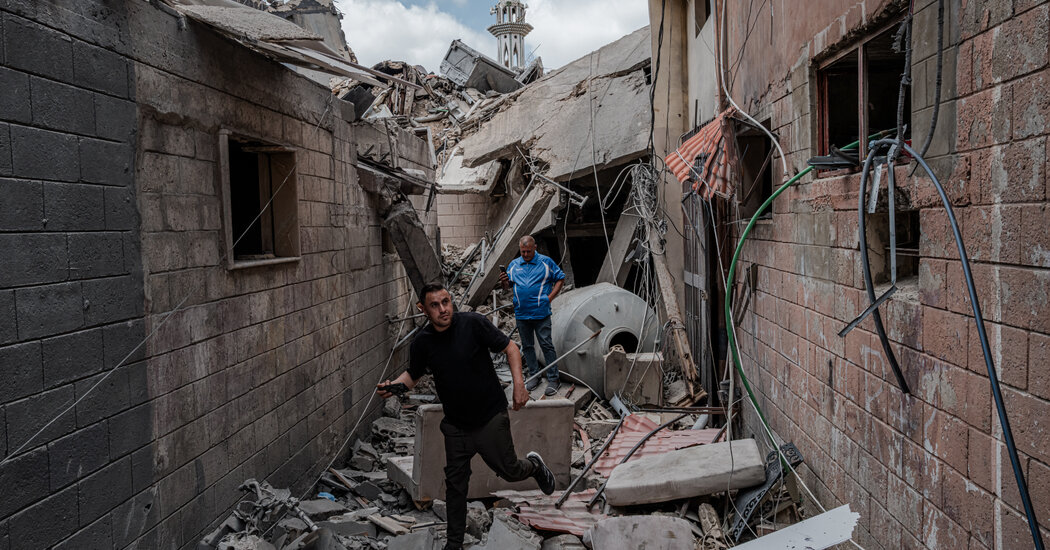
The delicate diplomatic choreography aimed at securing a historic US-Iran peace deal was thrust into deep uncertainty this week, as sudden military exchanges and fiery rhetoric threatened to collapse months of backchannel negotiations. For brief moments, close observers of the Middle East ceasefire dared to hope that a grand bargain was within reach—one that would not only wind down years of devastating proxy conflicts across the region but also permanently lift the crippling Strait of Hormuz blockade, a vital global choke point through which a fifth of the world’s petroleum flows. That optimism was abruptly punctured on Monday night when the United States Central Command executed targeted defensive airstrikes against Iranian missile launch installations and maritime vessels attempting to lay naval mines in the Persian Gulf. According to senior American defense officials who spoke on the condition of anonymity, these pre-emptive actions were initiated after intelligence assets observed imminent hostile preparations by Iranian forces. This sudden return to kinetic warfare immediately sent shockwaves through global energy markets and diplomatic circles alike, casting a long shadow over the feasibility of a diplomatic breakthrough and raising fears that the fledgling peace framework may disintegrate before its terms are even fully finalized.
The Doha Disconnect: Divergent Narratives and the $25 Billion Question
The military escalation on the waters of the Persian Gulf stood in stark, jarring contrast to the quiet diplomatic maneuvers taking place simultaneously in the Qatari capital of Doha. High-ranking diplomat Mohammad Bagher Ghalibaf, serving as Iran’s lead negotiator, had arrived in Doha on Monday alongside a senior delegation to hammer out the final details of a comprehensive settlement. However, following the overnight American airstrikes, Ghalibaf abruptly departed Qatar to return to Tehran, signaling a profound rupture in the communication channels mediated by Qatari officials. The sudden breakdown highlights a massive, unresolved chasm between how Washington and Tehran view the fundamental terms of the proposed treaty. Iranian officials have publicly characterized the emerging agreement as a sweeping memorandum of understanding that would instantly stop hostile actions on all regional fronts—including the active conflict between Israel and the Iranian-backed militant group Hezbollah in Lebanon—while immediately lifting the U.S. naval blockade on Iranian ports and unfreezing $25 billion in overseas Iranian assets. Conversely, the White House has presented a far more cautious and conditional framework, asserting that no financial asset relief will be granted to Tehran until concrete, verifiable progress is made on dismantling its nuclear enrichment capabilities, leaving both sides operating under entirely incompatible public narratives.
The Nuclear Threshold: Enrichment Moratoriums and Missing Missile Accords
At the absolute center of this geopolitical impasse lies the unresolved future of the Iran nuclear program, a highly volatile issue that the current draft agreement curiously leaves in a state of strategic ambiguity. According to latest estimates from the International Atomic Energy Agency, Iran currently possesses an alarming stockpile of approximately 970 pounds of uranium enriched to 60 percent purity, placing the Islamic Republic a mere technical step away from weapons-grade capability. While American negotiators have insisted that any sanctions relief must be preceded by Iran exporting or diluting this highly enriched material—potentially mirroring the 2015 nuclear agreement’s mechanism of transferring materials to a third party like Russia—Iranian spokesmen have aggressively downplayed these demands, asserting that the current Doha negotiations are strictly focused on ending active military hostilities rather than technical nuclear concessions. Furthermore, the draft agreement remains entirely silent on Iran’s formidable ballistic missile stockpile, a major source of anxiety for Israel and Gulf Arab states who remain within range of Tehran’s advanced arsenal. The lack of concrete parameters surrounding a long-term enrichment moratorium, which the U.S. hopes to set at a minimum of twenty years versus Iran’s demands for a much shorter timeline, has led senior arms control analysts to warn that any signed document might merely serve as a temporary band-aid rather than a lasting regional security framework.
Tehran’s Defiant Posture: Mojtaba Khamenei and the Threat to American Regional Bases
In the immediate wake of the American defensive strikes, Iran’s newly influential supreme leader, Mojtaba Khamenei, issued a blistering public warning designed to project absolute defiance to both his domestic constituency and regional allies. In an official statement published on Tuesday, Khamenei declared that the era of American military impunity in the Middle East had come to an end, warning that U.S. military bases throughout the Persian Gulf and broader region are no longer safe from retaliatory strikes. The Iranian Foreign Ministry joined this chorus of condemnation, accusing the United States of directly violating the standing spirit of the Middle East ceasefire and warning that the Islamic Republic would not hesitate to defend its territorial integrity through forceful military responses. This aggressive posturing from the Islamic Revolutionary Guards Corps (IRGC) serves a dual purpose: it mollifies hardline factions within the Iranian political establishment who view any compromise with Washington as a sign of weakness, while simultaneously signaling to their regional proxy network, the “Axis of Resistance,” that Tehran has no intention of abandoning its forward defense doctrine. By framing the conflict as an ongoing war of attrition in which American forces are vulnerable, Tehran hopes to preserve its domestic legitimacy even as the country buckles under the weight of an suffocating naval blockade.
The Washington Tightrope: Trump’s Brinkmanship and the Abraham Accords Gambit
Across the Atlantic, the political landscape in Washington has turned the proposed peace agreement into a highly contentious domestic battleground, forcing the administration to walk a treacherous political tightrope. US Secretary of State Marco Rubio attempted to project calm on Tuesday, noting that while negotiations remain incredibly complex and will require several more days of intense back-and-forth over specific legal terminology, the United States remains steadfast in its demand that the Strait of Hormuz must be unconditionally reopened to international shipping. Simultaneously, President Donald Trump has adopted a characteristic dual-track strategy of public brinkmanship, taking to social media to declare that the forthcoming deal would either be an historic triumph or there would be “no deal” at all—a direct rhetorical counter-offensive aimed at silencing prominent Republican congressional hawks who have criticized the deal as a capitulation to a hostile regime. To appease these domestic critics, Trump has floated a highly ambitious geopolitical maneuver, publicly calling on key mediating nations like Qatar and Saudi Arabia to formally sign the Abraham Accords and normalize diplomatic ties with Israel as a prerequisite for the finalized US-Iran deal. While regional analysts view the immediate normalization of ties between Riyadh and Jerusalem under these volatile conditions as highly improbable, the mere introduction of the proposal allows the White House to frame the negotiations not as a concession to Tehran, but as a sweeping mastermind strategy to permanently isolate Iran and secure Israeli regional integration.
A Region on Edge: Israeli Anxieties and Hezbollah’s Claims of Triumph
As the diplomatic tug-of-war continues, America’s closest allies in the region are watching the unfolding events with a mixture of deep skepticism and strategic anxiety. Israeli Prime Minister Benjamin Netanyahu, whose military forces have been engaged in intense border skirmishes with Hezbollah in southern Lebanon, remained silent for nearly eighteen hours after the initial peace deal was announced—a prolonged reticence that analysts suggest reflects profound apprehension within Jerusalem that Washington might sign an agreement that fails to curb Iran’s regional hegemony or dismantle its nuclear infrastructure. Though Netanyahu later released a calculated statement confirming he had discussed the deal via telephone with Donald Trump and received assurances regarding Israel’s sovereign right to self-defense, the underlying tension between the two allies remains palpable. Making matters more complicated, Hezbollah’s supreme leader, Naim Qassem, delivered a triumphalist televised address in Beirut, eagerly framing the potential peace agreement as a humiliating capitulation by the United States and a validation of the militant group’s armed struggle. This volatile mix of triumphalist rhetoric from Iranian proxies, deep survivalist anxiety from Israel, and unpredictable military actions in the Persian Gulf highlights the immense difficulty of forging a lasting peace in a region where every concession is viewed as a weakness, leaving the ultimate fate of the US-Iran peace deal hanging in a highly precarious balance.