




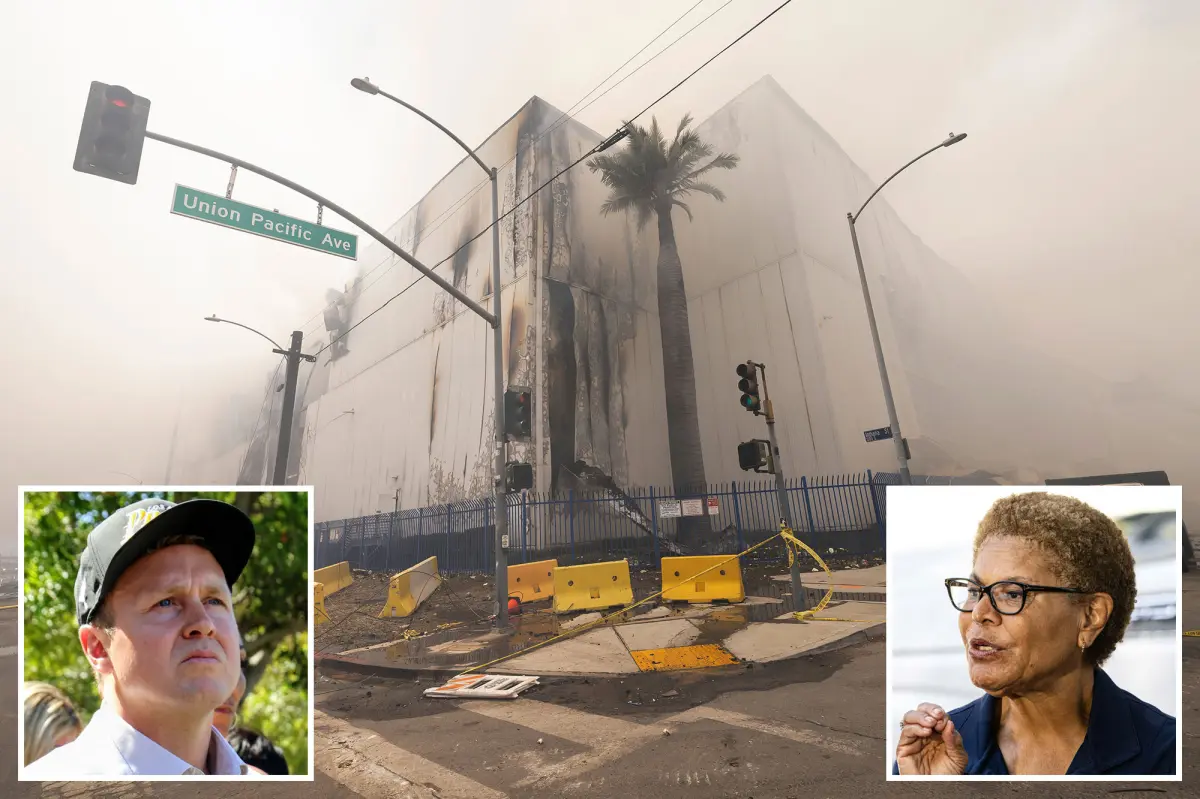
For five agonizing days, the residents of Los Angeles’ historic Boyle Heights neighborhood have watched a dark, suffocating shroud choke out their skies, transforming the normally sun-drenched basin into a grim, real-life Gotham City. The source of this atmospheric nightmare is a massive, smoldering 500,000-square-foot Lineage Logistics warehouse, where a relentless inferno has been burning since mid-week. Inside the unstable, water-logged structure sits a ticking ecological clock: 85 million pounds of frozen meat and bread products that, deprived of refrigeration, are rapidly spoiling and decaying. What began as a standard, albeit massive, industrial fire has slowly mutated into a terrifying race against time, as emergency crews struggle not only to extinguish the stubborn flames but also to prevent a massive biohazard fallout from the rotting organic matter trapped within the collapsing walls. For locals and commuters alike, the thick plume of smoke drifting over landmarks like Dodger Stadium is a constant, physical reminder of the unseen crisis unfolding in their backyard.
Below the rising smoke, the daily lives of Boyle Heights residents have been completely upended, replaced by a quiet, anxious confinement. Parents are keeping their children indoors, locking windows tight against a sickening, heavy odor that carries the ominous threat of airborne particles. In response to the growing dread, Mayor Karen Bass and local officials have scrambled to distribute air filters and face masks, while opening voluntary relief shelters for families desperate for a breath of clean air. “We will get through this, and we will always stand with the Boyle Heights community,” Mayor Bass promised, trying to offer a sense of calm to a neighborhood that often feels overlooked during municipal crises. Yet, for many working-class families in the area, the offer of a temporary shelter or a basic mask feels like a fragile shield against a massive, hovering threat to their long-term respiratory health.
The source of their fear is well-founded, as scientists and toxicologists grapple with a scenario that they describe as genuinely unprecedented. While the Los Angeles Fire Department initially reported that air quality tests have not detected immediate chemical hazards, health advocates and experts warn that analyzing smoke from millions of pounds of burning, biological matter is incredibly complex. Toxicologist Michael Kleinman warned that as the massive stockpiles of animal proteins decay, they become breeding grounds for bacteria; if these organic spoils catch fire, they release organic materials and pathogens into the smoke plumes, taking the region’s air quality into dangerous, uncharted territory. Will Barrett of the American Lung Association emphasized that industrial smoke of this magnitude is a highly unpredictable toxic soup, laden with microscopic fine particles capable of penetrating deep into human lungs and causing lasting damage, leaving residents to wonder what exactly they are inhaling with every breath.
This mounting atmospheric hazard has quickly fueled a parallel firestorm of political outrage and community frustration, highlighting the deep-seated anxiety of Angelenos who feel unprotected by their leadership. High-profile figures and anxious residents alike have taken to public platforms to criticize the city’s response, with media personality Spencer Pratt publicly lambasting Mayor Bass for being in Chicago to attend the opening of Barack Obama’s presidential library when the fire erupted, accusing her of negligence. Pratt’s fiery rhetoric—warning that the choking smoke is filled with toxic elements and urging the city to wake up to the repeating pattern of environmental disasters—resonated deeply with a public already suspicious of bureaucratic safety reassurances. This friction underscores a growing human crisis of trust, where a community in physical discomfort and fear demands immediate, visible accountability from the leaders sworn to protect them.
Meanwhile, on the front lines of the disaster, exhausted firefighters are engaged in a grueling physical battle that grows more hazardous by the hour. Drenching the colossal warehouse with millions of gallons of water has successfully contained the flames to one portion of the facility, but it has also waterlogged the building’s structural framework, creating a high risk of sudden collapse. Working through the night, crews have been forced to manually tear down sections of the exterior walls just to safely access hidden, deep-seated hot spots within the smoldering debris. The looming, monumental task of safely extracting the millions of pounds of wet, decaying meat from the compromised structure presents a logistical nightmare that fire officials admit will require a sustained, exhausting, and highly delicate operation lasting far into the coming weeks.
Recognizing the extraordinary scale of both the environmental threat and the logistical challenge, Governor Gavin Newsom declared a state of emergency over the weekend, opening up vital state resources to bolster the local recovery effort. The geographic location of the warehouse, situated squarely in the windy mid-basin of Los Angeles, has compounded the issue by acting as a natural fan, spreading the toxic haze far beyond the city limits into the San Gabriel Valley and the northwest San Bernardino Valley. As the emergency funds begin to flow and specialized containment teams arrive, the people of Los Angeles are left to endure the physical and psychological toll of a bizarre disaster. It is a stark reminder of the fragile infrastructure that feeds the metropolis, leaving an entire community waiting nervously for the smoke to finally clear and for the air they breathe to be safe once more.