

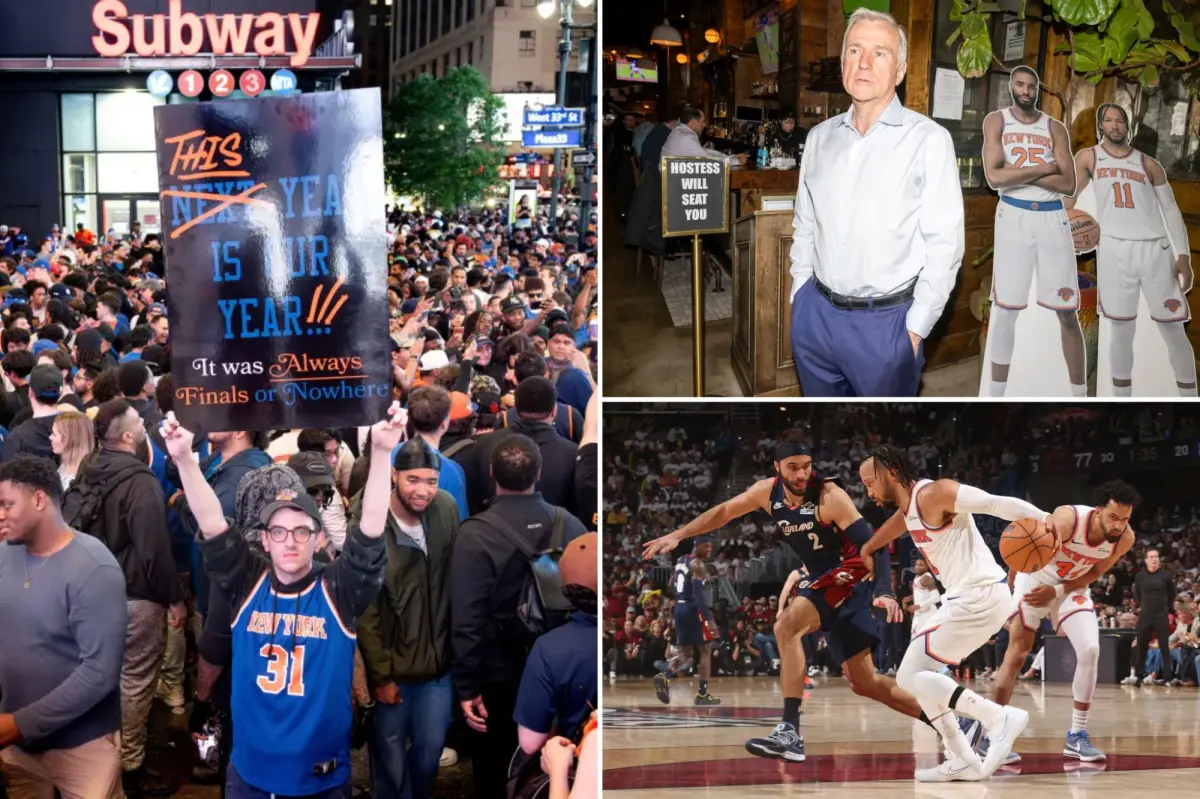
There is a unique electricity that takes hold of New York City when its beloved Knicks go on a deep postseason run. It is an undeniable, infectious vibe—a sea of blue and orange flooding the subways, a collective roar echoing from neighborhood bars, and an unmistakable sense of hope that unites strangers on the street. This year, however, the magic is not just elevating the city’s collective spirit; it is translating into a massive financial windfall. According to estimates released by City Hall and the New York City Economic Development Corporation, the basketball phenoms are poised to generate a staggering $465 million for the local economy this postseason. Already, the home games played so far have injected an estimated $202 million directly into the city’s veins through ticket sales, stadium concessions, team merchandise, public transit, and lodging. For a metropolis constantly seeking ways to fuel its local businesses, this sudden influx of capital represents a critical boost to the economy.
Just steps away from the iconic Madison Square Garden, the tangible impact of this basketball fever is painted on the faces of local business owners like Ian Conroy. Together with his brother Niall, Conroy has run Mustang Harry’s since 1995, weathering the city’s ups and downs for nearly three decades. This spring, thanks to the Knicks’ thrilling postseason dominance, their sports bar has experienced a breathtaking 60% surge in business, hitting its maximum 300-person capacity every single game night. For Conroy, this surge is a vital financial safety net that will help the bar stay afloat through the notoriously quiet summer months, especially since the Rangers did not make it to their own playoff season. Caught up in the euphoria and eager to provide his patrons with an unmatched viewing experience, Conroy even went all-in on his team, investing in 30 brand-new televisions just in time for the playoffs. Describing the grit of the roster, Conroy, who is originally from Ireland, proudly notes that this particular Knicks team has more heart than any he has seen during his time in New York.
This wave of excitement quickly spreads outward from Midtown, washing over neighborhoods like Chelsea, where venues are turning into bustling hubs of local pride. Aristotle Hatzigeorgious, who manages Slate in Chelsea alongside several Clinton Hall locations, has witnessed an unprecedented rush for watch party reservations. To keep up with the overwhelming demand, his venues introduced reserved seating options that have already reached their 1,000-person capacities for all seven potential games of the NBA Finals. For Hatzigeorgious, the phenomenon transcends basic sports bar economics; it represents a cultural moment where people realize they are participating in a once-in-a-lifetime experience. After facing overall decreases in patron attendance in recent times, this sudden wave of communal joy has brought back a much-needed buzz to the city’s dining and nightlife scene, giving everyone a reason to rejoice together.
Further downtown at the bustling Time Out Market in Union Square, the economic ripple effect takes on a highly social flavor. Jessica Bendig, the market’s marketing manager, explains that watch parties have become incredibly lucrative for vendors because fans arrive in what she calls “celebration mode.” There is a fascinating psychological element to sports fans watching high-stakes games: whether they are drinking to celebrate a thrilling victory or drinking to soothe the anxiety of a heartbreaking defeat, they are ready to spend. Bendig points out that customers arrive prepared to enjoy themselves, ordering rounds of craft beers and food to match the intensity on the court. This willingness to lean into the emotional rollercoaster of the playoffs creates an incredibly fun, high-energy environment that hospitality workers thrive on, turning what could be a regular weekday evening into a memorable community gathering.
Importantly, this massive financial boom is not confined to the immediate shadow of Madison Square Garden or the trendy corridors of Manhattan. Leaders across the outer boroughs are reporting that the playoff run is democratizing the wealth, channeling much-needed patronage into neighborhood eateries, corner pubs, and local retailers miles away from the arena. Tom Grech, the President and CEO of the Queens Chamber of Commerce, emphasizes that major athletic milestones like this serve as a powerful reminder of how sports create localized economic opportunities. From Jackson Heights to Astoria, local businesses are getting a slice of the pie as fans gather closer to home to support their team. For business leaders like Grech, this current basketball-centric economic boom is also a thrilling dress rehearsal, offering a tantalizing preview of the massive financial and cultural windfall that will sweep through the city when New York plays host to the upcoming World Cup.
While this year’s projected $465 million economic impact is lower than the highly optimistic $832 million “Cinderella run” projection floated by Mayor Adams’ administration during the previous postseason when they hoped for a finals appearance, it still represents a robust celebration of New York’s commercial resilience. This year’s calculations take a comprehensive look at the financial ecosystem, factoring in both the direct spending of tourists and ticket-holders and the indirect economic activity of millions of home-bound fans stocking up on food and beer for their own living room watch parties. With each home game of the NBA Finals projected to draw in as much as $90 million, the stakes—both on the court and on the balance sheets—have never been higher. Ultimately, this playoff run proves that the Knicks are far more than just a sports franchise to New York City; they are a vital engine of economic survival, a spark of pure communal joy, and a powerful reminder of what happens when the city rallies behind its home team.