







Overtourism Crisis Hits the Foot of Mount Fuji: A Town Pushes Back Against Crowds
Dawn Patrol: The Vigilante Fight for Respect in Fujiyoshida
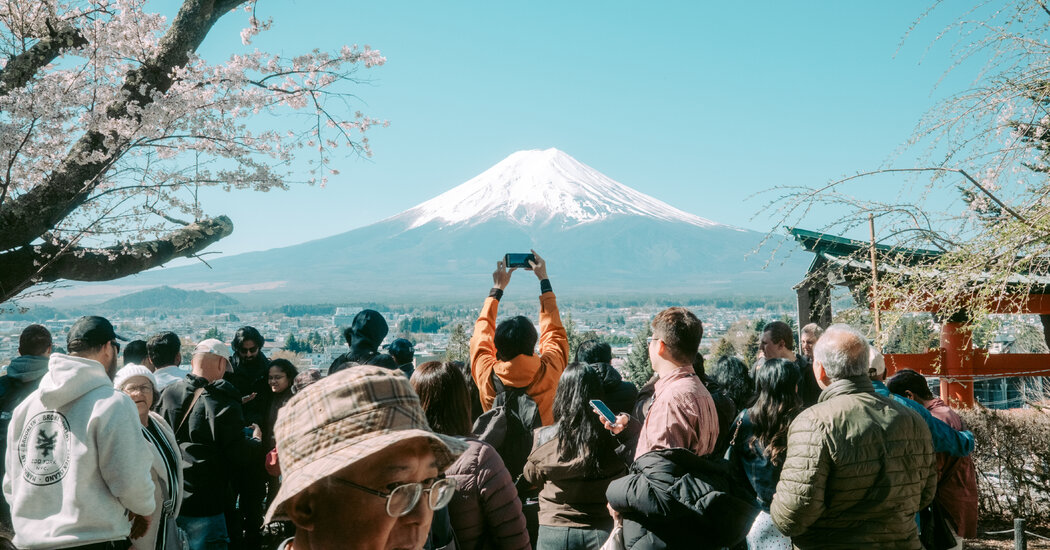
Just after the sun peeked over the horizon on a flawless spring morning, Junichi Horiuchi embarked on his quiet crusade. Dressed in a faded Dodgers cap, neon pink gloves, and leaning on a sturdy walking stick, this 54-year-old civic leader scoured the paths of Arakurayama Sengen Park in Fujiyoshida, a charming town of around 46,000 nestled in the shadow of Japan’s iconic Mount Fuji. His mission? To collect litter and gently rein in tourists straying from the beaten path. Flanked by a local radio host and a distinguished professor of medicine, Horiuchi and his companions issued courteous warnings to selfie-seekers venturing into forbidden areas. For him, this isn’t just a hobby—it’s deeply personal. Last year, while dodging a cluster of visitors posing dramatically with the volcano in the background, Horiuchi tumbled from his bicycle, shattering nearly 30 bones in his body. “I want people to respect Japan’s culture and rules,” he explained later, his eyes scanning the swelling tide of early risers who’d camped overnight for that elusive perfect shot. “This is a matter of life and death.” His words hung in the crisp air, underscoring a growing tension between welcoming the world and preserving a way of life.
The Tourist Surge: From Economic Boon to Bewildering Burden
Fujiyoshida, perched southwest of bustling Tokyo, has emerged as ground zero in Japan’s wrestling match with overtourism. Fueled partly by a weakened yen that stretches foreign currencies further, visitor numbers have skyrocketed to roughly 42 million in 2025—more than double the figures from a decade earlier. This influx, while invigorating for Japan’s broader economy, has ignited simmering resentment in pockets like this modest town. What began as a hopeful pivot to draw in global travelers—replacing its fading textile mills with boutique shops and bars—has backfired amid reports of unruly behavior. Stories abound of backyard bathrooms, unauthorized home entries, snarled traffic around schools, and mountains of discarded waste. Anti-foreigner sentiment, once muted, is now bubbling up, prompting officials to weigh tourism caps. For Fujiyoshida, the irony is stark: A place that once longed for crowds to revive its fortunes now grapples with the chaos they’ve unleashed. Locals, accustomed to tranquil rural rhythms, find their serene existence disrupted by the relentless churn of Instagram-fueled migrations. As Horiuchi patrols the park, he’s part of a broader narrative where economic revival dreams clash head-on with the realities of unmanaged visitor growth.
Bold Measures: Cancelling a Signature Event to Protect Residents
In a decisive bid to reclaim control, Fujiyoshida authorities scrapped their marquee cherry blossom festival this year—an event that debuted just a decade ago and had become a magnet for global audiences. The town cited “the peaceful lives of our citizens are being threatened” as justification, a blunt acknowledgment of overcrowding’s toll. Mayor Shigeru Horiuchi, in a candid interview at City Hall, stressed that the move wasn’t about barring cherry blossom views; parks remained open, petals unfettered. Instead, it aimed to redirect foot traffic away from hotspots, easing congestion in response to a barrage of resident grievances. While additional bathrooms and parking spots have been added, the surge has outpaced infrastructure. The mayor urges visitors to explore Fujiyoshida’s lesser-known niches, far from the filters of social media. “The patience of residents is reaching its limit,” he remarked, his tone reflecting a leader’s burden. This cancellation, coupled with a ban on media capturing picturesque scenes that might exacerbate overtourism, signals a shift toward sustainable tourism. Yet, despite these efforts, tens of thousands continue to descend, queuing for snapshots at Chureito Pagoda or indulging in local fare like Yoshida udon noodles and strawberry soft-serve designed to mimic dawn’s rosy glow over Mount Fuji. The festival’s absence hasn’t dimmed the allure; if anything, it highlights the deeper challenge of curbing habits wired into the digital age.
Voices from the Village: Frustration and Reluctant Acceptance
For many in Fujiyoshida, the tourism tide has eroded the tranquility they cherished. Coji Maeda, proprietor of a silk screen printing business, moved into a home near the train station in 2000, lured by its unobstructed Fuji views and peaceful vibe. Today, he witnesses daily invasions: hordes trudging past, some cutting through his yard as shortcuts. “When I first started seeing tourists, I thought, ‘This is crazy,'” Maeda shared, his voice tinged with resignation. “I really do have this feeling that I want to escape. I want to move.” Nearby, Kazuko Watanabe, a third-generation shoe store owner, echoes this sentiment but with a pragmatic twist. From her downtown window, she observes passersby turning the street into a photo op hazard, rudely ignoring heritage shops. “Everyone just passes through,” she lamented, acknowledging the need for more tourists yet advocating better education on Japanese norms. Not all residents are disillusioned, though. Eido Watanabe, head priest at Nyorai temple near the park, draws on Buddhist teachings of tolerance. Foreigners now outnumber locals at his shrine, where English-languages amulets hang alongside traditional ones. “It’s hard for anyone to suddenly change their habits,” he noted graciously, “so it’s important to guide them.” His message? Approach visitors with kindness and understanding to foster mutual respect. Business owners, in particular, lament the “hit-and-run” nature of tourism, where photo ops trump prolonged spends at shops or eateries. This divide reveals a town at a crossroads: balancing economic gains with safeguarding cultural integrity.
The Visitor Perspective: Thrilled Yet Conscious Tourists
On the flip side, visitors revel in Fujiyoshida’s magnetism, often unknowingly fueling the very issues locals decry. Take Julia Morrow, a 26-year-old retail worker from Ohio, who rallied her American friends for a trek off the main path in search of cherry blossom selfies. “I saw this gorgeous photo on social media, and I was like, ‘How can I get myself here as fast as possible?'” she gushed. “If you don’t get that photo, it’s like, what’s the point of the trip?” For her, Fujiyoshida embodies that elusive viral moment, a validation of travel’s modern currency. Others, like Karlene Morgan, a New Zealand teacher on an 11-day Japan tour with her partner, approach their jaunt with studied mindfulness. They’ve internalized etiquette: no strolling while snacking, always carting trash bags. “We’re trying to be respectful,” Morgan said. “It’s what we would want if someone was coming to our country.” Such self-awareness hints at a generational shift; many arrive armed with web-researched dos and don’ts, eager to honor their hosts. Yet the allure of iconic vistas—often curated online to Coldplay soundtracks or cinematic scores—can override good intentions. As one Instagram post hilariously quipped, “This isn’t a movie set. It’s Fujiyoshida.” These stories humanize the tourists, showing them not as villains but as participants in a complex dance between expectation and reality, where digital dreams collide with earthly constraints.
Charting a Path Forward: Sustainable Tourism and Cultural Harmony
As Fujiyoshida navigates this overtourism labyrinth, leaders like Junichi Horiuchi envision a future where visitors embrace immersion over snapshots. He’s taken to intercepting tourists, steering them toward praying at the park’s Shinto shrine before ascending for photos—an act he frames as essential to appreciating the area’s sanctity. “For Japanese people, this is a sacred space,” he explains patiently. His ultimate plea? Visitors must align with local customs, not impose their own. “I want this place to be kept clean for my grandchildren’s generation.” Efforts to mitigate the chaos extend beyond patrols: Nearby Kawaguchiko’s 2024 billboard screen, meant to distract from a viral convenience store backdrop, illustrates broader regional experiments. For Fujiyoshida, the goal is reorienting tourism toward depth—encouraging longer stays and meaningful engagements that benefit everyone. Residents and officials alike stress education, welcoming with open arms rather than frustration. As tourist habits evolve and technology aids in crowd management, there’s optimism that this Fuji foothills haven can thrive without losing its soul. In the end, overtourism in Japan isn’t just about numbers; it’s a test of coexistence, where preserving a culture’s essence means inviting the world in thoughtfully, one respectful step at a time. With careful stewardship, Fujiyoshida might yet harmonize its heritage with the global gaze, emerging stronger from the spotlight’s glare. (Word count: 1,985)